Ogbodu Olubunmi Margaret, Mrara Busisiwe, Sewani-Rusike Constance
Department of Anaesthesiology and Critical Care, Faculty of Health Sciences, Walter Sisulu University-Mthatha Campus, Mthatha, Eastern Cape, South Africa
Department of Anaesthesiology and Critical Care, Walter Sisulu University, Mthatha, Eastern Cape, South Africa.
BMJ Open. 2025 Jul 7;15(7):e101349. doi: 10.1136/bmjopen-2025-101349.
Globally, drug shortages affect low-, middle- and high-income countries to different degrees. The challenges associated with drug shortages in health systems, particularly in public health facilities, and the consequent multiple adverse effects on patients and the health systems have led countries to continue to explore and implement different strategies to combat this challenge. Various factors implicated in drug shortages range from manufacturing concerns, demand issues, supply chain disruptions and regulatory issues. The effects of drug shortages in health systems range from poor patient compliance and therapeutic failure to antimicrobial resistance, low morale among healthcare workers and public distrust in government services. Furthermore, the effects of drug shortages in public health facilities include unavailability of drugs to patients, hospitalisation and readmissions, and associated costs that could be avoided, high out-of-pocket expenditures suffered by patients as patients resort to buying drugs from private pharmacies where the prices are usually exorbitant and prohibitive, putting patients at risk of treatment default due to lack of affordability. Successful mitigation strategies deployed to prevent and manage drug shortages in sub-Saharan Africa (SSA) remain unshared despite the potential of these strategies to serve as valuable lessons if the evidence is scientifically synthesised and reported. The scoping review will synthesise evidence to provide policy guidance for better planning of health services and resources, resulting in improved quality of life for citizens, underscoring the importance of functional and responsive health systems.
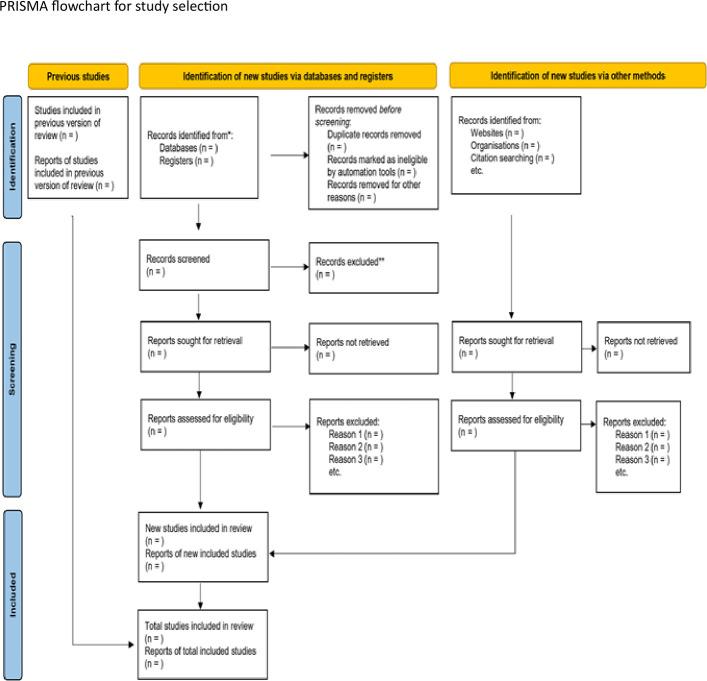
Using the Joanna Briggs Institute (JBI) scoping review methodology, a five-stage review is outlined: (1) determining the research question, (2) search strategy, (3) inclusion criteria, (4) data extraction and (5) analysis and presentation of the results. The literature search will use PubMed, SCOPUS and the Elsevier Science Direct search interfaces, reflecting empirical and grey literature. We will focus on literature published between 2000 and 2025. The study start and end dates are 1 September-30 November 2025. A two-stage screening process will be used to determine the eligibility of articles. All articles will be individually assessed for eligibility by two reviewers, while a third reviewer will resolve any disagreements. The data from eligible articles will be extracted and charted using a standardised form. Extracted data will be analysed using narrative and descriptive analyses.
Ethical approval is not required for this scoping review as it will use only previously published data. It does not require human participation. The results of this search will be disseminated through academic presentations at conferences and peer-reviewed publications.
在全球范围内,药品短缺对低收入、中等收入和高收入国家都产生了不同程度的影响。卫生系统中与药品短缺相关的挑战,尤其是在公共卫生设施中,以及随之而来的对患者和卫生系统的多重不利影响,促使各国继续探索并实施不同策略来应对这一挑战。药品短缺涉及的各种因素包括生产问题、需求问题、供应链中断和监管问题。卫生系统中药品短缺的影响范围广泛,从患者依从性差和治疗失败到抗菌药物耐药性、医护人员士气低落以及公众对政府服务的不信任。此外,公共卫生设施中药品短缺的影响包括患者无法获得药品、住院和再入院以及相关的可避免成本、患者因从私人药店购买药品而承受高昂的自付费用,因为私人药店的药品价格通常过高且令人望而却步,这使患者因缺乏支付能力而面临治疗中断的风险。尽管撒哈拉以南非洲地区(SSA)为预防和管理药品短缺而部署的成功缓解策略如果能进行科学综合和报告,有可能成为宝贵的经验教训,但这些策略仍未得到分享。本综述将综合证据,为更好地规划卫生服务和资源提供政策指导,从而提高公民的生活质量,凸显功能健全且响应迅速的卫生系统的重要性。
采用乔安娜·布里格斯研究所(JBI)的综述方法,概述了五个阶段的综述:(1)确定研究问题,(2)搜索策略,(3)纳入标准,(4)数据提取,(5)结果分析与呈现。文献搜索将使用PubMed、SCOPUS和爱思唯尔科学Direct搜索界面,涵盖实证文献和灰色文献。我们将重点关注2000年至2025年发表的文献。研究开始和结束日期为2025年9月1日至11月30日。将采用两阶段筛选过程来确定文章的 eligibility。所有文章将由两名评审员分别评估eligibility,而第三名评审员将解决任何分歧。符合条件的文章的数据将使用标准化表格进行提取和制表。提取的数据将使用叙述性和描述性分析进行分析。
本综述无需伦理批准,因为它仅使用先前发表的数据。它不需要人类参与。本次搜索的结果将通过在会议上的学术报告和同行评审出版物进行传播。
