Mondal Sudipta, Adler-Abramovich Lihi, Lampel Ayala, Bram Yaron, Lipstman Sophia, Gazit Ehud
Department of Molecular Microbiology and Biotechnology, George S. Wise Faculty of Life Sciences, Tel Aviv University, Tel Aviv 69978, Israel.
Department of Oral Biology, The Goldschleger School of Dental Medicine, Tel Aviv University, Tel Aviv 69978, Israel.
Nat Commun. 2015 Oct 15;6:8615. doi: 10.1038/ncomms9615.
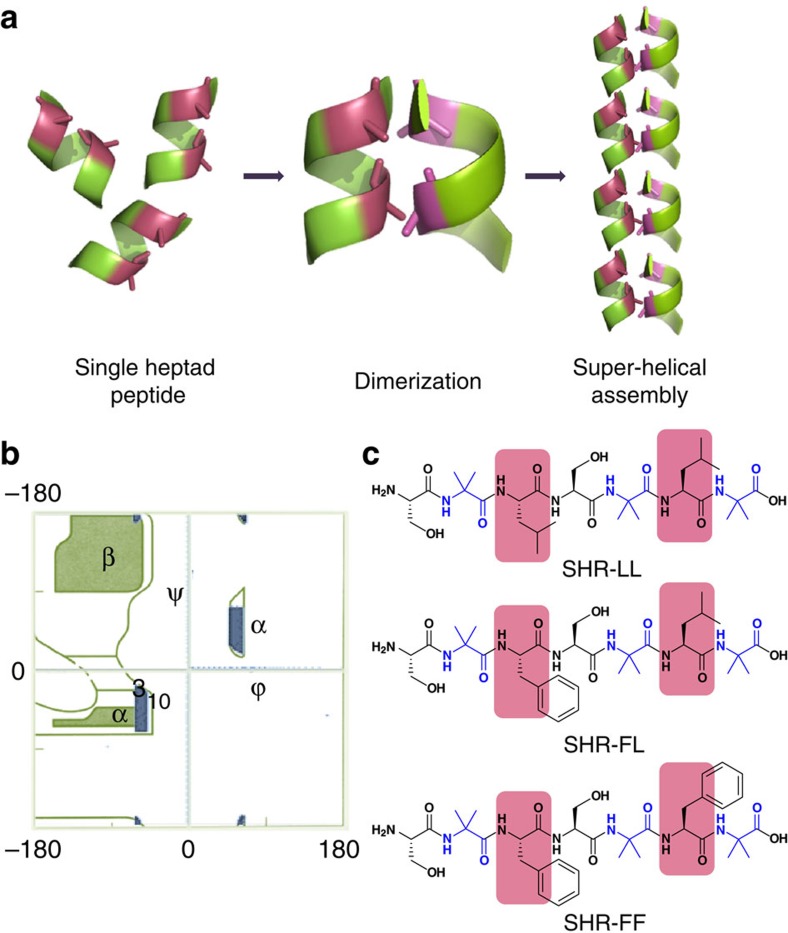
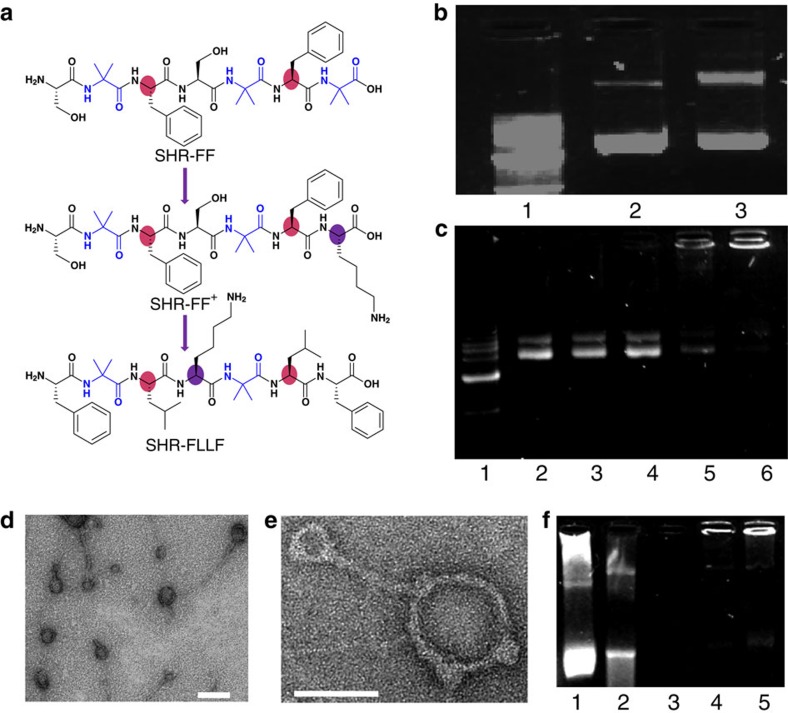
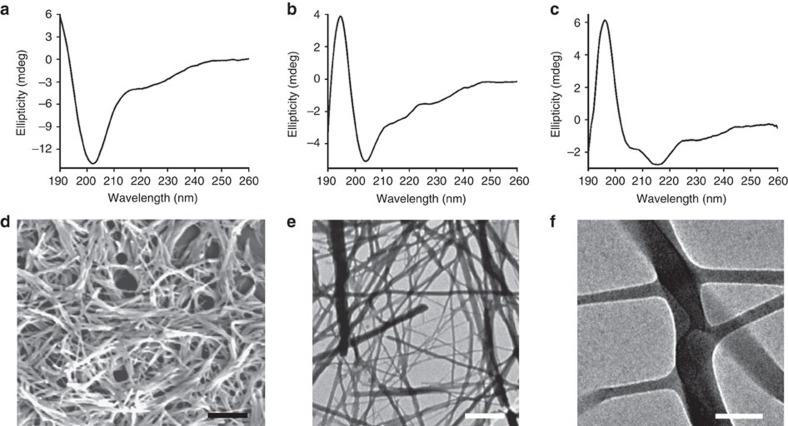
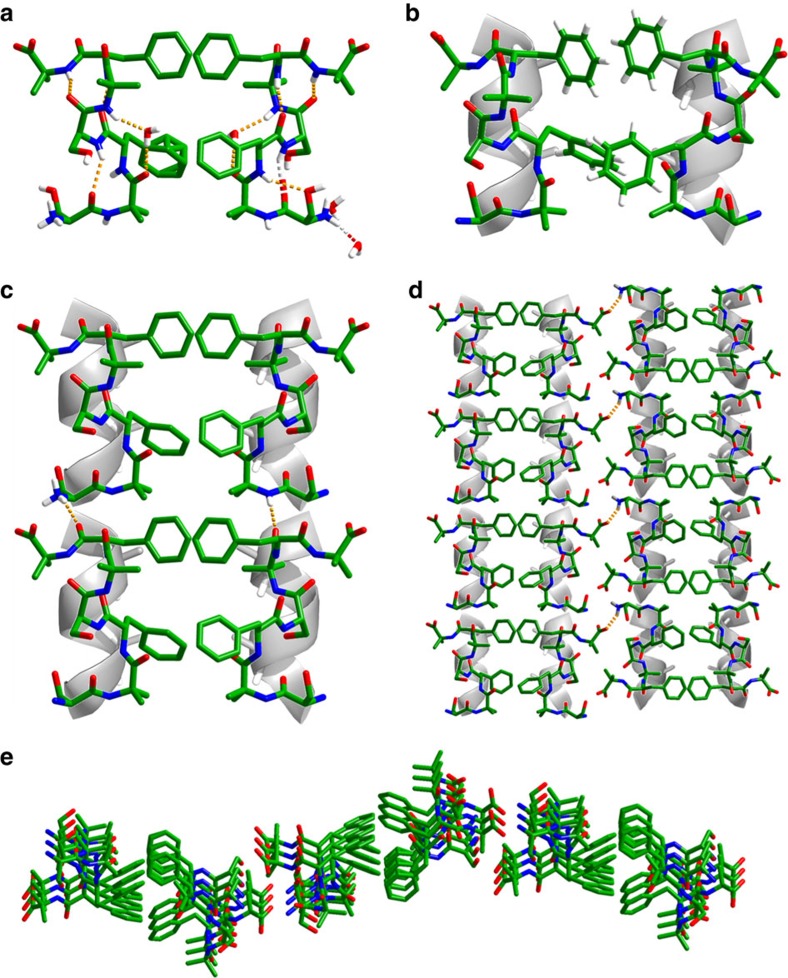
Inspired by the key role of super-helical motifs in molecular self-organization, several tandem heptad repeat peptides were used as building blocks to form well-ordered supramolecular nano-assemblies. However, the need for stable helical structures limits the length of the smallest described units to three heptad repeats. Here we describe the first-ever self-assembling single heptad repeat module, based on the ability of the non-coded α-aminoisobutyric acid to stabilize very short peptides in helical conformation. A conformationally constrained peptide comprised of aromatic, but not aliphatic, residues, at the first and fourth positions formed helical fibrillar assemblies. Single crystal X-ray analysis of the peptide demonstrates super-helical packing in which phenylalanine residues formed an 'aromatic zipper' arrangement at the molecular interface. The modification of the minimal building block with positively charged residues results in tight DNA binding ascribed to the combined factors of helicity, hydrophobicity and charge. The design of these peptides defines a new direction for assembly of super-helical nanostructures by minimal molecular elements.
受超螺旋基序在分子自组装中的关键作用启发,几种串联七肽重复序列肽被用作构建单元来形成有序的超分子纳米组装体。然而,对稳定螺旋结构的需求将所描述的最小单元长度限制为三个七肽重复序列。在此,我们基于非编码α-氨基异丁酸将非常短的肽稳定在螺旋构象的能力,描述了首个自组装单七肽重复模块。由芳香族而非脂肪族残基组成的构象受限肽在第一和第四位置形成螺旋纤维组装体。该肽的单晶X射线分析表明存在超螺旋堆积,其中苯丙氨酸残基在分子界面形成“芳香拉链”排列。用带正电荷的残基修饰最小构建单元会导致紧密的DNA结合,这归因于螺旋度、疏水性和电荷的综合因素。这些肽的设计为通过最小分子元件组装超螺旋纳米结构定义了一个新方向。