Muñoz-Arias Isa, Doitsh Gilad, Yang Zhiyuan, Sowinski Stefanie, Ruelas Debbie, Greene Warner C
School of Public Health, Division of Infectious Diseases and Virology, University of California, Berkeley, Berkeley, CA 94720, USA; Gladstone Institute of Virology and Immunology, 1650 Owens Street, San Francisco, CA 94158, USA.
Gladstone Institute of Virology and Immunology, 1650 Owens Street, San Francisco, CA 94158, USA.
Cell Host Microbe. 2015 Oct 14;18(4):463-70. doi: 10.1016/j.chom.2015.09.010.
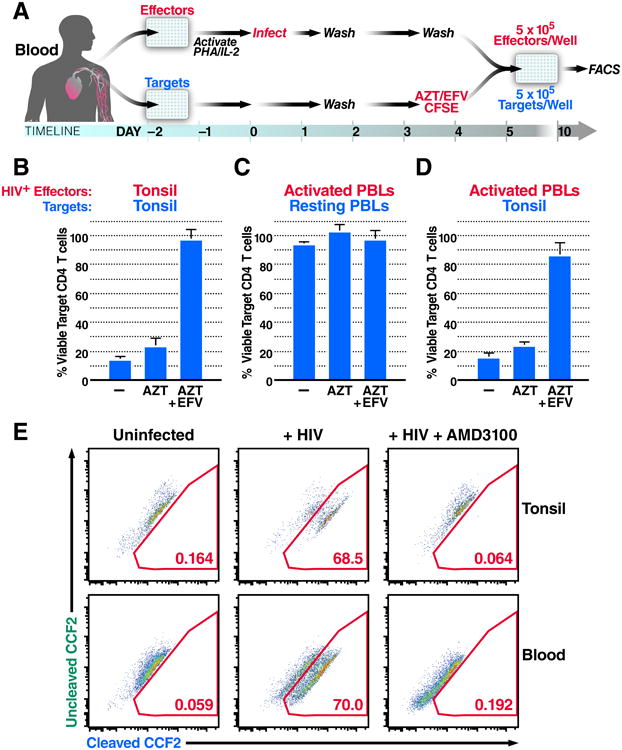
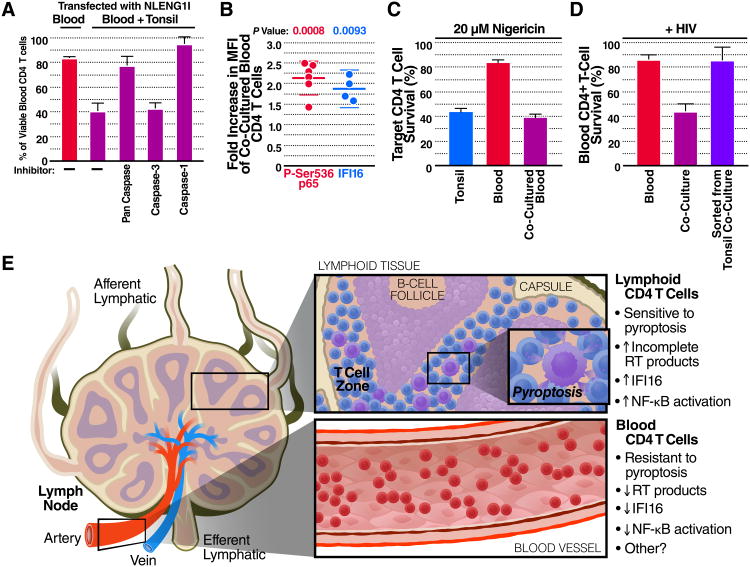
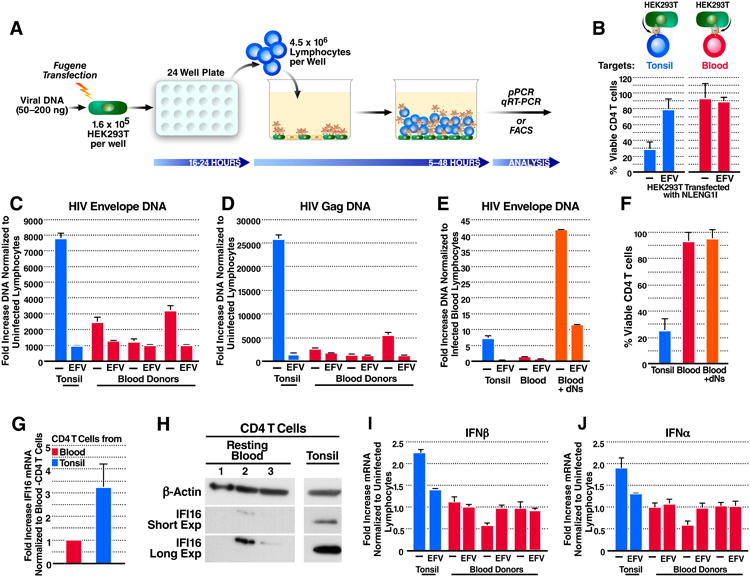
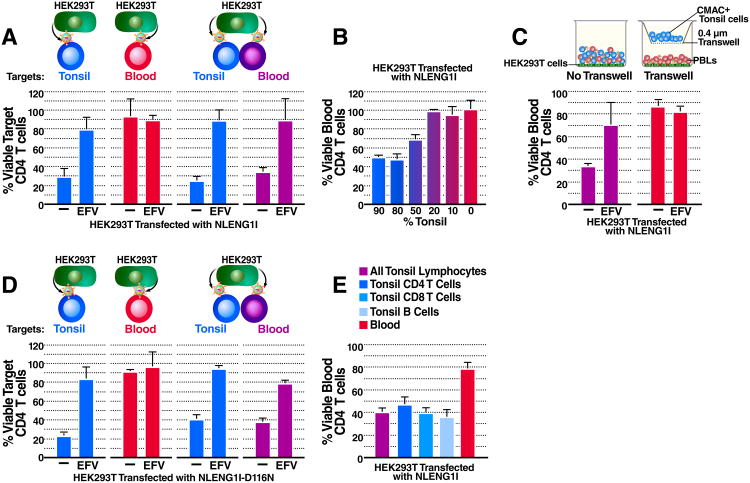
Progression to AIDS is driven by CD4 T cell depletion, mostly involving pyroptosis elicited by abortive HIV infection of CD4 T cells in lymphoid tissues. Inefficient reverse transcription in these cells leads to cytoplasmic accumulation of viral DNAs that are detected by the DNA sensor IFI16, resulting in inflammasome assembly, caspase-1 activation, and pyroptosis. Unexpectedly, we found that peripheral blood-derived CD4 T cells naturally resist pyroptosis. This resistance is partly due to their deeper resting state, resulting in fewer HIV-1 reverse transcripts and lower IFI16 expression. However, when co-cultured with lymphoid-derived cells, blood-derived CD4 T cells become sensitized to pyroptosis, likely recapitulating interactions occurring within lymphoid tissues. Sensitization correlates with higher levels of activated NF-κB, IFI16 expression, and reverse transcription. Blood-derived lymphocytes purified from co-cultures lose sensitivity to pyroptosis. These differences highlight how the lymphoid tissue microenvironment encountered by trafficking CD4 T lymphocytes dynamically shapes their biological response to HIV.
艾滋病的进展是由CD4 T细胞耗竭驱动的,主要涉及淋巴组织中CD4 T细胞因HIV感染失败引发的细胞焦亡。这些细胞中低效的逆转录导致病毒DNA在细胞质中积累,被DNA传感器IFI16检测到,从而导致炎性小体组装、半胱天冬酶-1激活和细胞焦亡。出乎意料的是,我们发现外周血来源的CD4 T细胞天然抵抗细胞焦亡。这种抗性部分归因于它们更深的静止状态,导致HIV-1逆转录产物减少和IFI16表达降低。然而,当与淋巴来源的细胞共培养时,血源性CD4 T细胞会对细胞焦亡敏感,这可能重现了淋巴组织内发生的相互作用。敏感性与更高水平的活化核因子κB、IFI16表达和逆转录相关。从共培养物中纯化的血源性淋巴细胞失去了对细胞焦亡的敏感性。这些差异突出了循环CD4 T淋巴细胞所遇到的淋巴组织微环境如何动态塑造它们对HIV的生物学反应。