Gladstone Institute of Virology and Immunology, San Francisco, CA 94158, USA.
Cell. 2010 Nov 24;143(5):789-801. doi: 10.1016/j.cell.2010.11.001.
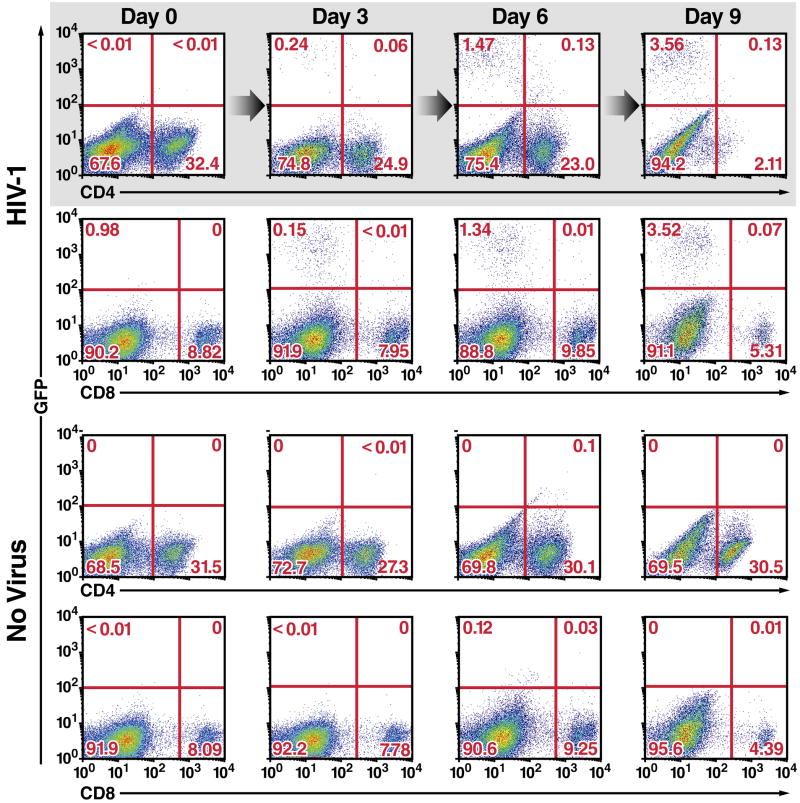
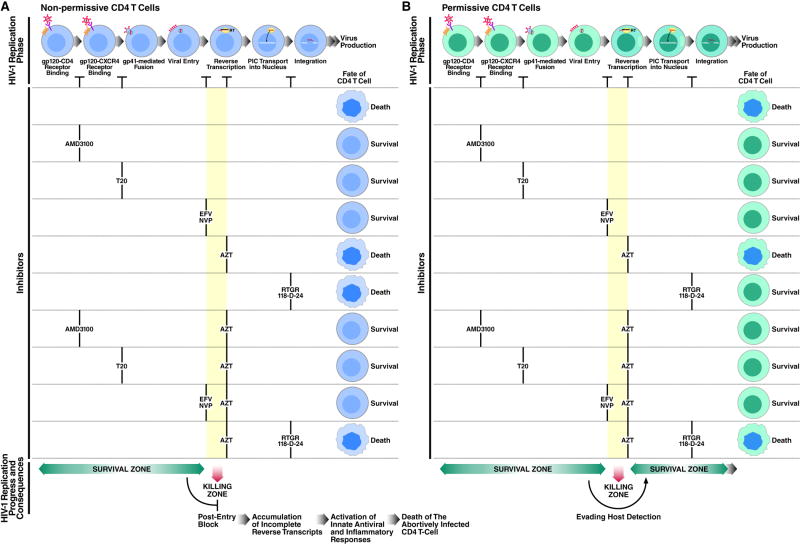
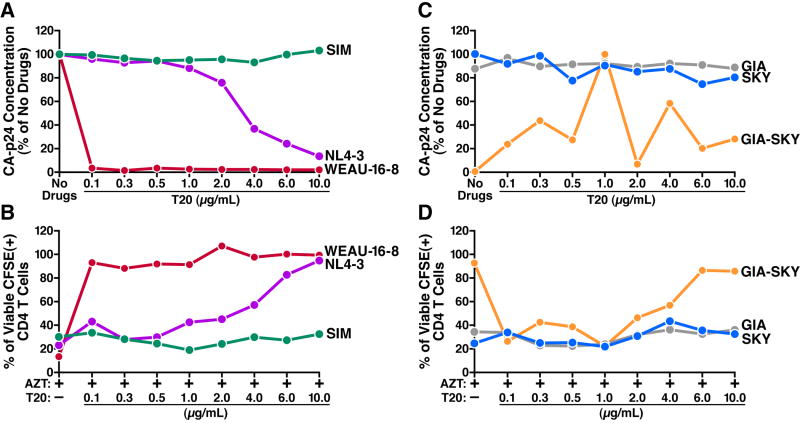
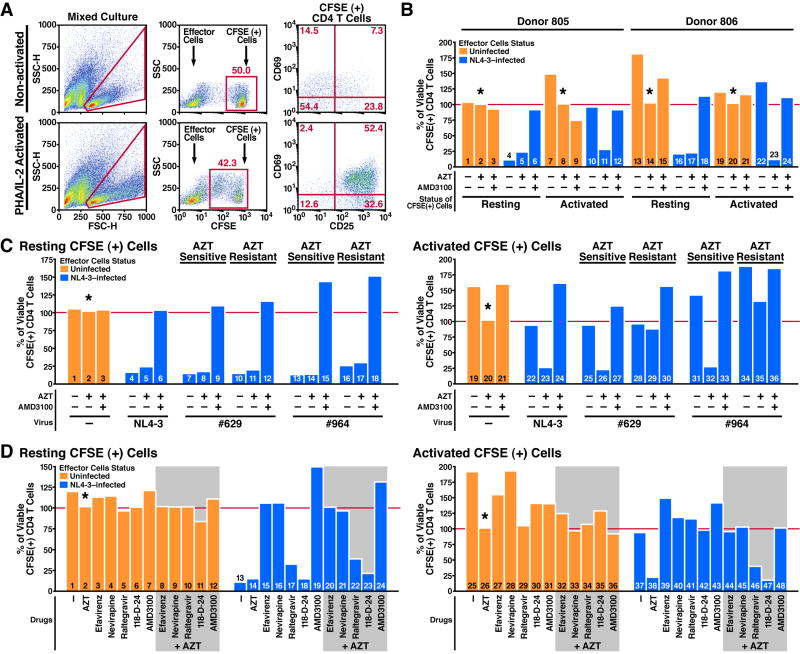
The mechanism by which CD4 T cells are depleted in HIV-infected hosts remains poorly understood. In ex vivo cultures of human tonsil tissue, CD4 T cells undergo a pronounced cytopathic response following HIV infection. Strikingly, >95% of these dying cells are not productively infected but instead correspond to bystander cells. We now show that the death of these "bystander" cells involves abortive HIV infection. Inhibitors blocking HIV entry or early steps of reverse transcription prevent CD4 T cell death while inhibition of later events in the viral life cycle does not. We demonstrate that the nonpermissive state exhibited by the majority of resting CD4 tonsil T cells leads to accumulation of incomplete reverse transcripts. These cytoplasmic nucleic acids activate a host defense program that elicits a coordinated proapoptotic and proinflammatory response involving caspase-3 and caspase-1 activation. While this response likely evolved to protect the host, it centrally contributes to the immunopathogenic effects of HIV.
HIV 感染宿主中 CD4 T 细胞耗竭的机制仍不清楚。在人类扁桃体组织的体外培养中,CD4 T 细胞在感染 HIV 后会发生明显的细胞病变反应。引人注目的是,>95%的死亡细胞没有被有效感染,而是对应旁观者细胞。我们现在表明,这些“旁观者”细胞的死亡涉及艾滋病毒感染的流产。阻断 HIV 进入或逆转录早期步骤的抑制剂可防止 CD4 T 细胞死亡,而抑制病毒生命周期的后期事件则不能。我们证明,大多数静止的 CD4 扁桃体 T 细胞表现出的非允许状态导致不完全逆转录本的积累。这些细胞质核酸激活了一种宿主防御程序,引发涉及半胱天冬酶-3 和半胱天冬酶-1 激活的协调的促凋亡和促炎反应。虽然这种反应可能是为了保护宿主而进化的,但它是 HIV 免疫病理效应的核心。