Song Xiaomu, Panych Lawrence P, Chen Nan-kuei
Department of Electrical Engineering, School of Engineering, Widener University, Kirkbride Hall, Room 369, One University Place, Chester, PA 19013, United States.
Department of Radiology, Brigham and Women's Hospital, Harvard Medical School, Boston, MA 02115, United States.
J Neurosci Methods. 2016 Jan 15;257:214-28. doi: 10.1016/j.jneumeth.2015.10.001. Epub 2015 Oct 16.
Reliable mapping of brain function across sessions and/or subjects in task- and resting-state has been a critical challenge for quantitative fMRI studies although it has been intensively addressed in the past decades.
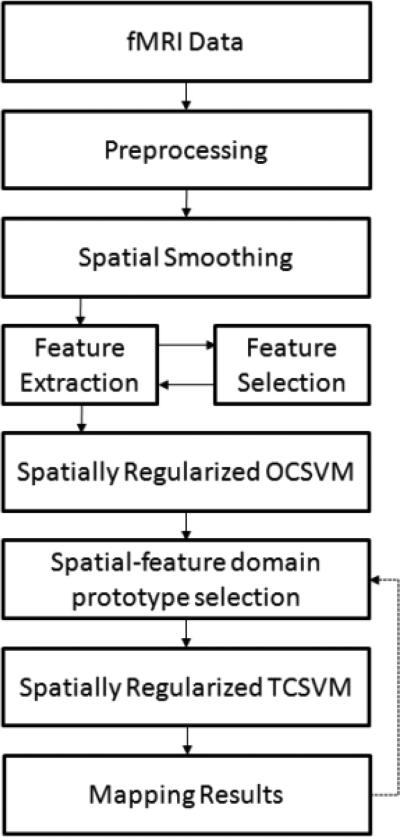
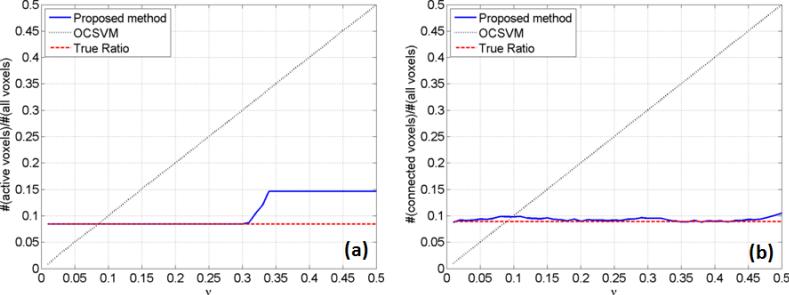
A spatially regularized support vector machine (SVM) technique was developed for the reliable brain mapping in task- and resting-state. Unlike most existing SVM-based brain mapping techniques, which implement supervised classifications of specific brain functional states or disorders, the proposed method performs a semi-supervised classification for the general brain function mapping where spatial correlation of fMRI is integrated into the SVM learning. The method can adapt to intra- and inter-subject variations induced by fMRI nonstationarity, and identify a true boundary between active and inactive voxels, or between functionally connected and unconnected voxels in a feature space.
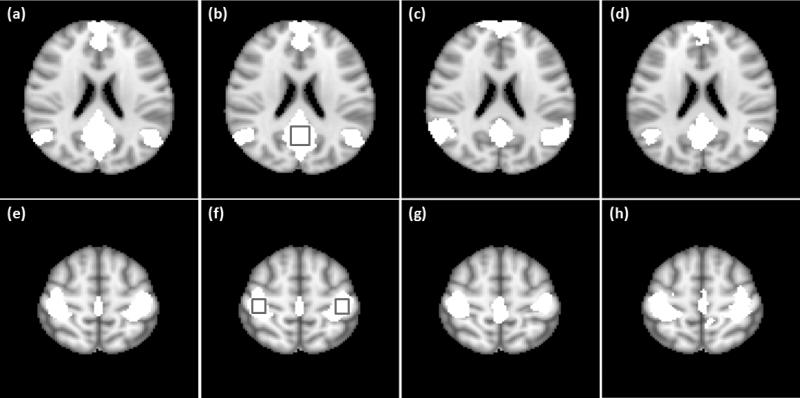
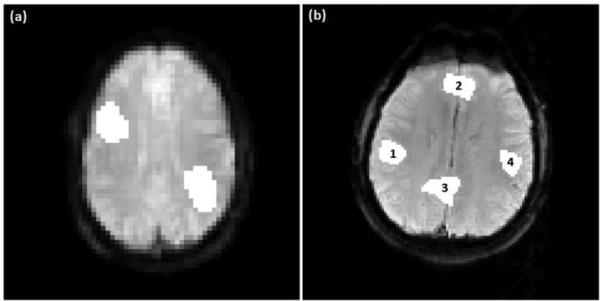
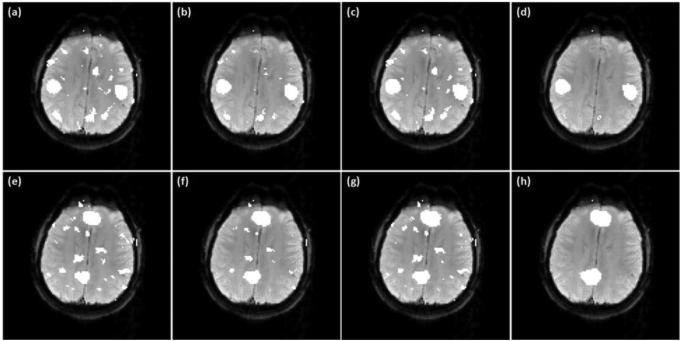
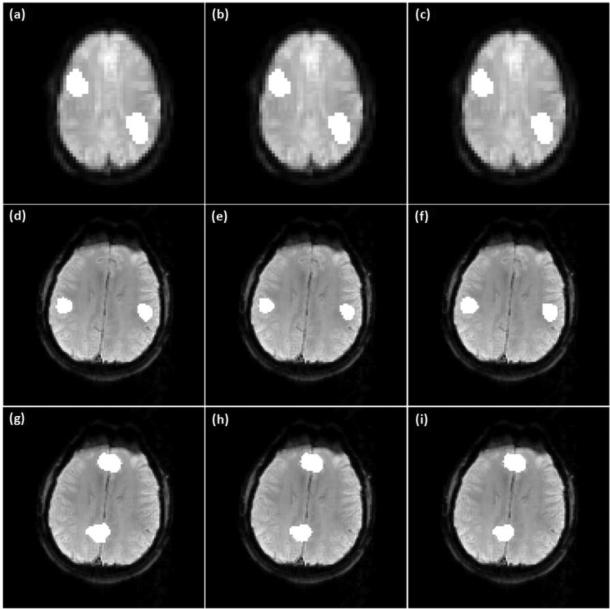
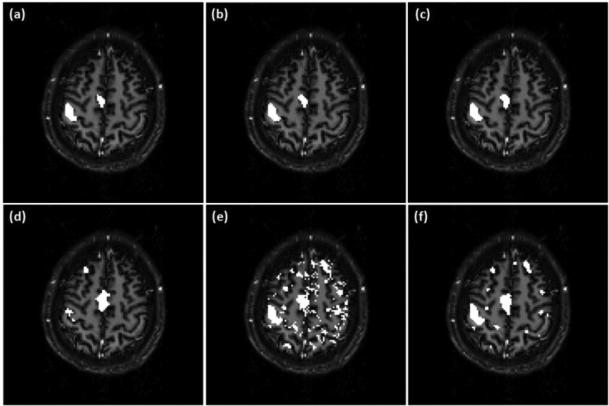
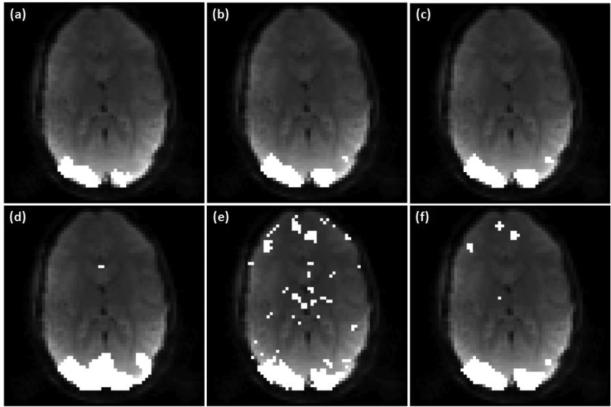
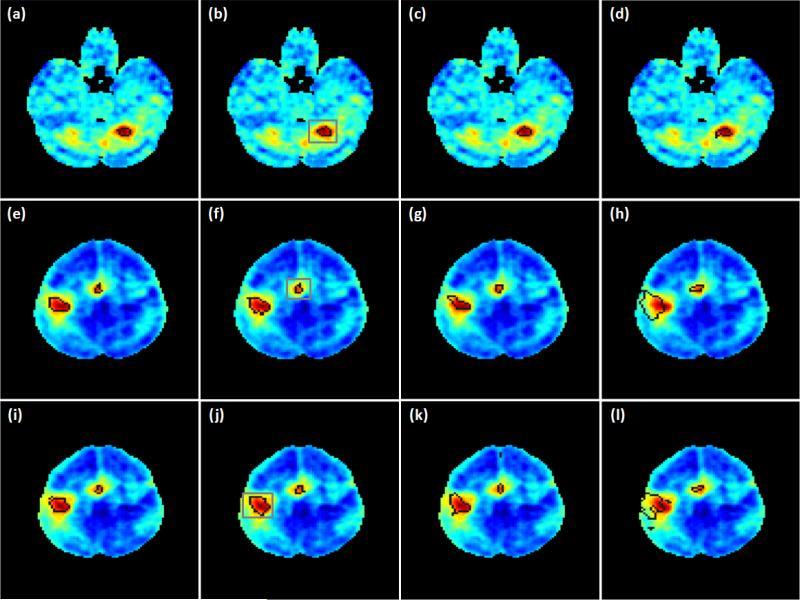
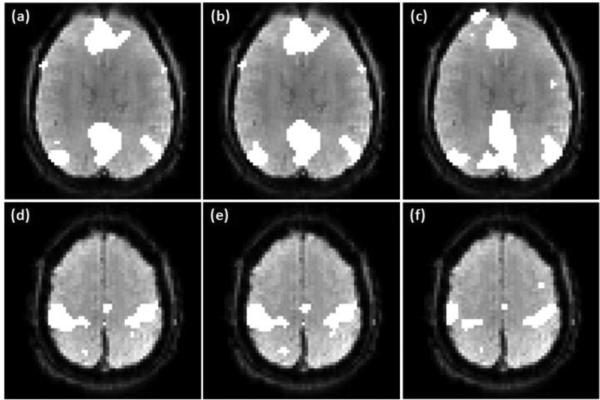
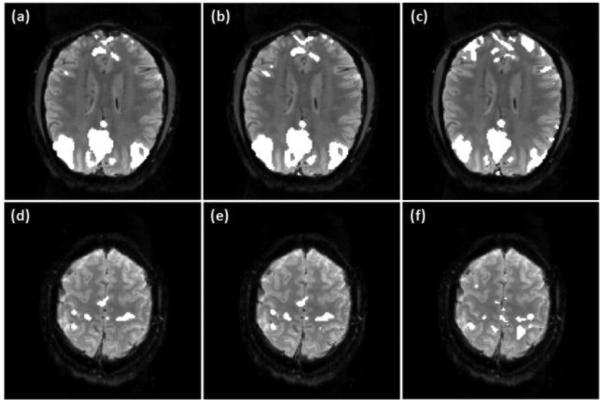
The method was evaluated using synthetic and experimental data at the individual and group level. Multiple features were evaluated in terms of their contributions to the spatially regularized SVM learning. Reliable mapping results in both task- and resting-state were obtained from individual subjects and at the group level.
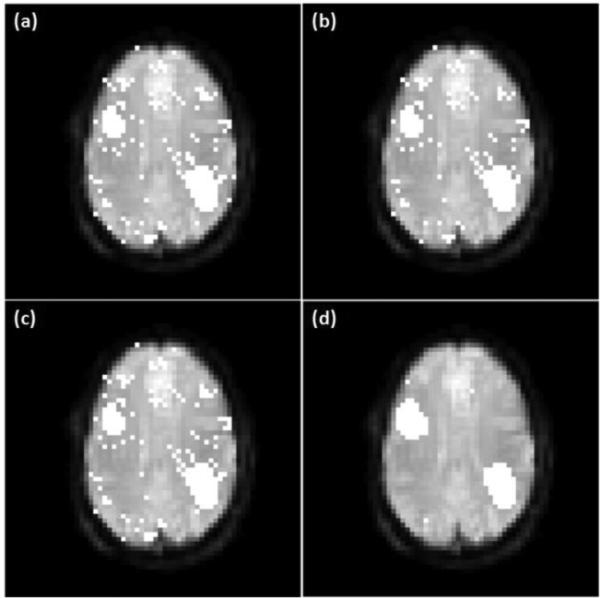
A comparison study was performed with independent component analysis, general linear model, and correlation analysis methods. Experimental results indicate that the proposed method can provide a better or comparable mapping performance at the individual and group level.
The proposed method can provide accurate and reliable mapping of brain function in task- and resting-state, and is applicable to a variety of quantitative fMRI studies.
在任务态和静息态下跨会话和/或受试者可靠地绘制脑功能图,一直是定量功能磁共振成像(fMRI)研究面临的一项重大挑战,尽管在过去几十年中已对此进行了深入研究。
开发了一种空间正则化支持向量机(SVM)技术,用于在任务态和静息态下进行可靠的脑图谱绘制。与大多数现有的基于SVM的脑图谱技术不同,后者实现对特定脑功能状态或疾病的监督分类,而本文提出的方法对一般脑功能图谱进行半监督分类,将fMRI的空间相关性整合到SVM学习中。该方法能够适应由fMRI非平稳性引起的个体内和个体间差异,并在特征空间中识别激活与未激活体素之间,或功能连接与未连接体素之间的真实边界。
在个体和群体水平上使用合成数据和实验数据对该方法进行了评估。从多个特征对空间正则化SVM学习的贡献方面进行了评估。在个体受试者和群体水平上均获得了任务态和静息态下可靠的图谱绘制结果。
与独立成分分析、一般线性模型和相关分析方法进行了比较研究。实验结果表明,本文提出的方法在个体和群体水平上能够提供更好的或相当的图谱绘制性能。
本文提出的方法能够在任务态和静息态下提供准确可靠的脑功能图谱,适用于各种定量fMRI研究。