Monastyrskyy Bohdan, D'Andrea Daniel, Fidelis Krzysztof, Tramontano Anna, Kryshtafovych Andriy
Genome Center, University of California, Davis, California, 95616.
Department of Physics, Sapienza-University of Rome, Rome, 00185, Italy.
Proteins. 2016 Sep;84 Suppl 1(Suppl 1):131-44. doi: 10.1002/prot.24943. Epub 2015 Nov 17.
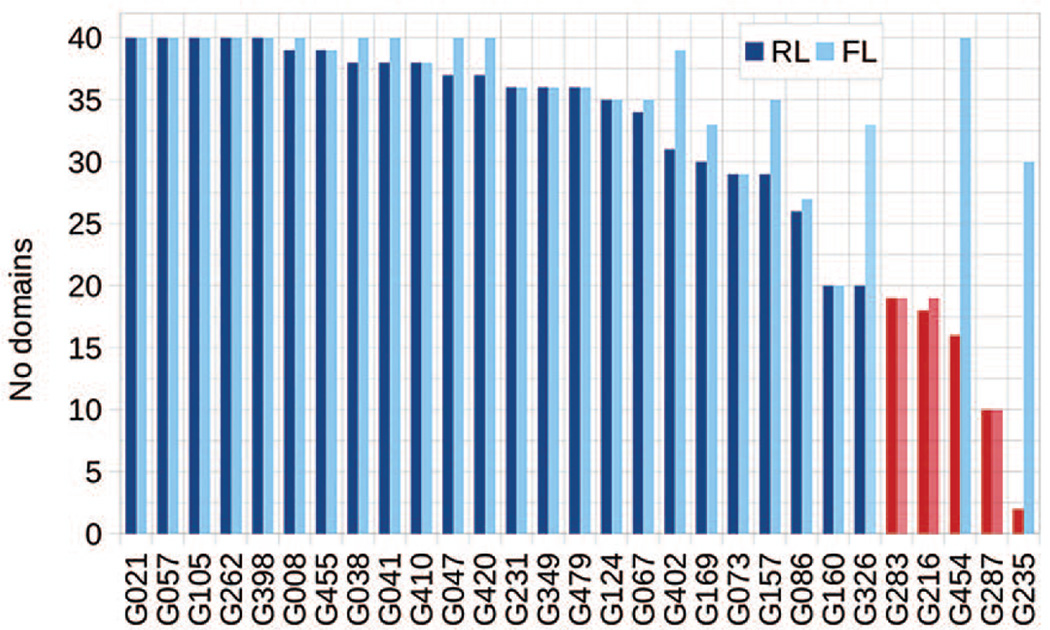
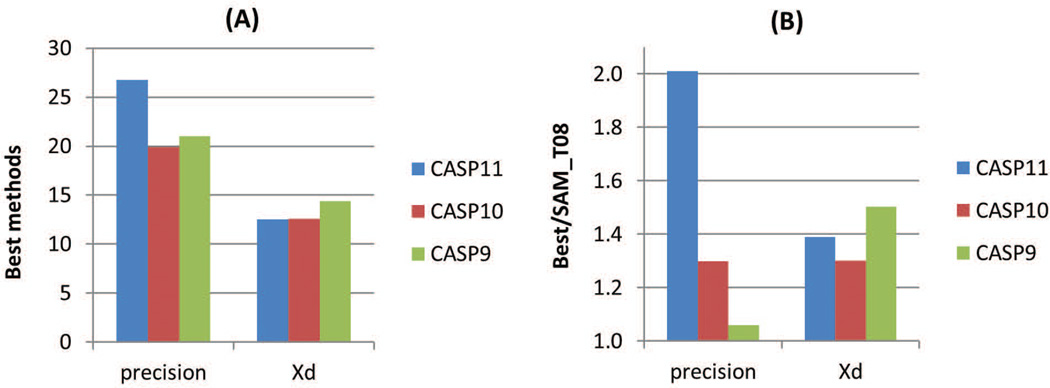
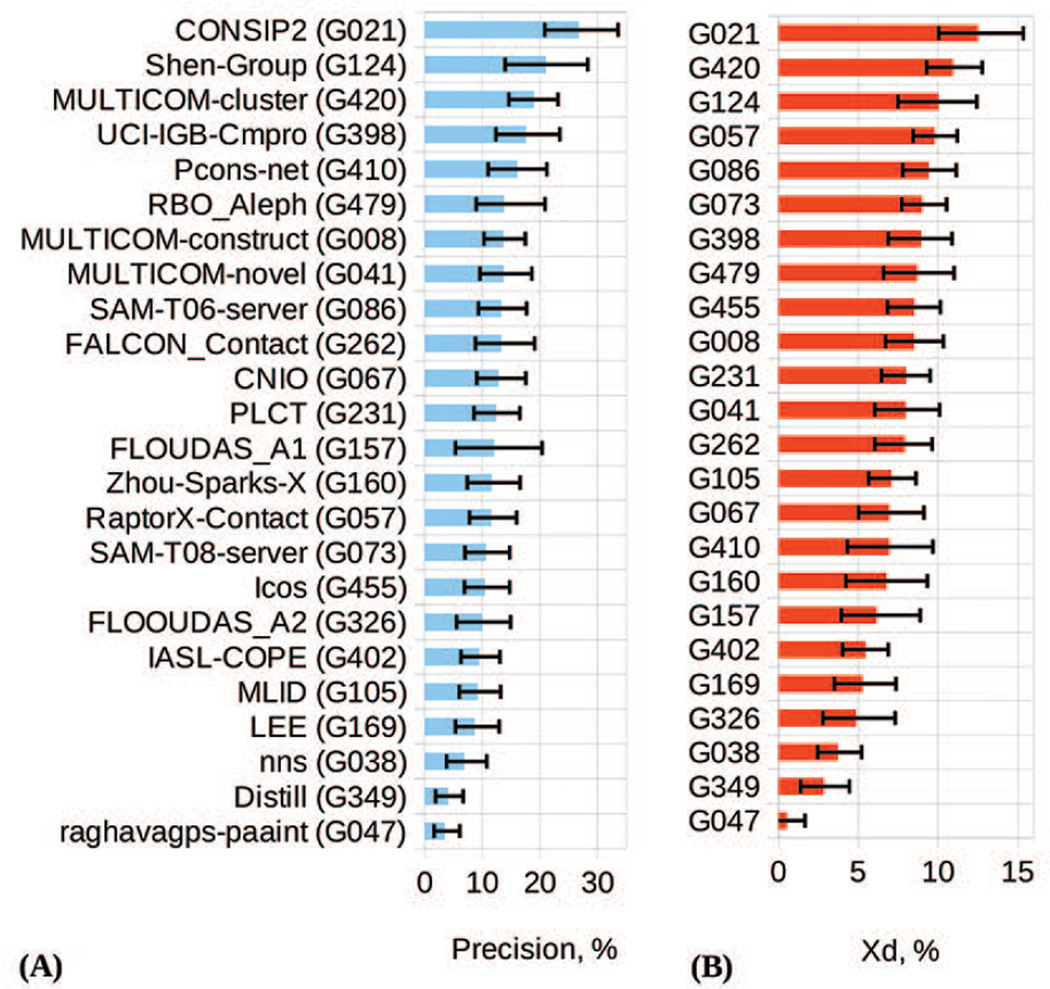
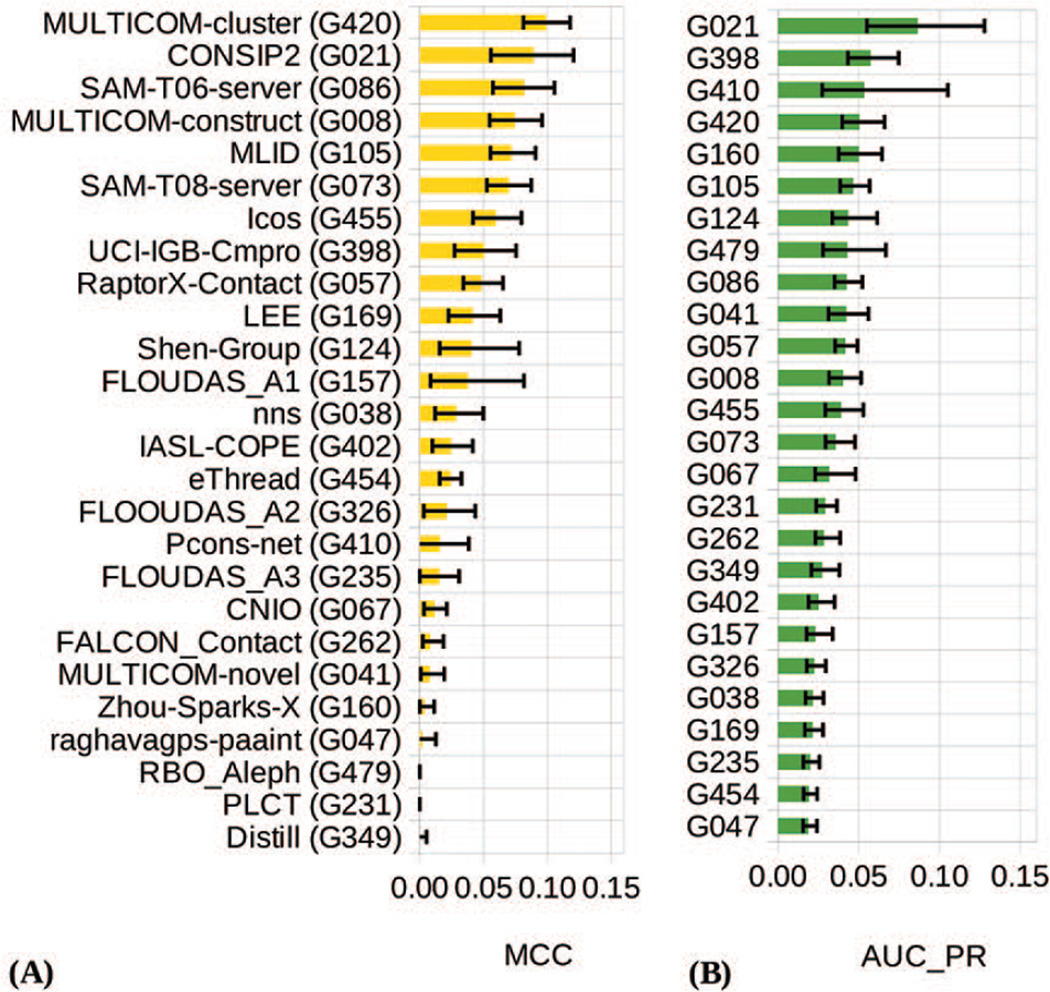
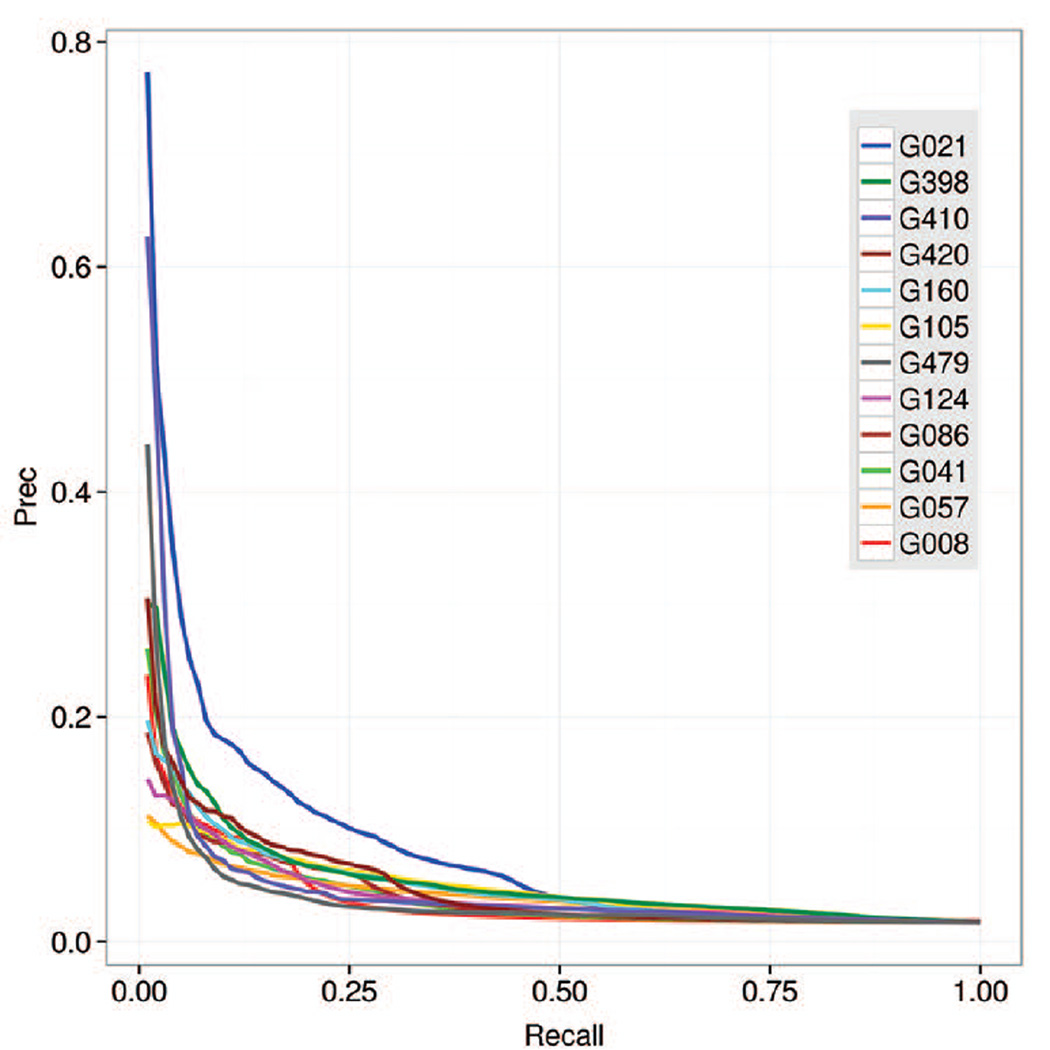
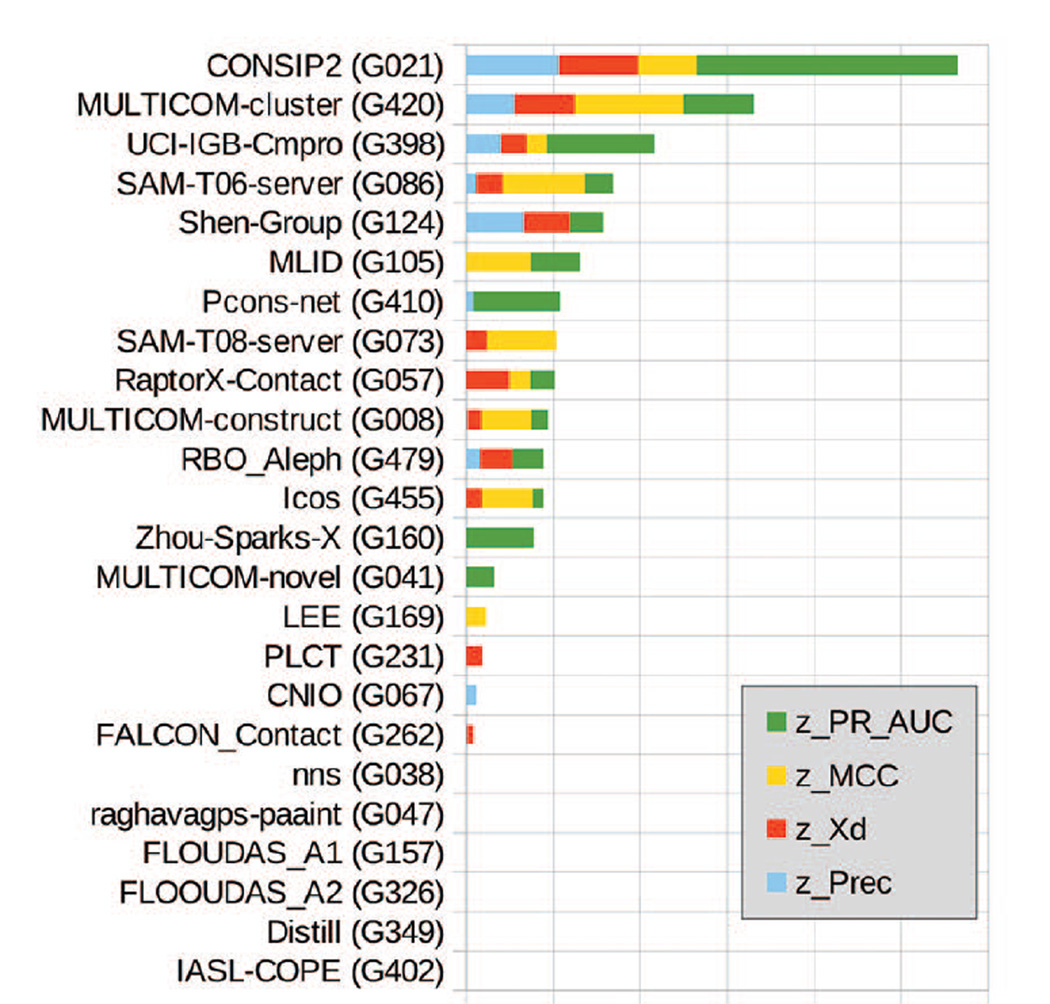
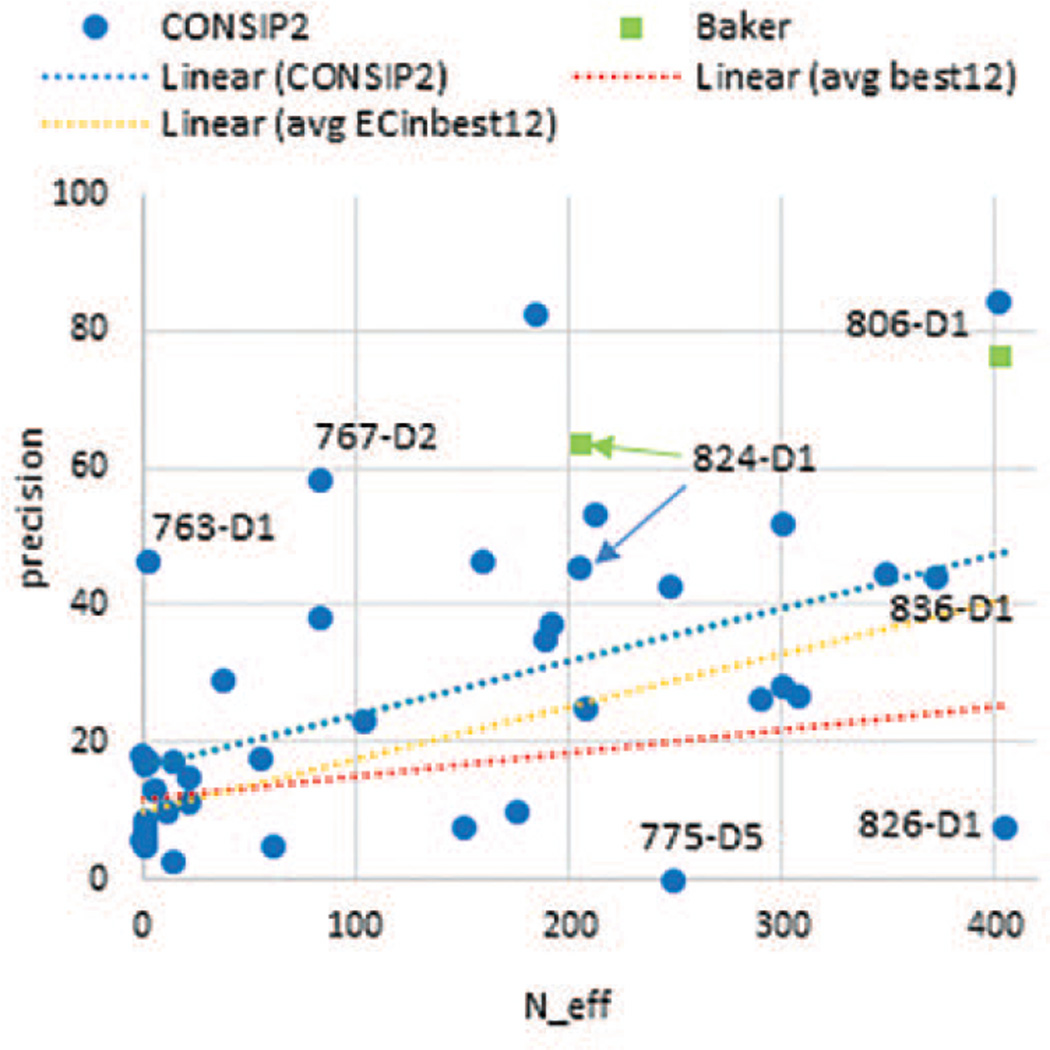
This article provides a report on the state-of-the-art in the prediction of intra-molecular residue-residue contacts in proteins based on the assessment of the predictions submitted to the CASP11 experiment. The assessment emphasis is placed on the accuracy in predicting long-range contacts. Twenty-nine groups participated in contact prediction in CASP11. At least eight of them used the recently developed evolutionary coupling techniques, with the top group (CONSIP2) reaching precision of 27% on target proteins that could not be modeled by homology. This result indicates a breakthrough in the development of methods based on the correlated mutation approach. Successful prediction of contacts was shown to be practically helpful in modeling three-dimensional structures; in particular target T0806 was modeled exceedingly well with accuracy not yet seen for ab initio targets of this size (>250 residues). Proteins 2016; 84(Suppl 1):131-144. © 2015 Wiley Periodicals, Inc.
本文基于对提交至CASP11实验的预测结果的评估,报告了蛋白质分子内残基-残基接触预测的最新进展。评估重点在于预测长程接触的准确性。29个团队参与了CASP11中的接触预测。其中至少8个团队使用了最近开发的进化耦合技术,顶尖团队(CONSIP2)对无法通过同源建模的目标蛋白质的预测精度达到了27%。这一结果表明基于相关突变方法的方法开发取得了突破。接触的成功预测在三维结构建模中显示出实际帮助;特别是对目标T0806的建模非常出色,对于这种大小(>250个残基)的从头预测目标,其准确性前所未见。《蛋白质》2016年;84(增刊1):131 - 144。© 2015威利期刊公司。