Lasek-Nesselquist Erica, Wisecaver Jennifer H, Hackett Jeremiah D, Johnson Matthew D
University of Scranton, 800 Linden St., Scranton, PA, 18510, USA.
Vanderbilt University, VU Station B 351364, Nashville, TN, 37235, USA.
BMC Genomics. 2015 Oct 16;16:805. doi: 10.1186/s12864-015-2052-9.
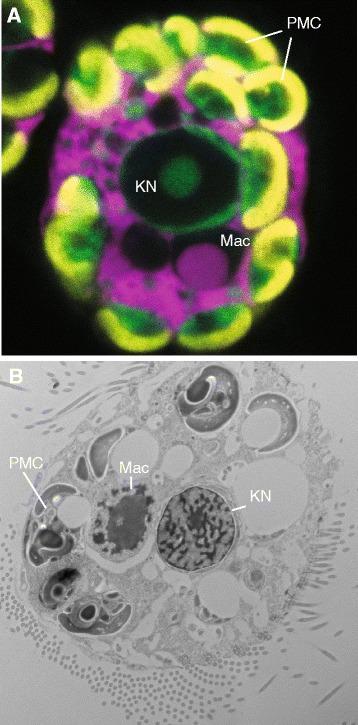
Organelle retention is a form of mixotrophy that allows organisms to reap metabolic benefits similar to those of photoautotrophs through capture of algal prey and sequestration of their plastids. Mesodinium rubrum is an abundant and broadly distributed photosynthetic marine ciliate that steals organelles from cryptophyte algae, such as Geminigera cryophila. M. rubrum is unique from most other acquired phototrophs because it also steals a functional nucleus that facilitates genetic control of sequestered plastids and other organelles. We analyzed changes in G. cryophila nuclear gene expression and transcript abundance after its incorporation into the cellular architecture of M. rubrum as an initial step towards understanding this complex system.
We compared Illumina-generated transcriptomes of the cryptophyte Geminigera cryophila as a free-living cell and as a sequestered nucleus in M. rubrum to identify changes in protein abundance and gene expression. After KEGG annotation, proteins were clustered by functional categories, which were evaluated for over- or under-representation in the sequestered nucleus. Similarly, coding sequences were grouped by KEGG categories/pathways, which were then evaluated for over- or under-expression via read count strategies.
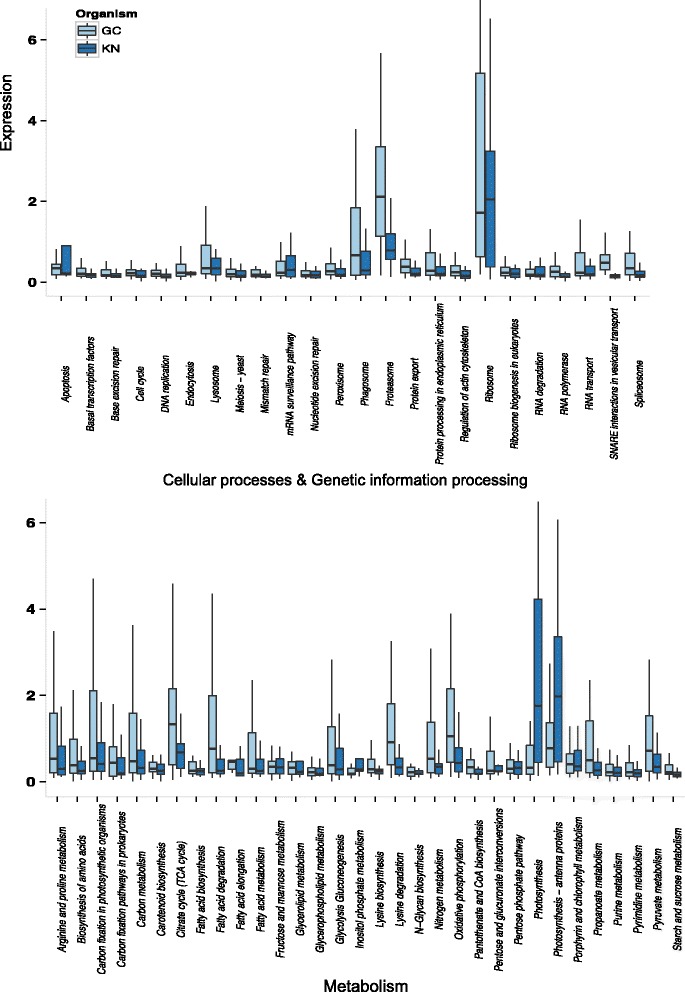
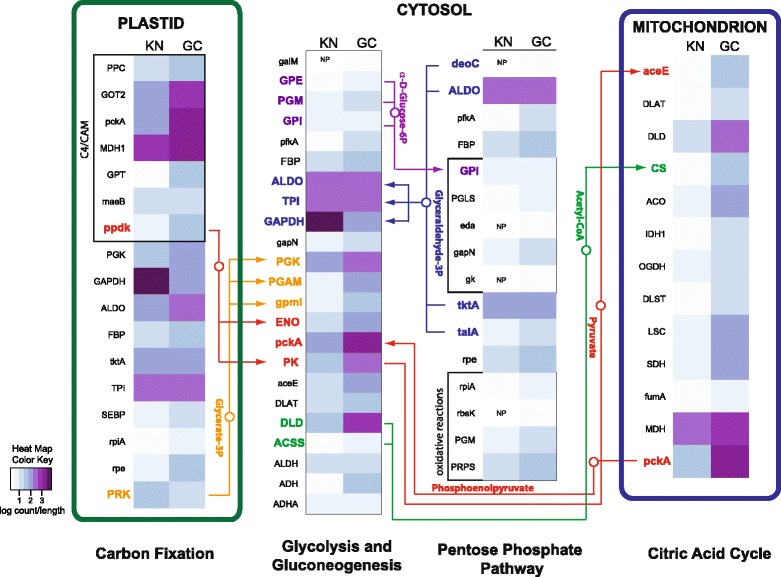
At the time of sampling, the global transcriptome of M. rubrum was dominated (~58-62 %) by transcription from its stolen nucleus. A comparison of transcriptomes from free-living G. cryophila cells to those of the sequestered nucleus revealed a decrease in gene expression and transcript abundance for most functional protein categories within the ciliate. However, genes coding for proteins involved in photosynthesis, oxidative stress reduction, and several other metabolic pathways revealed striking exceptions to this general decline.
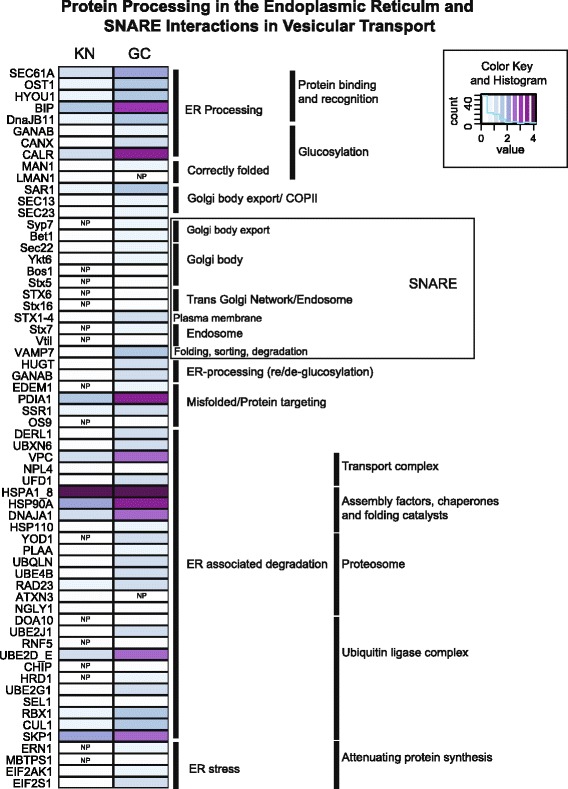
Major changes in G. cryophila transcript expression after sequestration by M. rubrum and the ciliate's success as a photoautotroph imply some level of control or gene regulation by the ciliate and at the very least reflect a degree of coordination between host and foreign organelles. Intriguingly, cryptophyte genes involved in protein transport are significantly under-expressed in M. rubrum, implicating a role for the ciliate's endomembrane system in targeting cryptophyte proteins to plastid complexes. Collectively, this initial portrait of an acquired transcriptome within a dynamic and ecologically successful ciliate highlights the remarkable cellular and metabolic chimerism of this system.
细胞器保留是一种混合营养形式,使生物体能够通过捕获藻类猎物并隔离其质体来获得与光合自养生物类似的代谢益处。红色中缢虫是一种分布广泛且数量丰富的光合海洋纤毛虫,它从隐藻(如嗜冷双生藻)中窃取细胞器。红色中缢虫与大多数其他获得性光合生物不同,因为它还窃取了一个功能性细胞核,该细胞核有助于对隔离的质体和其他细胞器进行基因控制。作为理解这个复杂系统的第一步,我们分析了嗜冷双生藻被整合到红色中缢虫细胞结构后其核基因表达和转录本丰度的变化。
我们比较了Illumina测序生成的嗜冷双生藻作为自由生活细胞和作为红色中缢虫中隔离细胞核的转录组,以确定蛋白质丰度和基因表达的变化。经过KEGG注释后,蛋白质按功能类别聚类,并评估其在隔离细胞核中的丰度过高或过低情况。同样,编码序列按KEGG类别/途径分组,然后通过读取计数策略评估其表达过高或过低情况。
在采样时,红色中缢虫的整体转录组约58 - 62%由其窃取的细胞核转录主导。对自由生活的嗜冷双生藻细胞与隔离细胞核的转录组进行比较发现,纤毛虫内大多数功能蛋白类别的基因表达和转录本丰度都有所下降。然而,编码参与光合作用、氧化应激减轻及其他几种代谢途径的蛋白质的基因却明显有别于这种普遍下降趋势。
嗜冷双生藻被红色中缢虫隔离后转录表达的主要变化以及纤毛虫作为光合自养生物的成功意味着纤毛虫存在一定程度的控制或基因调控,至少反映了宿主与外来细胞器之间的某种协调程度。有趣的是,参与蛋白质转运的隐藻基因在红色中缢虫中显著低表达,这表明纤毛虫的内膜系统在将隐藻蛋白靶向质体复合体中发挥了作用。总体而言,这个动态且在生态上成功的纤毛虫中获得性转录组的初步描绘突出了该系统显著的细胞和代谢嵌合现象。