Heye Anna K, Thrippleton Michael J, Armitage Paul A, Valdés Hernández Maria Del C, Makin Stephen D, Glatz Andreas, Sakka Eleni, Wardlaw Joanna M
Neuroimaging Sciences, University of Edinburgh, Chancellors Building, 49 Little France Crescent, Edinburgh EH16 4SB, UK.
Neuroimaging Sciences, University of Edinburgh, Chancellors Building, 49 Little France Crescent, Edinburgh EH16 4SB, UK; Department of Cardiovascular Science, University of Sheffield, Medical School, Beech Hill Road, Sheffield S10 2RX UK.
Neuroimage. 2016 Jan 15;125:446-455. doi: 10.1016/j.neuroimage.2015.10.018. Epub 2015 Oct 20.
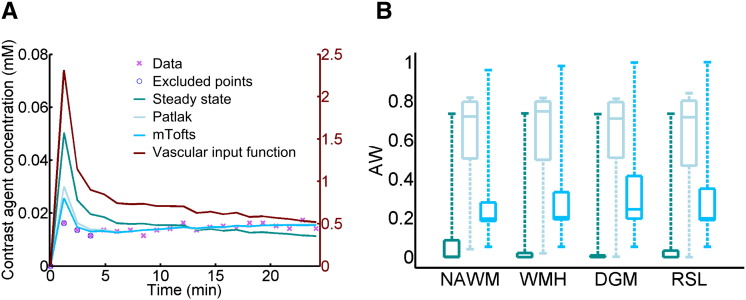
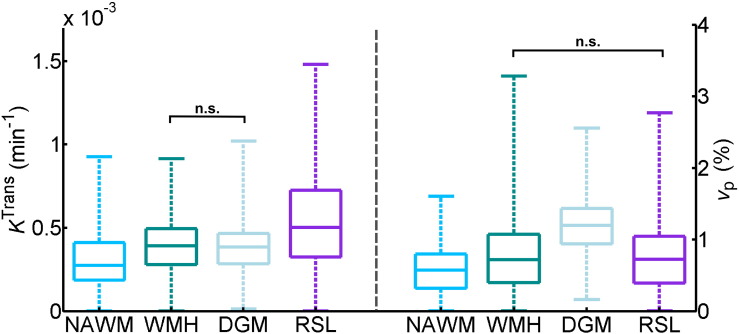
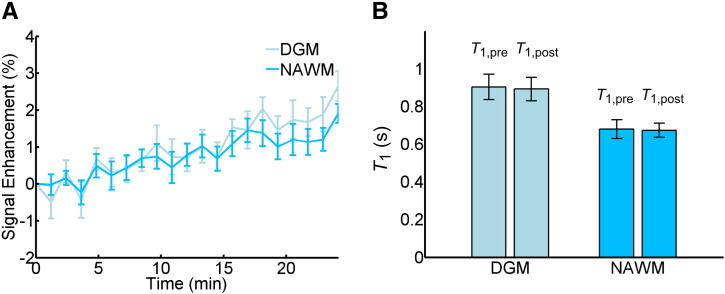
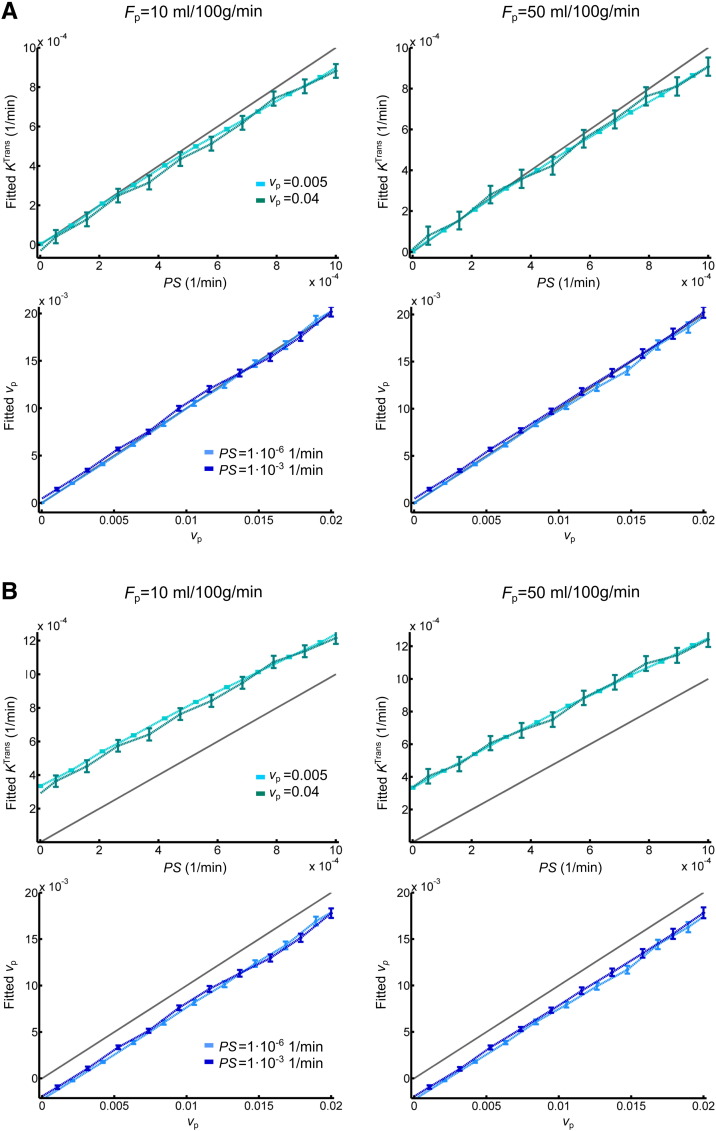
There is evidence that subtle breakdown of the blood-brain barrier (BBB) is a pathophysiological component of several diseases, including cerebral small vessel disease and some dementias. Dynamic contrast-enhanced MRI (DCE-MRI) combined with tracer kinetic modelling is widely used for assessing permeability and perfusion in brain tumours and body tissues where contrast agents readily accumulate in the extracellular space. However, in diseases where leakage is subtle, the optimal approach for measuring BBB integrity is likely to differ since the magnitude and rate of enhancement caused by leakage are extremely low; several methods have been reported in the literature, yielding a wide range of parameters even in healthy subjects. We hypothesised that the Patlak model is a suitable approach for measuring low-level BBB permeability with low temporal resolution and high spatial resolution and brain coverage, and that normal levels of scanner instability would influence permeability measurements. DCE-MRI was performed in a cohort of mild stroke patients (n=201) with a range of cerebral small vessel disease severity. We fitted these data to a set of nested tracer kinetic models, ranking their performance according to the Akaike information criterion. To assess the influence of scanner drift, we scanned 15 healthy volunteers that underwent a "sham" DCE-MRI procedure without administration of contrast agent. Numerical simulations were performed to investigate model validity and the effect of scanner drift. The Patlak model was found to be most appropriate for fitting low-permeability data, and the simulations showed vp and K(Trans) estimates to be reasonably robust to the model assumptions. However, signal drift (measured at approximately 0.1% per minute and comparable to literature reports in other settings) led to systematic errors in calculated tracer kinetic parameters, particularly at low permeabilities. Our findings justify the growing use of the Patlak model in low-permeability states, which has the potential to provide valuable information regarding BBB integrity in a range of diseases. However, absolute values of the resulting tracer kinetic parameters should be interpreted with extreme caution, and the size and influence of signal drift should be measured where possible.
有证据表明,血脑屏障(BBB)的细微破坏是包括脑小血管疾病和某些痴呆症在内的几种疾病的病理生理组成部分。动态对比增强磁共振成像(DCE-MRI)结合示踪剂动力学建模被广泛用于评估脑肿瘤和身体组织中的通透性和灌注,在这些组织中造影剂容易在细胞外间隙积聚。然而,在渗漏细微的疾病中,测量血脑屏障完整性的最佳方法可能会有所不同,因为渗漏引起的增强幅度和速率极低;文献中报道了几种方法,即使在健康受试者中也产生了广泛的参数。我们假设Patlak模型是一种适用于以低时间分辨率、高空间分辨率和全脑覆盖来测量低水平血脑屏障通透性的方法,并且正常水平的扫描仪不稳定性会影响通透性测量。对一组患有不同严重程度脑小血管疾病的轻度中风患者(n = 201)进行了DCE-MRI检查。我们将这些数据拟合到一组嵌套的示踪剂动力学模型中,并根据赤池信息准则对它们的性能进行排名。为了评估扫描仪漂移的影响,我们扫描了15名健康志愿者,他们接受了不注射造影剂的“假”DCE-MRI检查。进行了数值模拟以研究模型的有效性和扫描仪漂移的影响。发现Patlak模型最适合拟合低通透性数据,模拟结果表明vp和K(Trans)估计值对模型假设具有合理的稳健性。然而,信号漂移(每分钟约0.1%,与其他情况下的文献报道相当)导致计算出的示踪剂动力学参数出现系统误差,尤其是在低通透性时。我们的研究结果证明了Patlak模型在低通透性状态下越来越多的应用是合理的,它有可能为一系列疾病中的血脑屏障完整性提供有价值的信息。然而,所得示踪剂动力学参数的绝对值应极其谨慎地解释,并且应尽可能测量信号漂移的大小和影响。