Henriques Alexandre, Kastner Stefan, Wafzig Oliver, Gonzalez De Aguilar Jose-Luis, Schneider Armin
INSERM, U1118, Mécanismes Centraux et Péripheriques de la Neurodégénérescence, Strasbourg, France ; UMRS1118, Fédération de Médecine Translationnelle de Strasbourg, Université de Strasbourg, France.
Sygnis Bioscience GmbH & Co KG, Im Neuenheimer Feld 515, 69120 Heidelberg, Germany.
Genom Data. 2015 Feb 28;4:47-9. doi: 10.1016/j.gdata.2015.02.003. eCollection 2015 Jun.
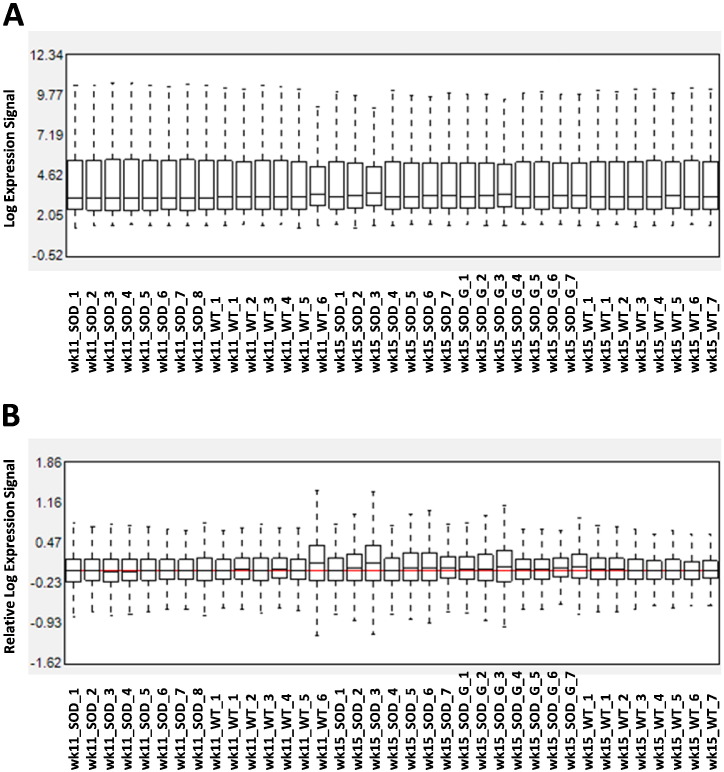
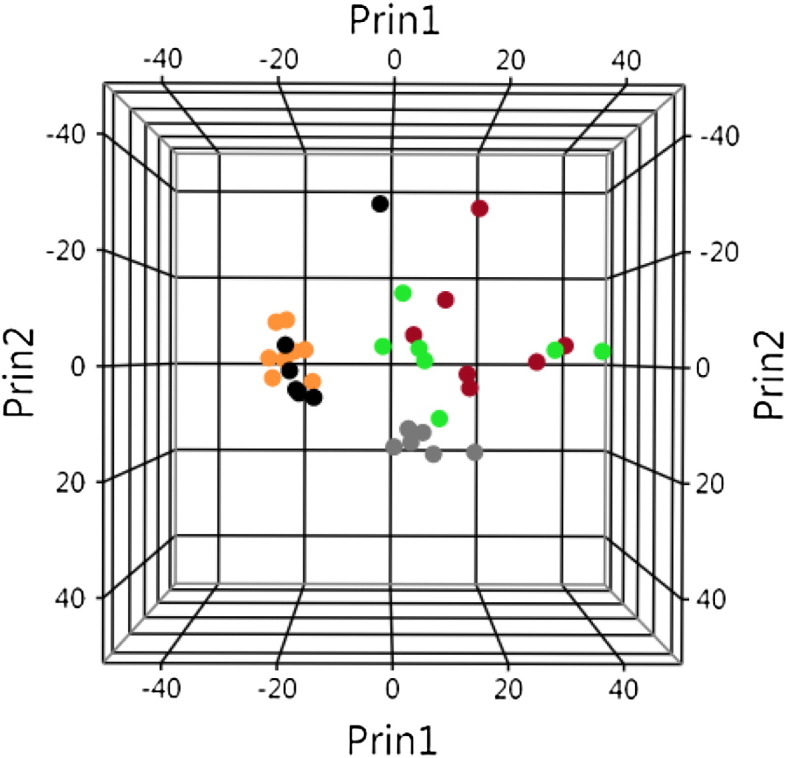
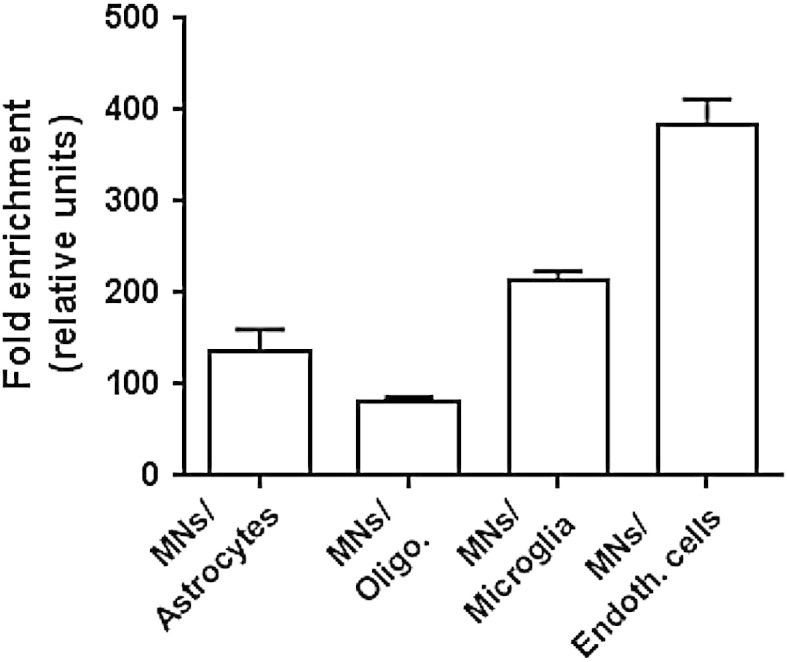
Granulocyte-colony stimulating factor (G-CSF) has been recently identified as a neurotrophic factor able to preserve motor functions, rescue motor units and extent survival in an animal model of amyotrophic lateral sclerosis, the SOD1 G93A mice. To gain insight into the mode of action of G-CSF, we have recently performed gene expression profiling on isolated lumbar motoneurons from SOD1G93A mice, and shown that G-CSF re-adjusted gene expression in motoneurons of symptomatic SOD1G93A mice and modulates genes related to neuromuscular function (Henriques et al., 2015). Here, we provide quality controls for the microarray experiment (GO accession number GSE60856) and describe the experimental strategy.
粒细胞集落刺激因子(G-CSF)最近被鉴定为一种神经营养因子,在肌萎缩侧索硬化症动物模型SOD1 G93A小鼠中,它能够保留运动功能、挽救运动单位并延长生存期。为深入了解G-CSF的作用模式,我们最近对从SOD1G93A小鼠分离出的腰段运动神经元进行了基因表达谱分析,并表明G-CSF可重新调整有症状的SOD1G93A小鼠运动神经元中的基因表达,并调节与神经肌肉功能相关的基因(Henriques等人,2015年)。在此,我们提供了微阵列实验的质量控制(GO登录号GSE60856)并描述了实验策略。