Nowosad Jakub
Institute of Geoecology and Geoinformation, Adam Mickiewicz University, Dzięgielowa 27, 61-680, Poznań, Poland.
Int J Biometeorol. 2016 Jun;60(6):843-55. doi: 10.1007/s00484-015-1077-8. Epub 2015 Oct 21.
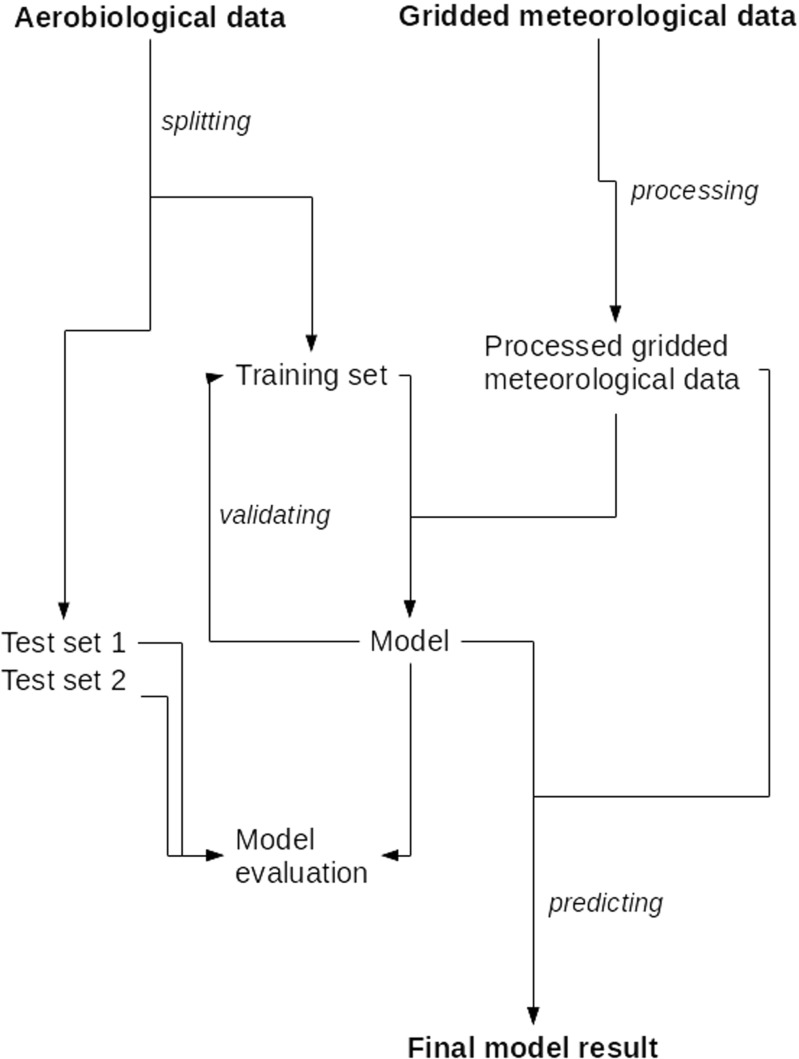
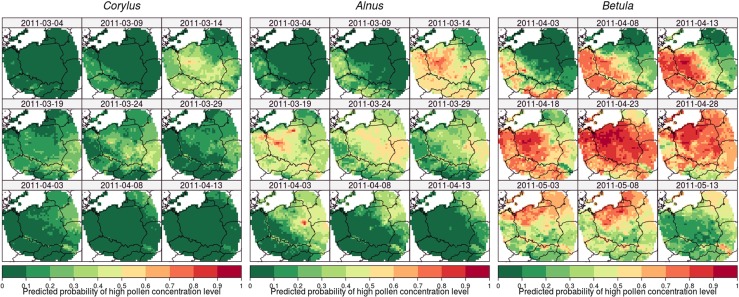
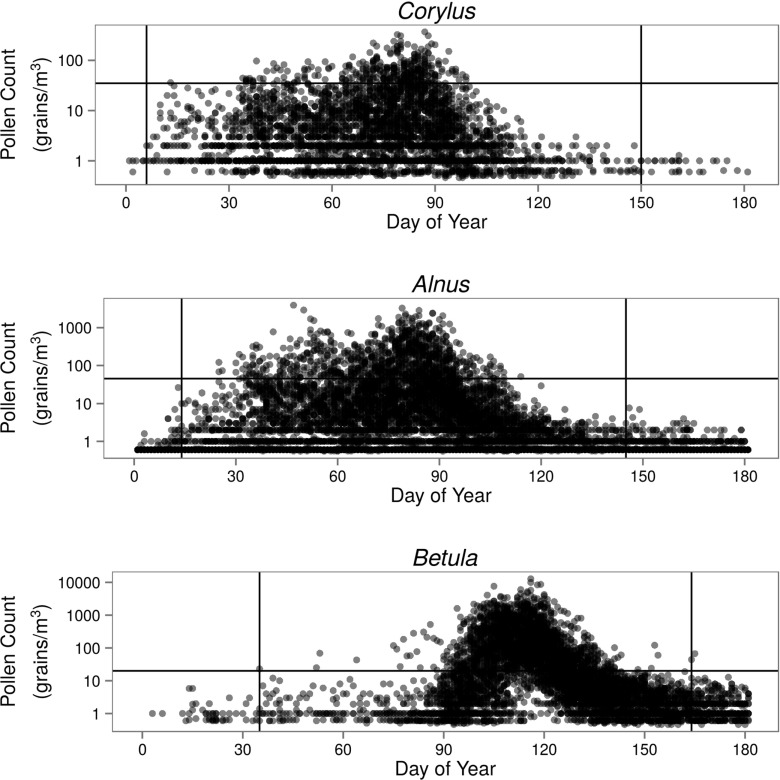
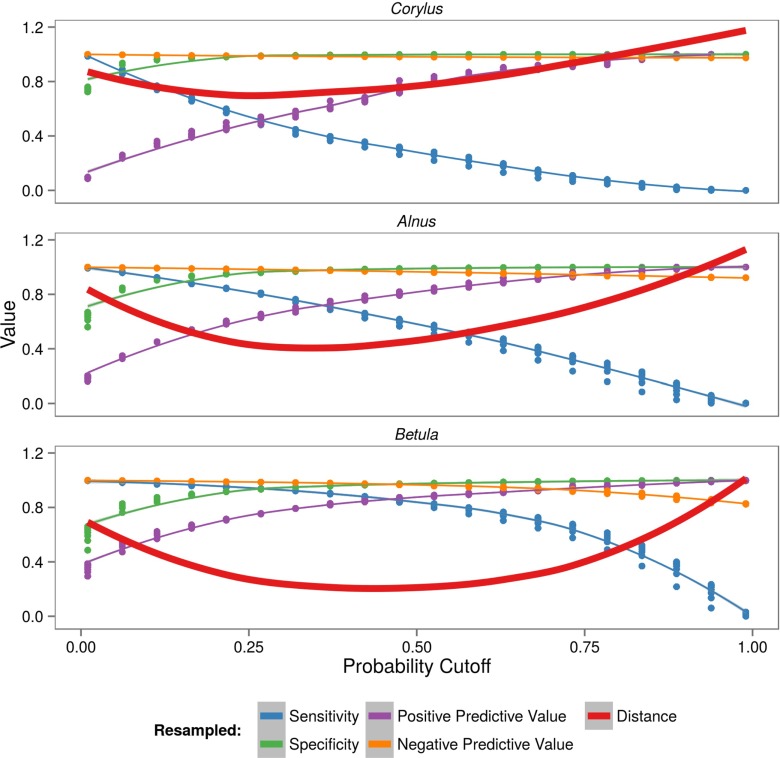
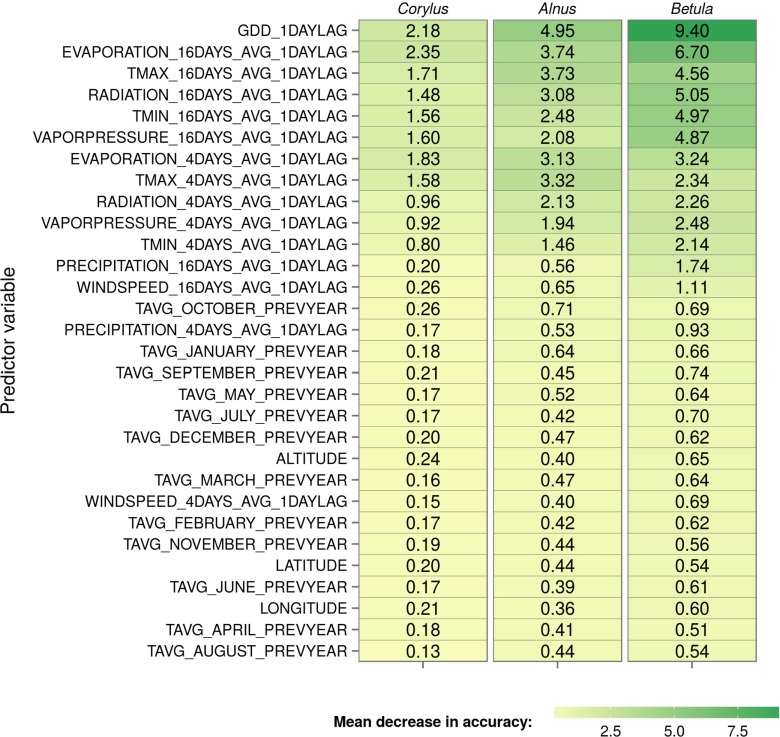
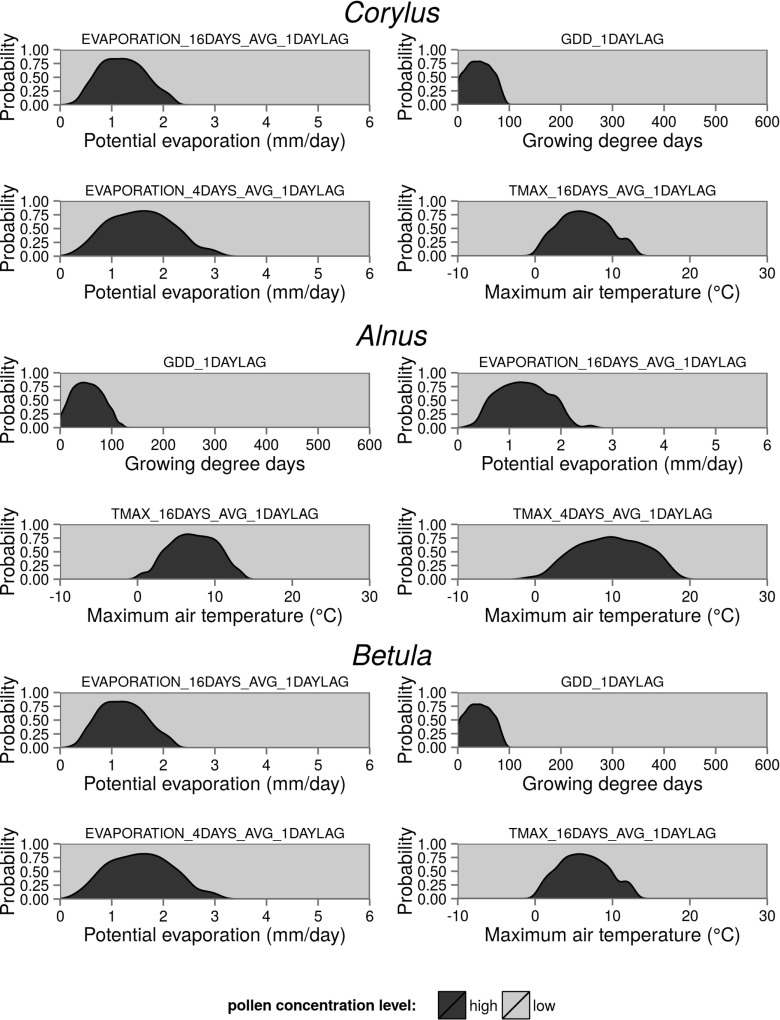
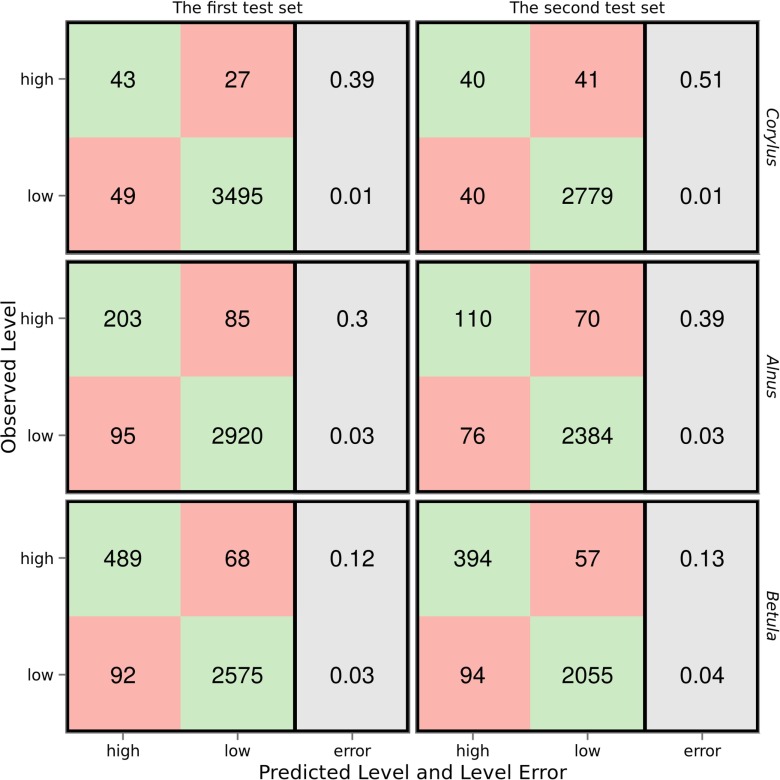
Corylus, Alnus, and Betula trees are among the most important sources of allergic pollen in the temperate zone of the Northern Hemisphere and have a large impact on the quality of life and productivity of allergy sufferers. Therefore, it is important to predict high pollen concentrations, both in time and space. The aim of this study was to create and evaluate spatiotemporal models for predicting high Corylus, Alnus, and Betula pollen concentration levels, based on gridded meteorological data. Aerobiological monitoring was carried out in 11 cities in Poland and gathered, depending on the site, between 2 and 16 years of measurements. According to the first allergy symptoms during exposure, a high pollen count level was established for each taxon. An optimizing probability threshold technique was used for mitigation of the problem of imbalance in the pollen concentration levels. For each taxon, the model was built using a random forest method. The study revealed the possibility of moderately reliable prediction of Corylus and highly reliable prediction of Alnus and Betula high pollen concentration levels, using preprocessed gridded meteorological data. Cumulative growing degree days and potential evaporation proved to be two of the most important predictor variables in the models. The final models predicted not only for single locations but also for continuous areas. Furthermore, the proposed modeling framework could be used to predict high pollen concentrations of Corylus, Alnus, Betula, and other taxa, and in other countries.
榛树、桤木和桦树是北半球温带地区过敏性花粉的最重要来源之一,对过敏患者的生活质量和生产力有很大影响。因此,及时准确地预测高花粉浓度非常重要。本研究的目的是基于网格化气象数据创建和评估用于预测榛树、桤木和桦树高花粉浓度水平的时空模型。在波兰的11个城市进行了气传生物学监测,根据地点不同,收集了2至16年的测量数据。根据暴露期间的首次过敏症状,为每个分类单元确定了高花粉计数水平。采用优化概率阈值技术来缓解花粉浓度水平不平衡的问题。对于每个分类单元,使用随机森林方法构建模型。研究表明,利用预处理的网格化气象数据,可以对榛树花粉浓度进行中等可靠的预测,对桤木和桦树高花粉浓度水平进行高度可靠的预测。累积生长度日数和潜在蒸发量被证明是模型中两个最重要的预测变量。最终模型不仅可以预测单个地点,还可以预测连续区域。此外,所提出的建模框架可用于预测榛树、桤木、桦树和其他分类单元在其他国家的高花粉浓度。