Southwell Colin, Emmerson Louise, McKinlay John, Newbery Kym, Takahashi Akinori, Kato Akiko, Barbraud Christophe, DeLord Karine, Weimerskirch Henri
Australian Antarctic Division, Department of the Environment, Kingston, Tasmania, Australia.
National Institute of Polar Research, Tachikawa, Tokyo, Japan.
PLoS One. 2015 Oct 21;10(10):e0139877. doi: 10.1371/journal.pone.0139877. eCollection 2015.
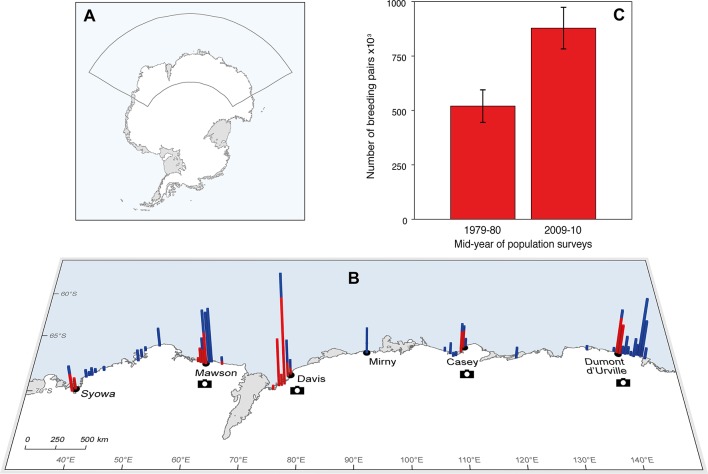
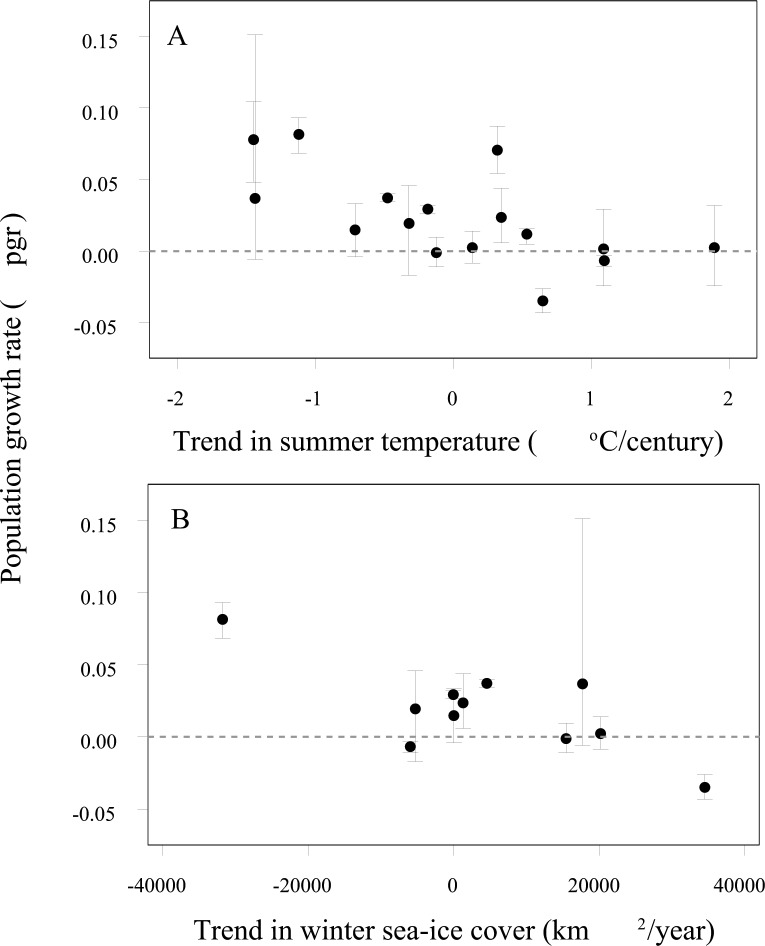
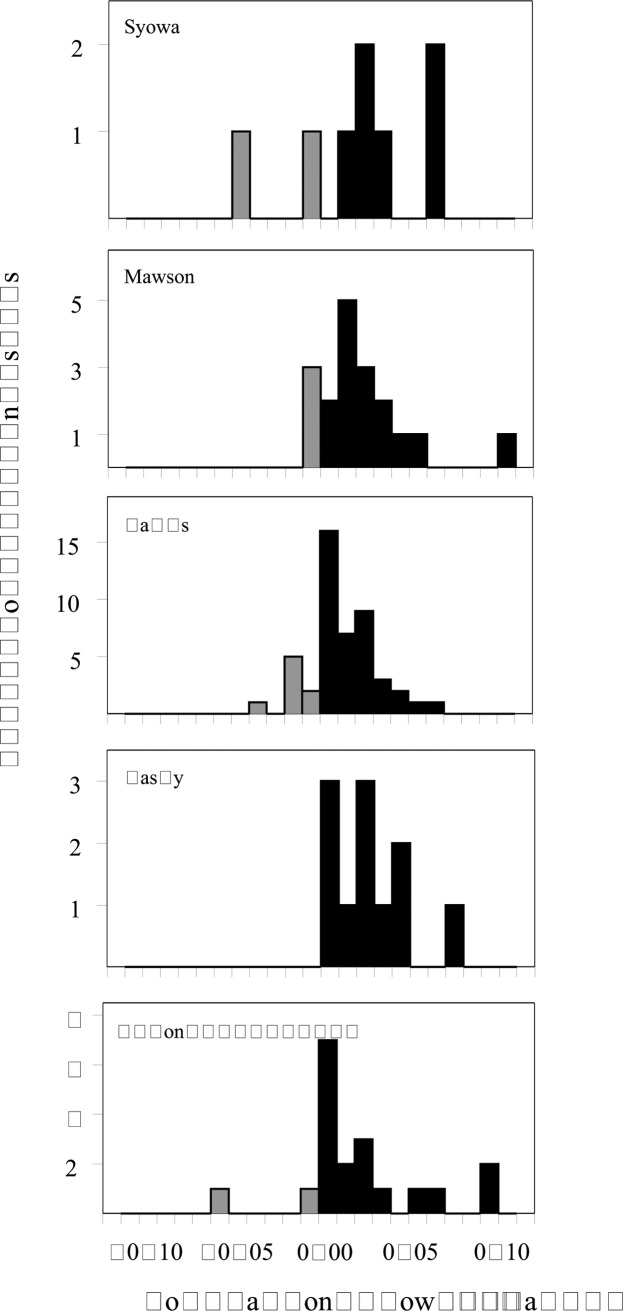
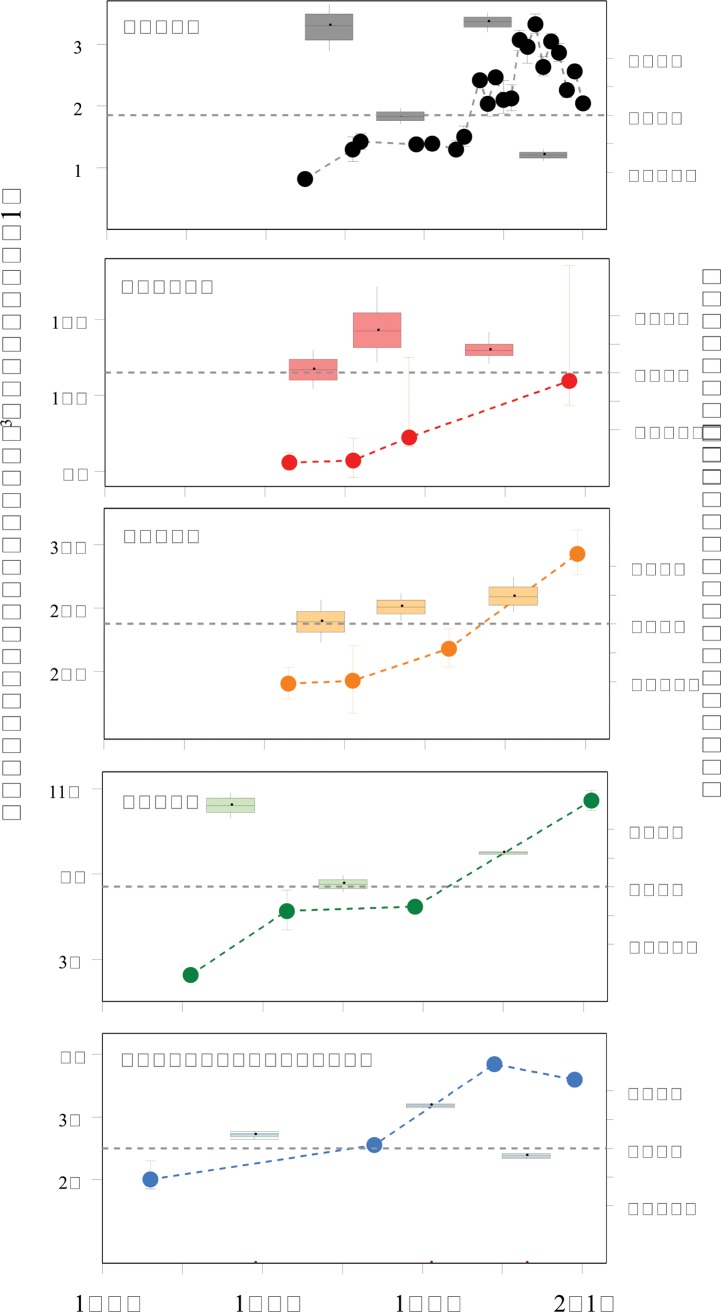
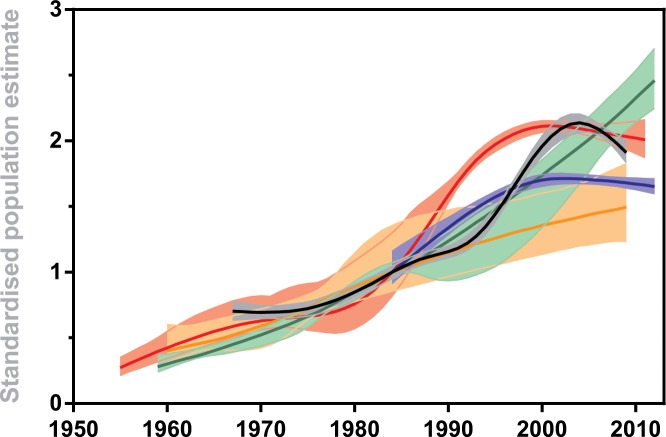
Seabirds are considered to be useful and practical indicators of the state of marine ecosystems because they integrate across changes in the lower trophic levels and the physical environment. Signals from this key group of species can indicate broad scale impacts or response to environmental change. Recent studies of penguin populations, the most commonly abundant Antarctic seabirds in the west Antarctic Peninsula and western Ross Sea, have demonstrated that physical changes in Antarctic marine environments have profound effects on biota at high trophic levels. Large populations of the circumpolar-breeding Adélie penguin occur in East Antarctica, but direct, standardized population data across much of this vast coastline have been more limited than in other Antarctic regions. We combine extensive new population survey data, new population estimation methods, and re-interpreted historical survey data to assess decadal-scale change in East Antarctic Adélie penguin breeding populations. We show that, in contrast to the west Antarctic Peninsula and western Ross Sea where breeding populations have decreased or shown variable trends over the last 30 years, East Antarctic regional populations have almost doubled in abundance since the 1980's and have been increasing since the earliest counts in the 1960's. The population changes are associated with five-year lagged changes in the physical environment, suggesting that the changing environment impacts primarily on the pre-breeding age classes. East Antarctic marine ecosystems have been subject to a number of changes over the last 50 years which may have influenced Adélie penguin population growth, including decadal-scale climate variation, an inferred mid-20th century sea-ice contraction, and early-to-mid 20th century exploitation of fish and whale populations.
海鸟被认为是海洋生态系统状况的有用且实用的指标,因为它们综合反映了低营养级和物理环境的变化。来自这一关键物种群体的信号可以表明广泛的影响或对环境变化的响应。最近对企鹅种群的研究表明,南极海洋环境的物理变化对高营养级生物群有深远影响。企鹅是南极半岛西部和罗斯海西部最常见的南极海鸟。环极地繁殖的阿德利企鹅大量分布在南极东部,但在这片广阔海岸线的大部分地区,直接的、标准化的种群数据比其他南极地区更为有限。我们结合广泛的新种群调查数据、新的种群估计方法以及重新解读的历史调查数据,来评估南极东部阿德利企鹅繁殖种群的十年尺度变化。我们发现,与南极半岛西部和罗斯海西部不同,在过去30年里,那里的繁殖种群数量减少或呈现出不同的趋势,自20世纪80年代以来,南极东部地区的种群数量几乎翻了一番,并且自20世纪60年代最早的统计以来一直在增加。种群变化与物理环境的五年滞后变化相关,这表明变化的环境主要影响繁殖前的年龄组。在过去50年里,南极东部海洋生态系统发生了许多变化,这些变化可能影响了阿德利企鹅的种群增长,包括十年尺度的气候变化、推断的20世纪中叶海冰收缩以及20世纪早期至中期对鱼类和鲸鱼种群的开发利用。