Rusmini Paola, Polanco Maria Josefa, Cristofani Riccardo, Cicardi Maria Elena, Meroni Marco, Galbiati Mariarita, Piccolella Margherita, Messi Elio, Giorgetti Elisa, Lieberman Andrew P, Milioto Carmelo, Rocchi Anna, Aggarwal Tanya, Pennuto Maria, Crippa Valeria, Poletti Angelo
Dipartimento di Scienze Farmacologiche e Biomolecolari (DiSFeB), Centro di Eccellenza sulle Malattie Neurodegenerative, Università degli Studi di Milano, Milano, Italy.
Centro InterUniversitario sulle Malattie Neurodegenerative, Università degli Studi di Firenze, Genova, Roma Tor Vergata and Milano, Italy.
Sci Rep. 2015 Oct 22;5:15174. doi: 10.1038/srep15174.
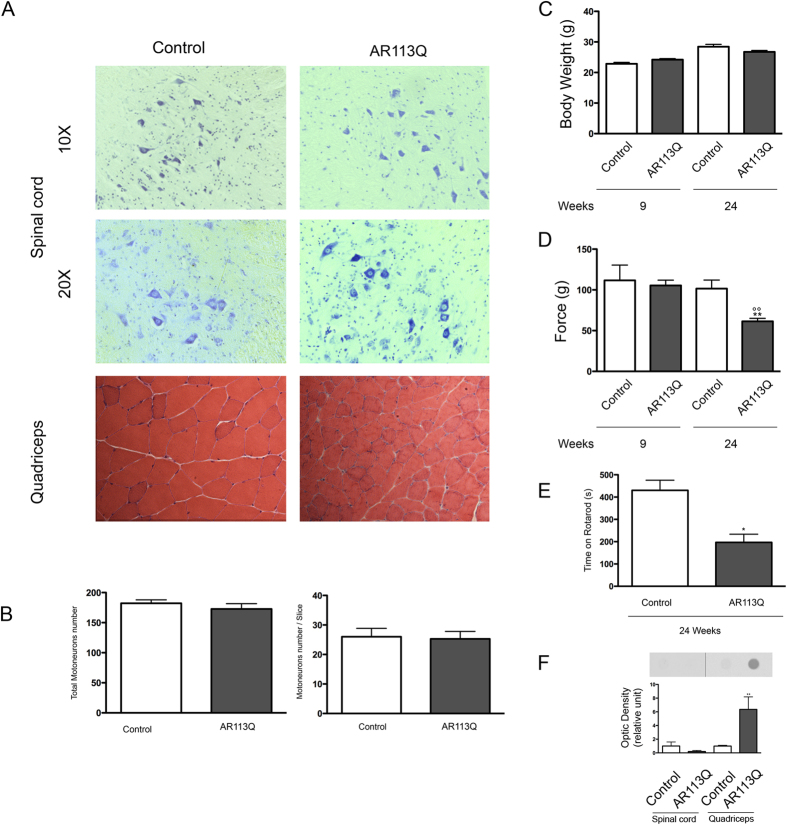
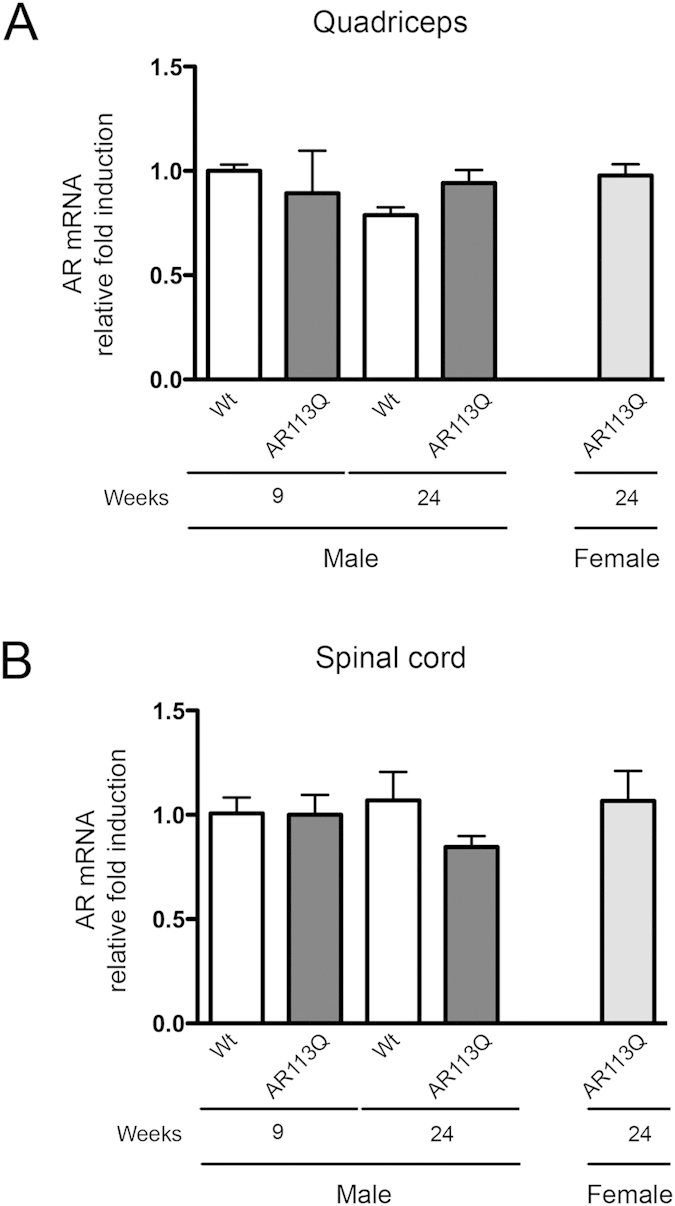
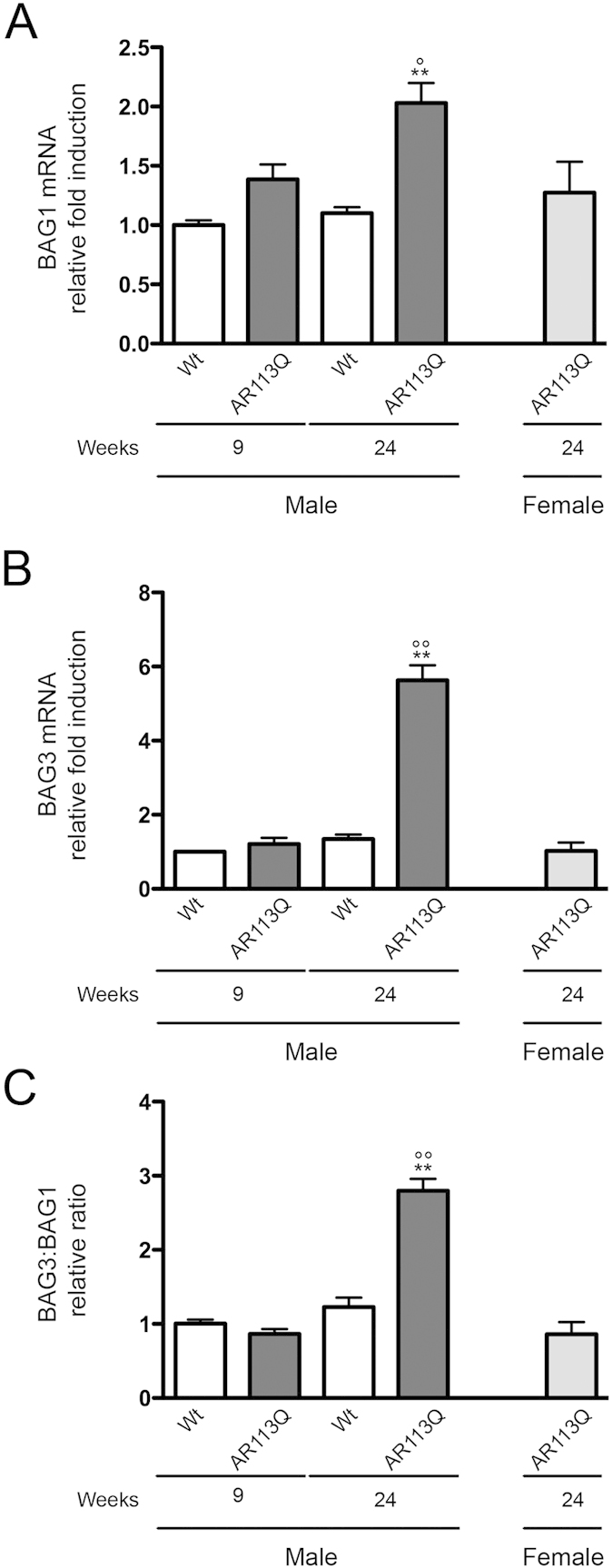
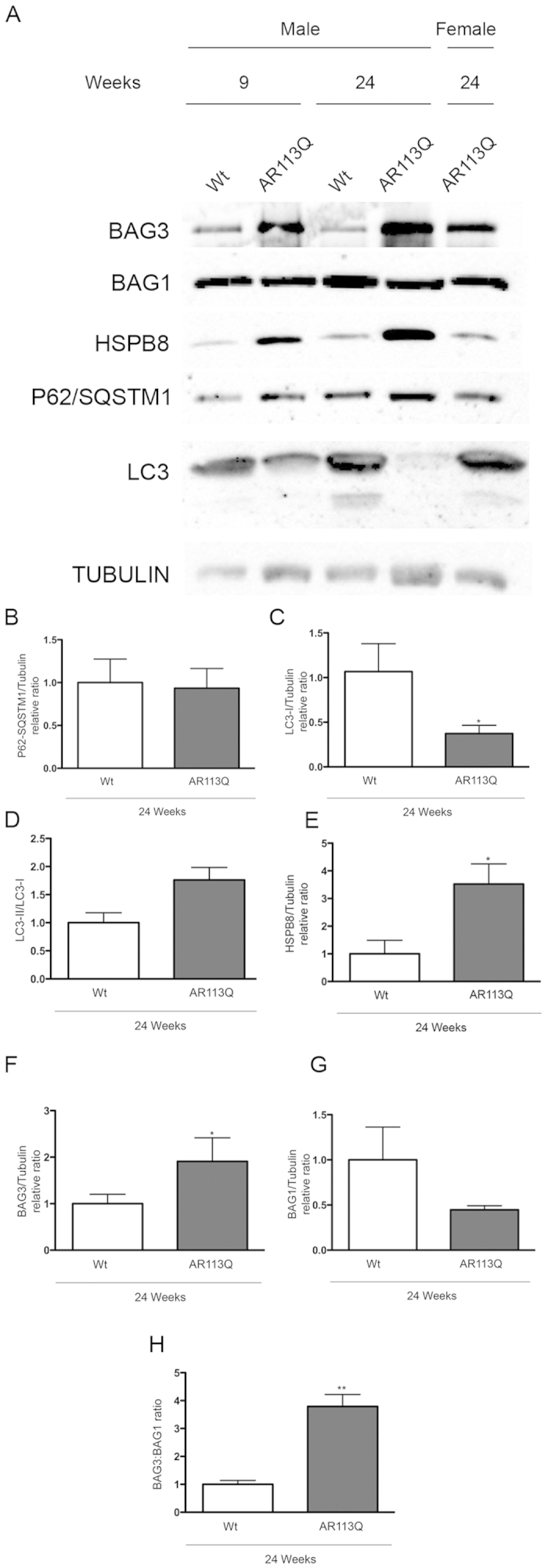
Spinal and bulbar muscular atrophy (SBMA) is characterized by loss of motoneurons and sensory neurons, accompanied by atrophy of muscle cells. SBMA is due to an androgen receptor containing a polyglutamine tract (ARpolyQ) that misfolds and aggregates, thereby perturbing the protein quality control (PQC) system. Using SBMA AR113Q mice we analyzed proteotoxic stress-induced alterations of HSPB8-mediated PQC machinery promoting clearance of misfolded proteins by autophagy. In muscle of symptomatic AR113Q male mice, we found expression upregulation of Pax-7, myogenin, E2-ubiquitin ligase UBE2Q1 and acetylcholine receptor (AchR), but not of MyoD, and of two E3-ligases (MuRF-1 and Cullin3). TGFβ1 and PGC-1α were also robustly upregulated. We also found a dramatic perturbation of the autophagic response, with upregulation of most autophagic markers (Beclin-1, ATG10, p62/SQSTM1, LC3) and of the HSPB8-mediated PQC response. Both HSPB8 and its co-chaperone BAG3 were robustly upregulated together with other specific HSPB8 interactors (HSPB2 and HSPB3). Notably, the BAG3:BAG1 ratio increased in muscle suggesting preferential misfolded proteins routing to autophagy rather than to proteasome. Thus, mutant ARpolyQ induces a potent autophagic response in muscle cells. Alteration in HSPB8-based PQC machinery may represent muscle-specific biomarkers useful to assess SBMA progression in mice and patients in response to pharmacological treatments.
脊髓延髓性肌萎缩症(SBMA)的特征是运动神经元和感觉神经元丧失,并伴有肌肉细胞萎缩。SBMA是由含有多聚谷氨酰胺序列的雄激素受体(ARpolyQ)错误折叠和聚集引起的,从而扰乱了蛋白质质量控制(PQC)系统。我们使用SBMA AR113Q小鼠分析了蛋白毒性应激诱导的HSPB8介导的PQC机制的改变,该机制通过自噬促进错误折叠蛋白的清除。在有症状的AR113Q雄性小鼠的肌肉中,我们发现Pax-7、肌细胞生成素、E2泛素连接酶UBE2Q1和乙酰胆碱受体(AchR)的表达上调,但MyoD以及两种E3连接酶(MuRF-1和Cullin3)的表达未上调。TGFβ1和PGC-1α也显著上调。我们还发现自噬反应发生了显著紊乱,大多数自噬标志物(Beclin-1、ATG10、p62/SQSTM1、LC3)以及HSPB8介导的PQC反应均上调。HSPB8及其共伴侣蛋白BAG3与其他特定的HSPB8相互作用分子(HSPB2和HSPB3)一起均显著上调。值得注意的是,肌肉中BAG3:BAG1的比例增加,表明错误折叠蛋白优先通过自噬而非蛋白酶体途径进行处理。因此,突变的ARpolyQ在肌肉细胞中诱导了强烈的自噬反应。基于HSPB8的PQC机制的改变可能代表了肌肉特异性生物标志物,有助于评估小鼠和患者在药物治疗后SBMA的进展情况。