Li Jianzhong, Chen Linlin, Wu Hongyuan, Lu Yiming, Hu Zhenlin, Lu Bin, Zhang Liming, Chai Yifeng, Zhang Junping
School of Pharmacy, Second Military Medical University, Shanghai 200433, China.
Department of Chemical Defence Medicine, Faculty of Navy Medicine, Second Military Medical University, Shanghai 200433, China.
Int J Mol Sci. 2015 Oct 15;16(10):24555-73. doi: 10.3390/ijms161024555.
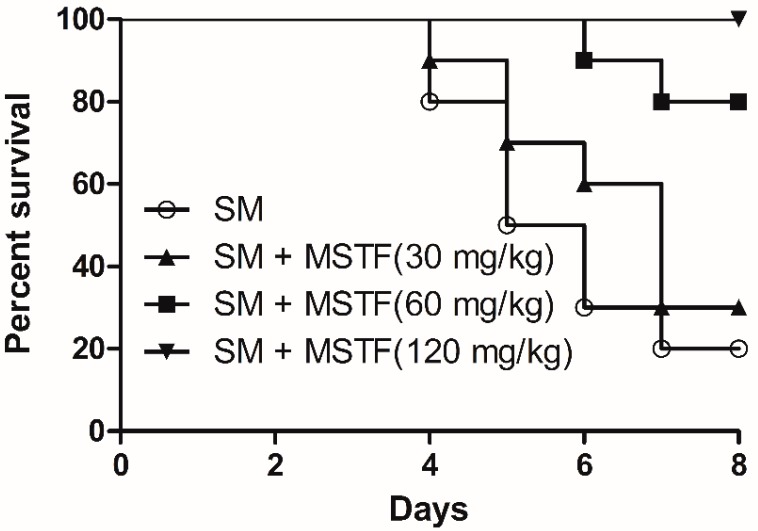
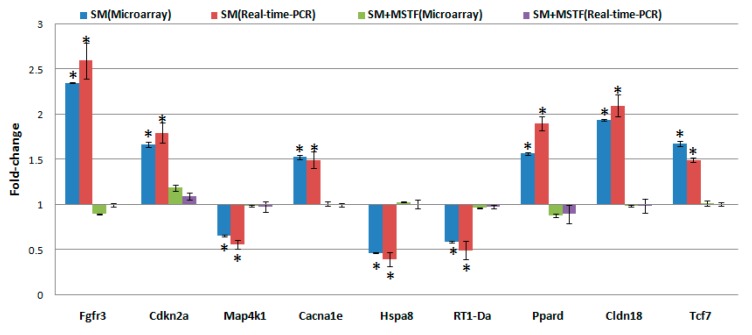
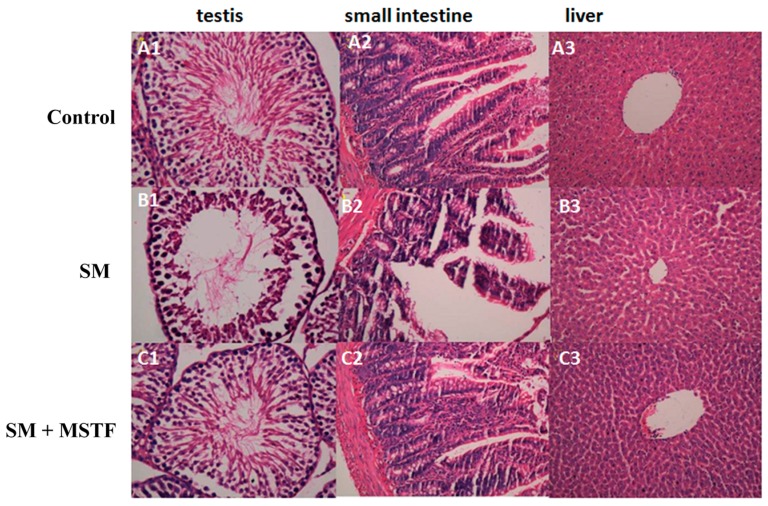
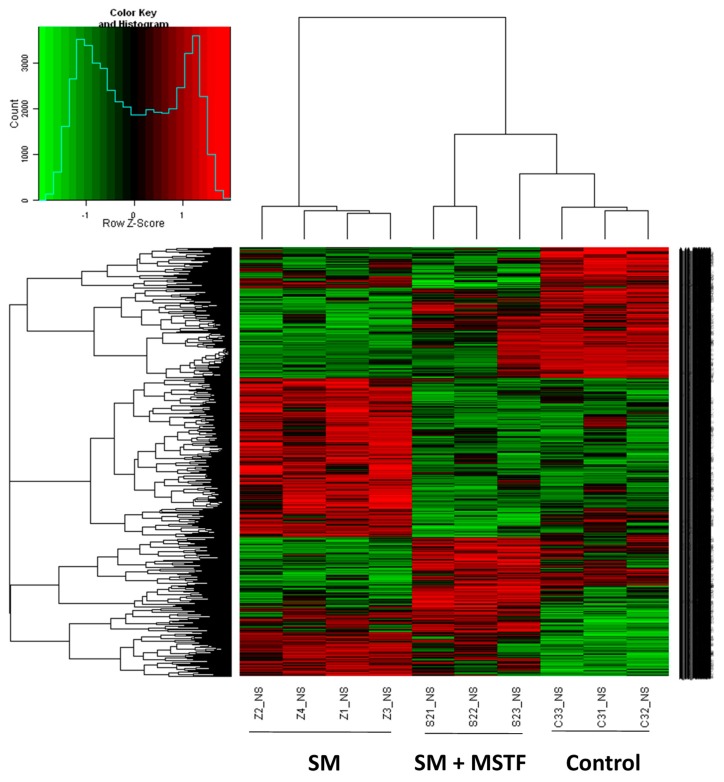
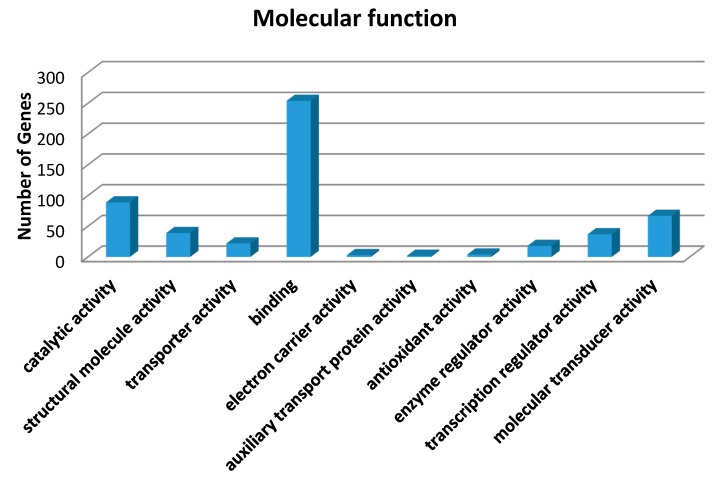
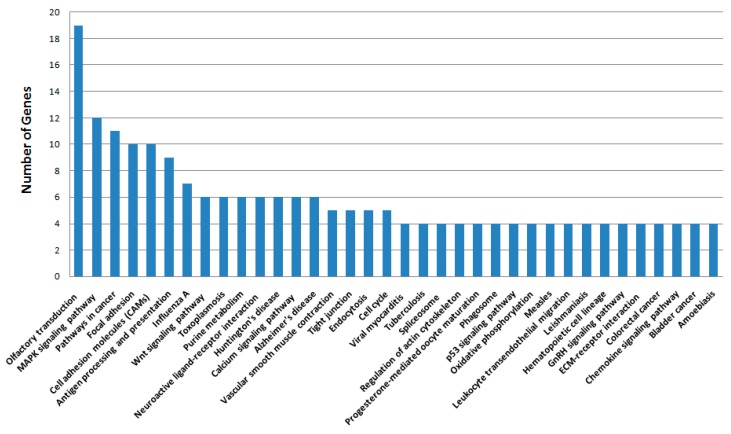
Sulfur mustard (SM) is a vesicating chemical warfare agent used in numerous military conflicts and remains a potential chemical threat to the present day. Exposure to SM causes the depletion of cellular antioxidant thiols, mainly glutathione (GSH), which may lead to a series of SM-associated toxic responses. MSTF is the mixture of salvianolic acids (SA) of Salvia miltiorrhiza and total flavonoids (TFA) of Anemarrhena asphodeloides. SA is the main water-soluble phenolic compound in Salvia miltiorrhiza. TFA mainly includes mangiferin, isomangiferin and neomangiferin. SA and TFA possess diverse activities, including antioxidant and anti-inflammation activities. In this study, we mainly investigated the therapeutic effects of MSTF on SM toxicity in Sprague Dawley rats. Treatment with MSTF 1 h after subcutaneous injection with 3.5 mg/kg (equivalent to 0.7 LD50) SM significantly increased the survival levels of rats and attenuated the SM-induced morphological changes in the testis, small intestine and liver tissues. Treatment with MSTF at doses of 60 and 120 mg/kg caused a significant (p<0.05) reversal in SM-induced GSH depletion. Gene expression profiles revealed that treatment with MSTF had a dramatic effect on gene expression changes caused by SM. Treatment with MSTF prevented SM-induced differential expression of 93.8% (973 genes) of 1037 genes. Pathway enrichment analysis indicated that these genes were mainly involved in a total of 36 pathways, such as the MAPK signaling pathway, pathways in cancer, antigen processing and presentation. These data suggest that MSTF attenuates SM-induced injury by increasing GSH and targeting multiple pathways, including the MAPK signaling pathway, as well as antigen processing and presentation. These results suggest that MSTF has the potential to be used as a potential therapeutic agent against SM injuries.
硫芥(SM)是一种糜烂性化学战剂,在众多军事冲突中被使用,至今仍是一种潜在的化学威胁。接触硫芥会导致细胞抗氧化剂硫醇(主要是谷胱甘肽,GSH)耗竭,这可能会引发一系列与硫芥相关的毒性反应。MSTF是丹参中丹酚酸(SA)和知母中总黄酮(TFA)的混合物。丹酚酸是丹参中主要的水溶性酚类化合物。总黄酮主要包括芒果苷、异芒果苷和新芒果苷。丹酚酸和总黄酮具有多种活性,包括抗氧化和抗炎活性。在本研究中,我们主要研究了MSTF对Sprague Dawley大鼠硫芥毒性的治疗作用。皮下注射3.5 mg/kg(相当于0.7 LD50)硫芥1小时后用MSTF治疗,显著提高了大鼠的存活率,并减轻了硫芥诱导的睾丸、小肠和肝脏组织的形态学变化。60和120 mg/kg剂量的MSTF治疗导致硫芥诱导的GSH耗竭显著(p<0.05)逆转。基因表达谱显示,MSTF治疗对硫芥引起的基因表达变化有显著影响。MSTF治疗可防止硫芥诱导的1037个基因中93.8%(973个基因)的差异表达。通路富集分析表明,这些基因主要参与总共36条通路,如MAPK信号通路、癌症通路、抗原加工和呈递通路。这些数据表明,MSTF通过增加GSH和靶向多种通路(包括MAPK信号通路以及抗原加工和呈递通路)来减轻硫芥诱导的损伤。这些结果表明,MSTF有潜力用作对抗硫芥损伤的潜在治疗剂。