Colineau Lucie, Rouers Angeline, Yamamoto Takuya, Xu Yin, Urrutia Alejandra, Pham Hang-Phuong, Cardinaud Sylvain, Samri Assia, Dorgham Karim, Coulon Pierre-Grégoire, Cheynier Rémi, Hosmalin Anne, Oksenhendler Eric, Six Adrien, Kelleher Anthony D, Zaunders John, Koup Richard A, Autran Brigitte, Moris Arnaud, Graff-Dubois Stéphanie
Sorbonne Universités, UPMC Université Paris 06, Center for Immunology and Microbial Infections-CIMI-Paris, Paris, France; INSERM, U1135, Center for Immunology and Microbial Infections-CIMI-Paris, Paris, France; CNRS, ERL 8255, Center for Immunology and Microbial Infections-CIMI-Paris, Paris, France.
Immunology Laboratory, Vaccine research center, National Institute of Allergy and Infectious Diseases (NIAID), NIH, Bethesda, Maryland, United States of America.
PLoS One. 2015 Oct 26;10(10):e0140978. doi: 10.1371/journal.pone.0140978. eCollection 2015.
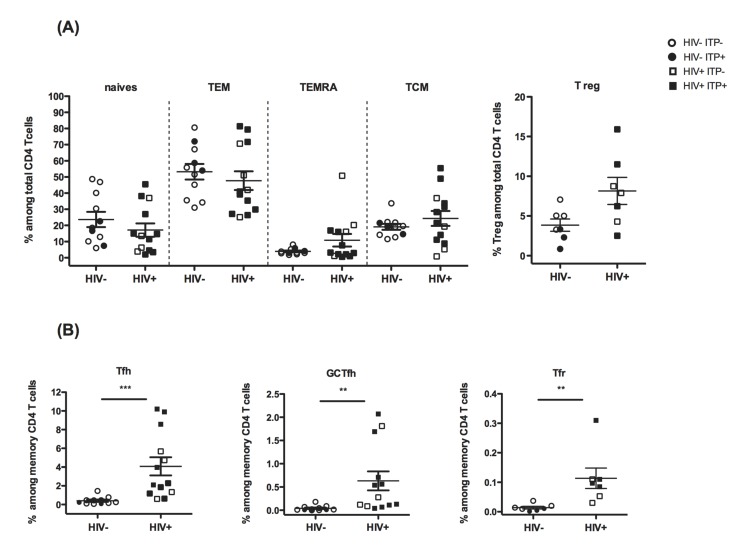
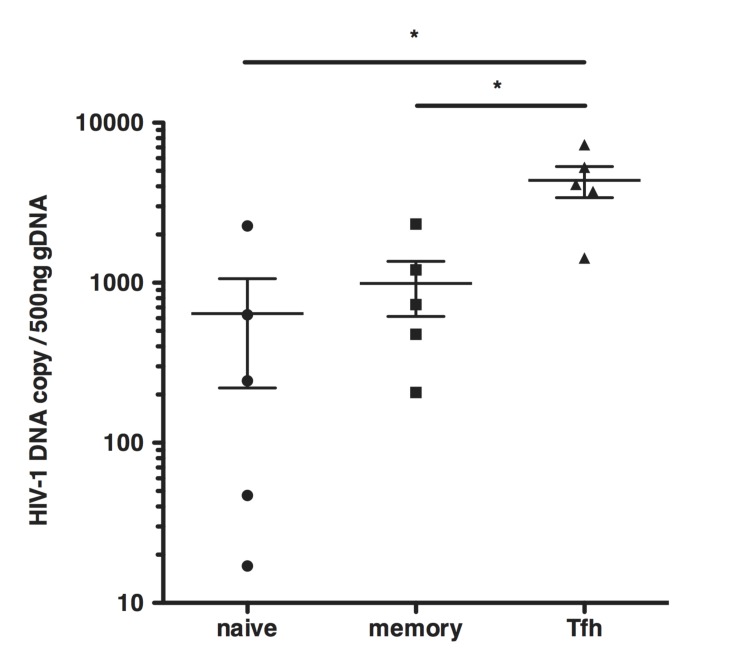
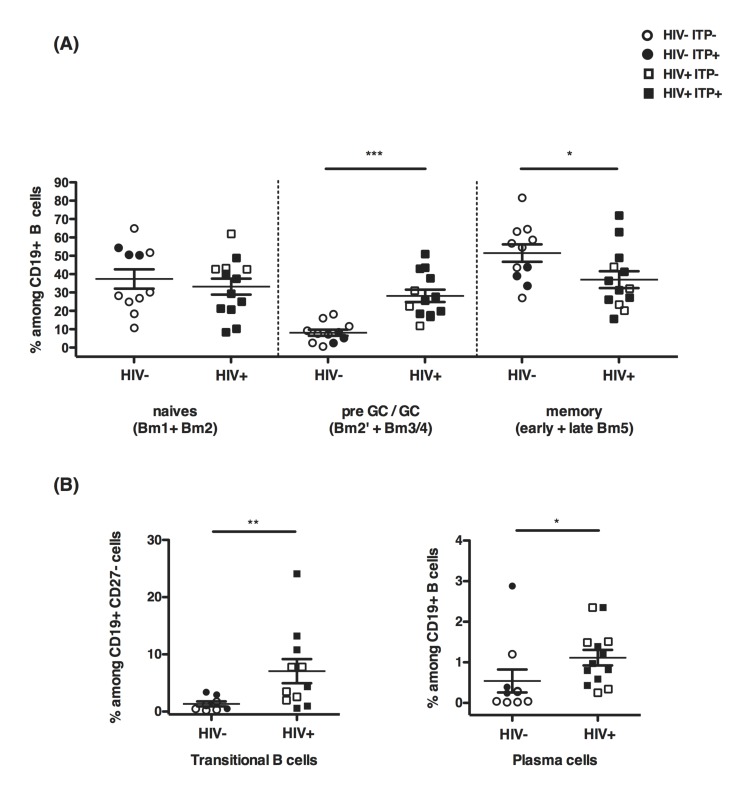
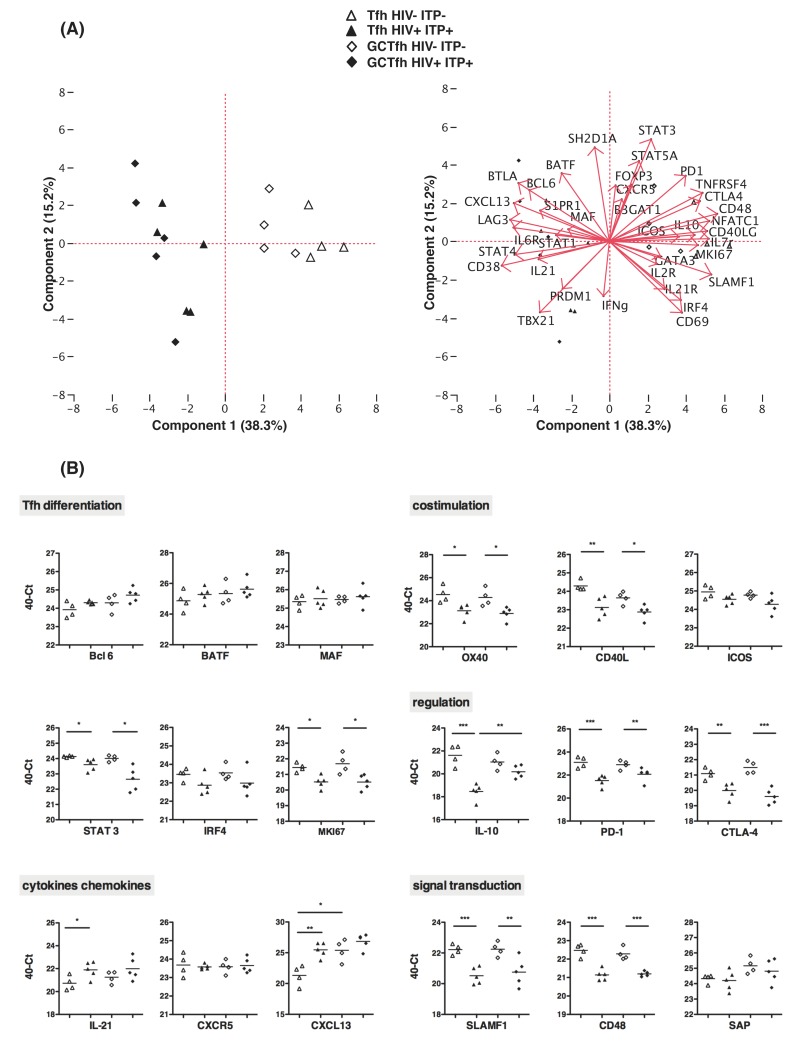
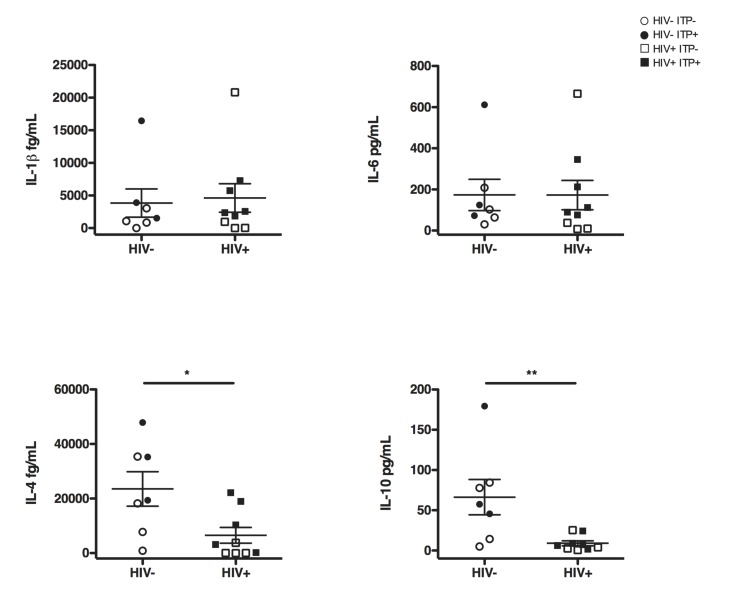
Follicular helper T (Tfh) cells within secondary lymphoid organs control multiple steps of B cell maturation and antibody (Ab) production. HIV-1 infection is associated with an altered B cell differentiation and Tfh isolated from lymph nodes of HIV-infected (HIV+) individuals provide inadequate B cell help in vitro. However, the mechanisms underlying this impairment of Tfh function are not fully defined. Using a unique collection of splenocytes, we compared the frequency, phenotype and transcriptome of Tfh subsets in spleens from HIV negative (HIV-) and HIV+ subjects. We observed an increase of CXCR5+PD-1highCD57-Tfh and germinal center (GC) CD57+ Tfh in HIV+ spleens. Both subsets showed a reduced mRNA expression of the transcription factor STAT-3, co-stimulatory, regulatory and signal transduction molecules as compared to HIV- spleens. Similarly, Foxp3 expressing follicular regulatory T (Tfr) cells were increased, suggesting sustained GC reactions in chronically HIV+ spleens. As a consequence, GC B cell populations were expanded, however, complete maturation into memory B cells was reduced in HIV+ spleens where we evidenced a compromised production of B cell-activating cytokines such as IL-4 and IL-10. Collectively our data indicate that, although Tfh proliferation and GC reactions seem to be ongoing in HIV-infected spleens, Tfh "differentiation" and expression of costimulatory molecules is skewed with a profound effect on B cell maturation.
二级淋巴器官内的滤泡辅助性T(Tfh)细胞控制B细胞成熟和抗体(Ab)产生的多个步骤。HIV-1感染与B细胞分化改变有关,从HIV感染(HIV+)个体的淋巴结中分离出的Tfh在体外提供的B细胞辅助不足。然而,Tfh功能受损的潜在机制尚未完全明确。我们使用独特的脾细胞样本,比较了HIV阴性(HIV-)和HIV+受试者脾脏中Tfh亚群的频率、表型和转录组。我们观察到HIV+脾脏中CXCR5+PD-1highCD57-Tfh和生发中心(GC)CD57+ Tfh增加。与HIV-脾脏相比,这两个亚群的转录因子STAT-3、共刺激、调节和信号转导分子的mRNA表达均降低。同样,表达Foxp3的滤泡调节性T(Tfr)细胞增加,提示慢性HIV+脾脏中存在持续的GC反应。因此,GC B细胞群体扩大,然而,在HIV+脾脏中向记忆B细胞的完全成熟减少,我们在其中证明了B细胞激活细胞因子如IL-4和IL-10的产生受损。我们的数据共同表明,尽管在HIV感染的脾脏中Tfh增殖和GC反应似乎持续存在,但Tfh的“分化”和共刺激分子的表达存在偏差,对B细胞成熟产生深远影响。