Cannuyer Julie, Van Tongelen Aurélie, Loriot Axelle, De Smet Charles
Group of Genetics and Epigenetics, de Duve Institute, Université Catholique de Louvain, Brussels, Belgium.
Clin Epigenetics. 2015 Oct 26;7:114. doi: 10.1186/s13148-015-0147-4. eCollection 2015.
Many human tumors show aberrant activation of a group of germline-specific genes, termed cancer-germline (CG) genes, several of which appear to exert oncogenic functions. Although activation of CG genes in tumors has been linked to promoter DNA demethylation, the mechanisms underlying this epigenetic alteration remain unclear. Two main processes have been proposed: awaking of a gametogenic program directing demethylation of target DNA sequences via specific regulators, or general deficiency of DNA methylation activities resulting from mis-targeting or down-regulation of the DNMT1 methyltransferase.
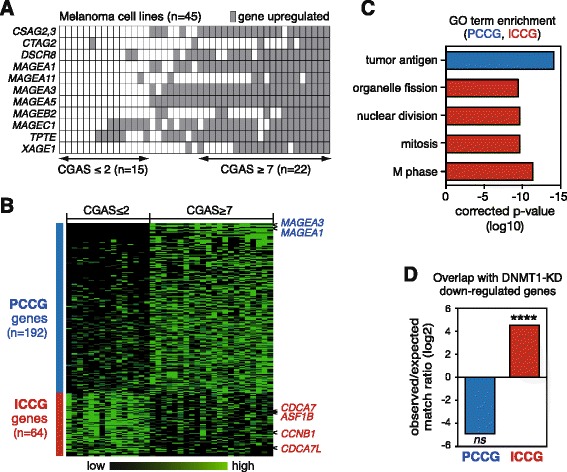
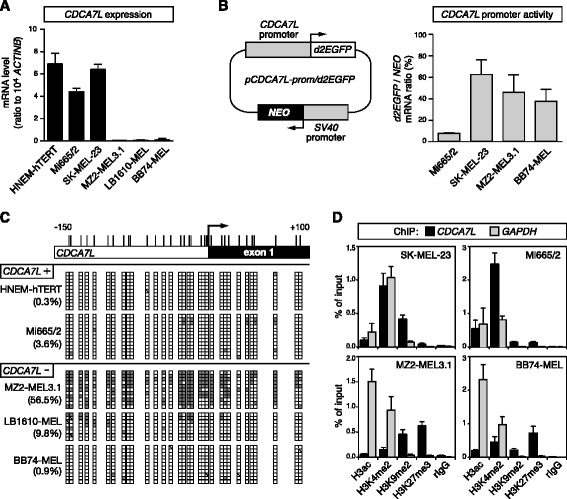
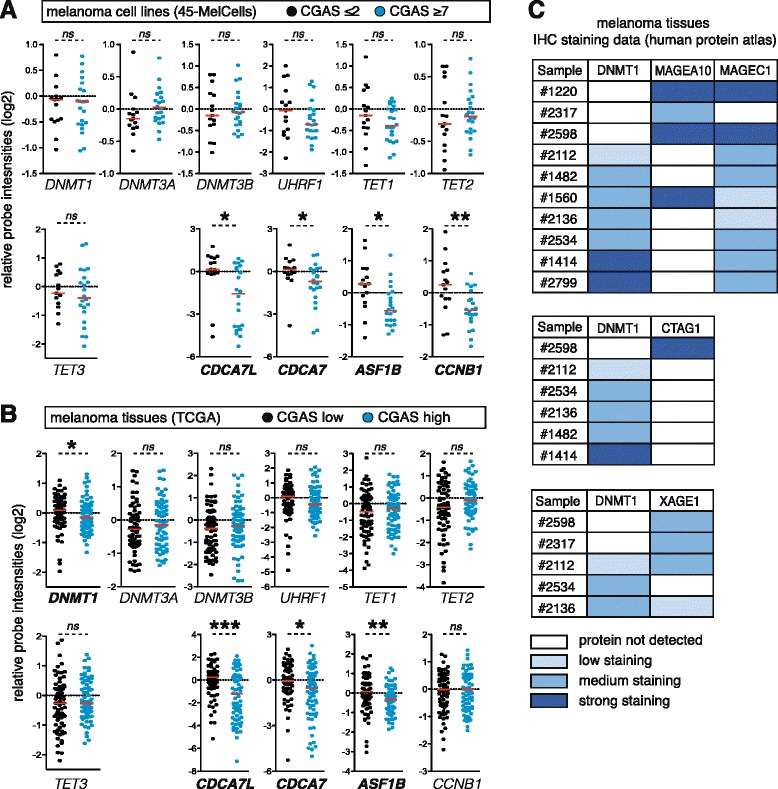
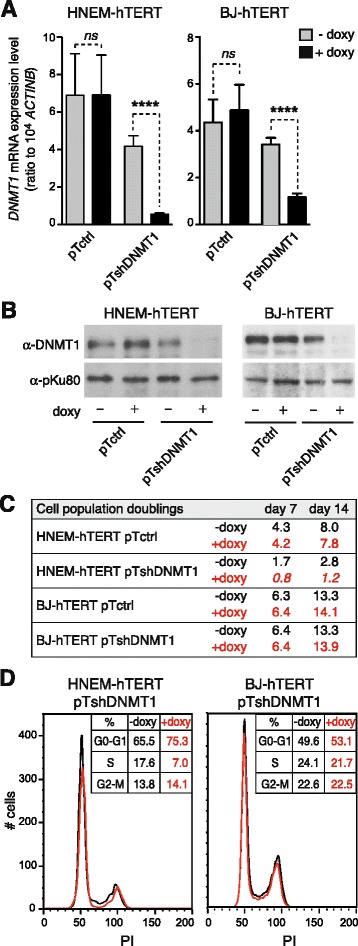
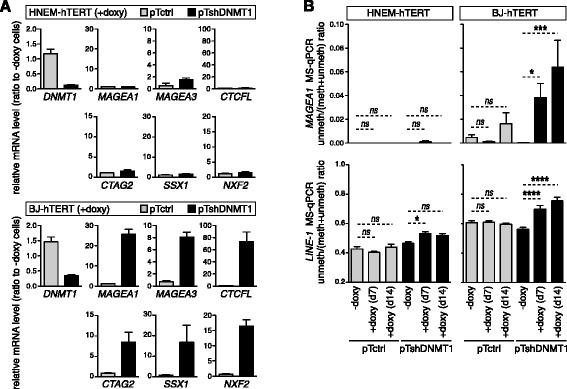
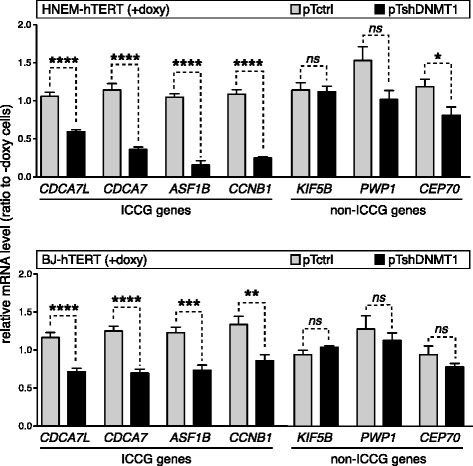
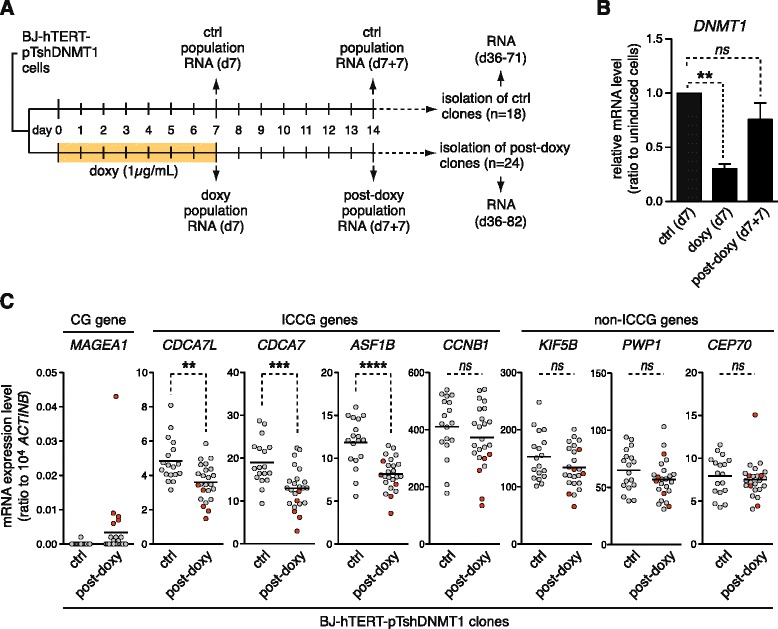
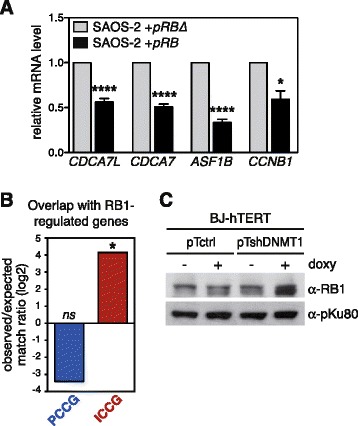
By the analysis of transcriptomic data, we searched to identify gene expression changes associated with CG gene activation in melanoma cells. We found no evidence linking CG gene activation with differential expression of gametogenic regulators. Instead, CG gene activation correlated with decreased expression of a set of mitosis/division-related genes (ICCG genes). Interestingly, a similar gene expression signature was previously associated with depletion of DNMT1. Consistently, analysis of a large set of melanoma tissues revealed that DNMT1 expression levels were often lower in samples showing activation of multiple CG genes. Moreover, by using immortalized melanocytes and fibroblasts carrying an inducible anti-DNMT1 small hairpin RNA (shRNA), we demonstrate that transient depletion of DNMT1 can lead to long-term activation of CG genes and repression of ICCG genes at the same time. For one of the ICCG genes (CDCA7L), we found that its down-regulation in melanoma cells was associated with deposition of repressive chromatin marks, including H3K27me3.
Together, our observations point towards transient DNMT1 depletion as a causal factor of CG gene activation in vivo in melanoma.
许多人类肿瘤显示出一组种系特异性基因的异常激活,这些基因被称为癌胚(CG)基因,其中一些似乎具有致癌功能。尽管肿瘤中CG基因的激活与启动子DNA去甲基化有关,但其表观遗传改变的潜在机制仍不清楚。目前提出了两个主要过程:通过特定调节因子唤醒指导靶DNA序列去甲基化的配子发生程序,或由于DNMT1甲基转移酶的错误靶向或下调导致DNA甲基化活性普遍缺乏。
通过对转录组数据的分析,我们试图识别与黑色素瘤细胞中CG基因激活相关的基因表达变化。我们没有发现CG基因激活与配子发生调节因子差异表达之间存在关联的证据。相反,CG基因激活与一组有丝分裂/分裂相关基因(ICCG基因)的表达降低相关。有趣的是,先前曾有类似的基因表达特征与DNMT1的缺失有关。一致地,对大量黑色素瘤组织的分析表明,在显示多个CG基因激活的样本中,DNMT1表达水平通常较低。此外,通过使用携带可诱导抗DNMT1小发夹RNA(shRNA)的永生化黑素细胞和成纤维细胞,我们证明DNMT1的短暂缺失可同时导致CG基因的长期激活和ICCG基因的抑制。对于其中一个ICCG基因(CDCA7L),我们发现其在黑色素瘤细胞中的下调与包括H3K27me3在内的抑制性染色质标记的沉积有关。
总之,我们的观察结果表明,在黑色素瘤体内,短暂的DNMT1缺失是CG基因激活的一个因果因素。