Galán-Díaz Carlos, Edwards Peter, Nelson John D, van der Wal René
dot.rural (RCUK Digital Economy Research), University of Aberdeen, MacRobert Building, King's College, Aberdeen, AB24 5UA, UK.
Aberdeen Centre for Environmental Sustainability (ACES), School of Biological Sciences, University of Aberdeen, Auris, 23 St. Machar Drive, Aberdeen, AB24 3UU, UK.
Ambio. 2015 Nov;44 Suppl 4(Suppl 4):538-49. doi: 10.1007/s13280-015-0704-2.
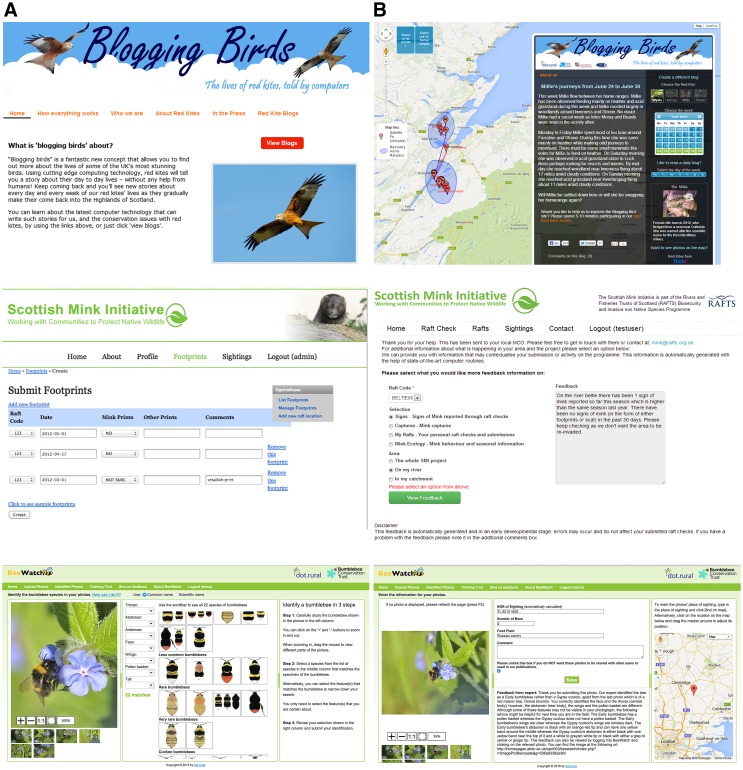
Nature conservation organisations increasingly turn to new digital technologies to help deliver conservation objectives. This has led to collaborative forms of working with academia to spearhead digital innovation. Through in-depth interviews with three UK research-council-funded case studies, we show that by working with academics conservation organisations can receive positive and negative impacts, some of which cut across their operations. Positive impacts include new ways of engaging with audiences, improved data workflows, financial benefits, capacity building and the necessary digital infrastructure to help them influence policy. Negative impacts include the time and resources required to learn new skills and sustain new technologies, managing different organisational objectives and shifts in working practices as a result of the new technologies. Most importantly, collaboration with academics was shown to bring the opportunity of a profound change in perspectives on technologies with benefits to the partner organisations and individuals therein.
自然保护组织越来越多地转向新的数字技术,以帮助实现保护目标。这导致了与学术界合作的工作形式,以引领数字创新。通过对三个由英国研究委员会资助的案例研究进行深入访谈,我们发现,通过与学者合作,保护组织会受到积极和消极的影响,其中一些影响贯穿其运营。积极影响包括与受众互动的新方式、改进的数据工作流程、经济收益、能力建设以及有助于其影响政策的必要数字基础设施。负面影响包括学习新技能和维持新技术所需的时间和资源、管理不同的组织目标以及新技术导致的工作方式转变。最重要的是,与学者的合作被证明带来了对技术观点发生深刻变化的机会,这对其中的合作伙伴组织和个人都有益处。