Yun Maximina H
Institute of Structural and Molecular Biology, Division of Biosciences, University College London, Gower Street, London WC1E 6BT, UK.
Int J Mol Sci. 2015 Oct 23;16(10):25392-432. doi: 10.3390/ijms161025392.
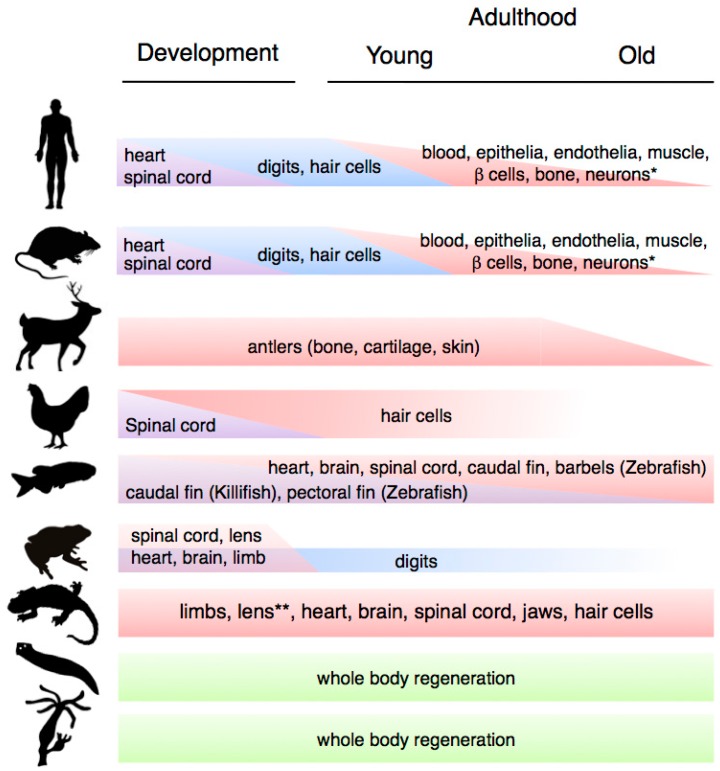
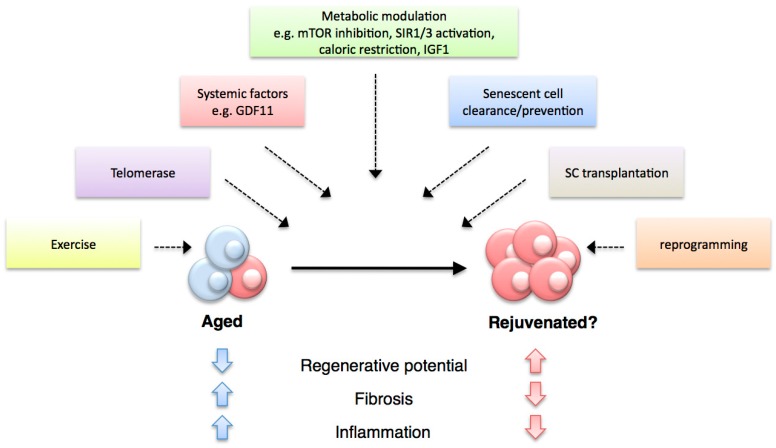
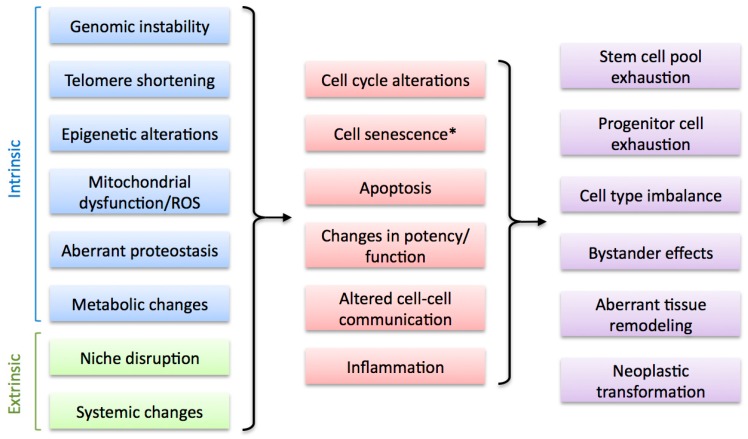
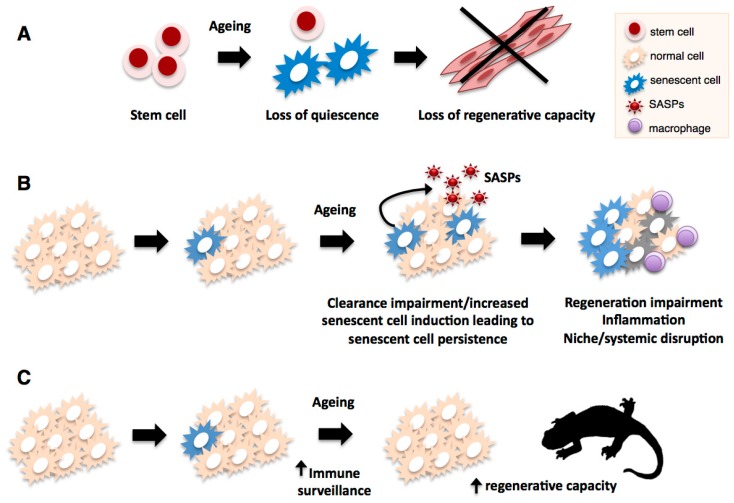
Most organisms experience changes in regenerative abilities through their lifespan. During aging, numerous tissues exhibit a progressive decline in homeostasis and regeneration that results in tissue degeneration, malfunction and pathology. The mechanisms responsible for this decay are both cell intrinsic, such as cellular senescence, as well as cell-extrinsic, such as changes in the regenerative environment. Understanding how these mechanisms impact on regenerative processes is essential to devise therapeutic approaches to improve tissue regeneration and extend healthspan. This review offers an overview of how regenerative abilities change through lifespan in various organisms, the factors that underlie such changes and the avenues for therapeutic intervention. It focuses on established models of mammalian regeneration as well as on models in which regenerative abilities do not decline with age, as these can deliver valuable insights for our understanding of the interplay between regeneration and aging.
大多数生物体在其生命周期中都会经历再生能力的变化。在衰老过程中,许多组织的稳态和再生能力逐渐下降,导致组织退化、功能失常和病理变化。造成这种衰退的机制既有细胞内在的,如细胞衰老,也有细胞外在的,如再生环境的变化。了解这些机制如何影响再生过程对于设计改善组织再生和延长健康寿命的治疗方法至关重要。本综述概述了各种生物体的再生能力如何随生命周期变化、导致这种变化的因素以及治疗干预的途径。它重点关注已确立的哺乳动物再生模型以及再生能力不会随年龄下降的模型,因为这些模型可以为我们理解再生与衰老之间的相互作用提供有价值的见解。