Carchia E, Porreca I, Almeida P J, D'Angelo F, Cuomo D, Ceccarelli M, De Felice M, Mallardo M, Ambrosino C
IRGS, Biogem, Via Camporeale, 83031 Ariano Irpino, Avellino, Italy.
STAB VIDA-Investigação e Serviços em Ciências Biológicas, Madan Parque, Caparica, Portugal.
Cell Death Dis. 2015 Oct 29;6(10):e1959. doi: 10.1038/cddis.2015.319.
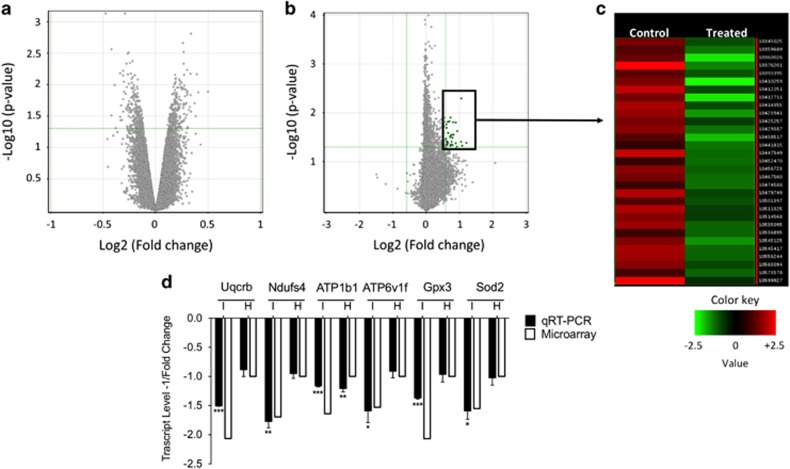
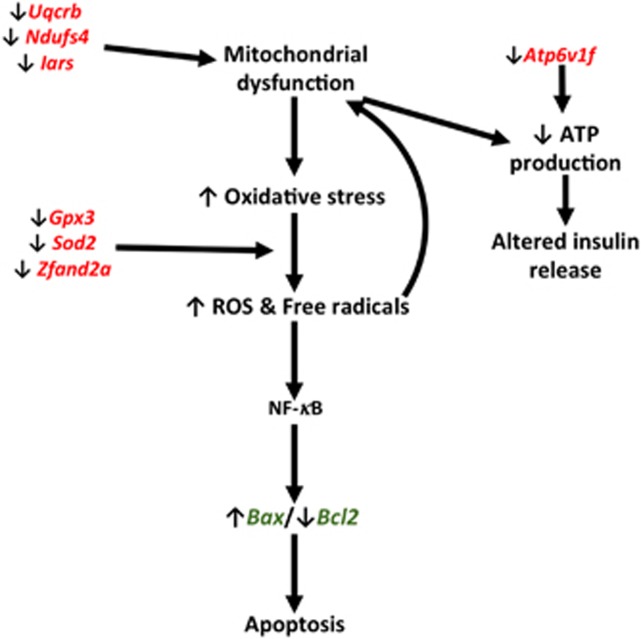
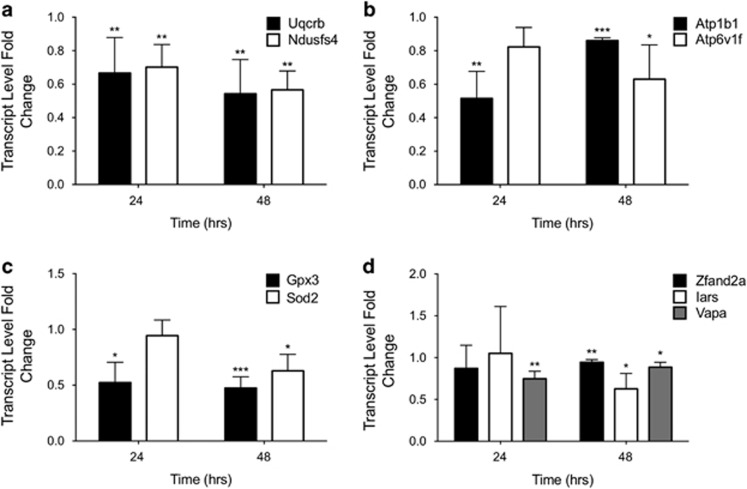
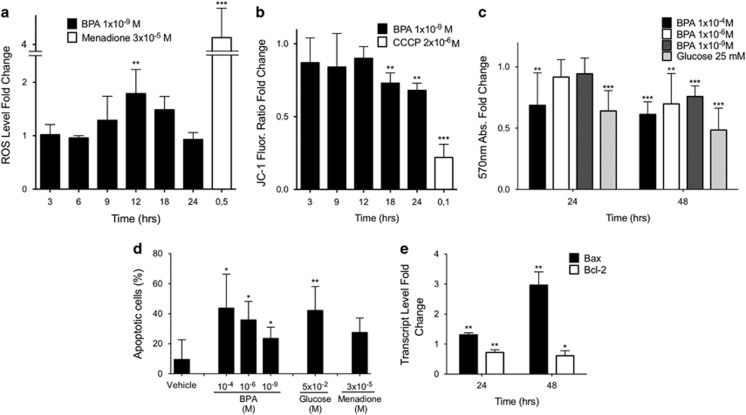
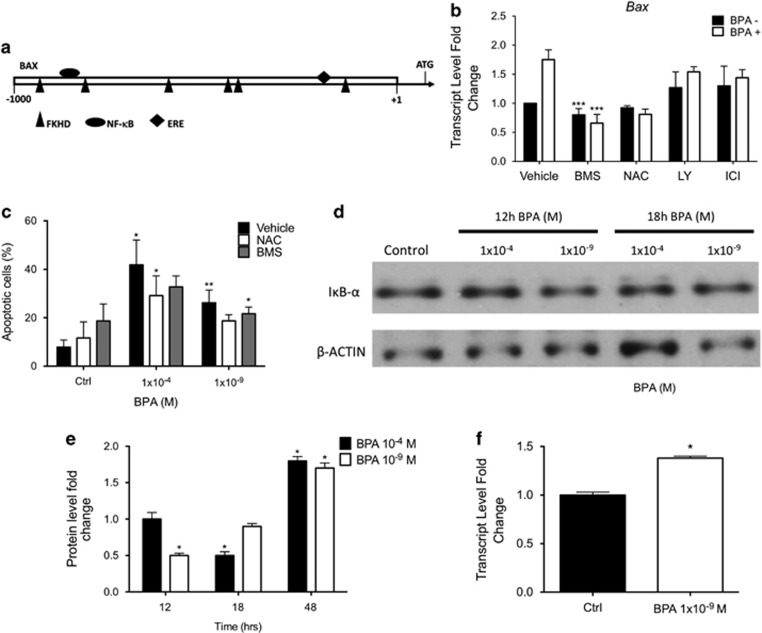
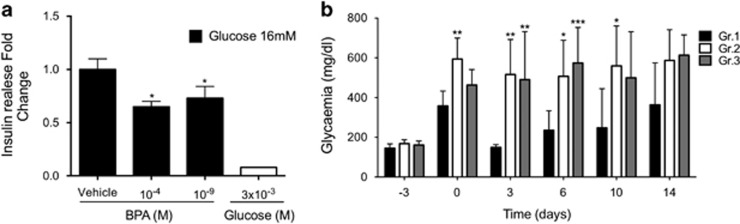
Epidemiologic and experimental studies have associated changes of blood glucose homeostasis to Bisphenol A (BPA) exposure. We took a toxicogenomic approach to investigate the mechanisms of low-dose (1 × 10(-9 )M) BPA toxicity in ex vivo cultures of primary murine pancreatic islets and hepatocytes. Twenty-nine inhibited genes were identified in islets and none in exposed hepatocytes. Although their expression was slightly altered, their impaired cellular level, as a whole, resulted in specific phenotypic changes. Damage of mitochondrial function and metabolism, as predicted by bioinformatics analyses, was observed: BPA exposure led to a time-dependent decrease in mitochondrial membrane potential, to an increase of ROS cellular levels and, finally, to an induction of apoptosis, attributable to the bigger Bax/Bcl-2 ratio owing to activation of NF-κB pathway. Our data suggest a multifactorial mechanism for BPA toxicity in pancreatic islets with emphasis to mitochondria dysfunction and NF-κB activation. Finally, we assessed in vitro the viability of BPA-treated islets in stressing condition, as exposure to high glucose, evidencing a reduced ability of the exposed islets to respond to further damages. The result was confirmed in vivo evaluating the reduction of glycemia in hyperglycemic mice transplanted with control and BPA-treated pancreatic islets. The reported findings identify the pancreatic islet as the main target of BPA toxicity in impairing the glycemia. They suggest that the BPA exposure can weaken the response of the pancreatic islets to damages. The last observation could represent a broader concept whose consideration should lead to the development of experimental plans better reproducing the multiple exposure conditions.
流行病学和实验研究已将血糖稳态变化与双酚A(BPA)暴露联系起来。我们采用毒理基因组学方法,研究低剂量(1×10⁻⁹ M)BPA对原代小鼠胰岛和肝细胞体外培养物的毒性作用机制。在胰岛中鉴定出29个受抑制基因,而在暴露的肝细胞中未发现。尽管它们的表达略有改变,但总体上其细胞水平受损导致了特定的表型变化。如生物信息学分析所预测的,观察到线粒体功能和代谢受损:BPA暴露导致线粒体膜电位随时间下降,细胞内活性氧水平升高,最终诱导细胞凋亡,这归因于NF-κB通路激活导致Bax/Bcl-2比值增大。我们的数据表明,BPA对胰岛的毒性作用存在多因素机制,重点在于线粒体功能障碍和NF-κB激活。最后,我们在体外评估了BPA处理的胰岛在应激条件下(如暴露于高糖环境)的活力,结果表明暴露的胰岛对进一步损伤的反应能力降低。在体内评估移植了对照和BPA处理的胰岛的高血糖小鼠血糖降低情况时,证实了这一结果。所报道的研究结果确定胰岛是BPA毒性损害血糖的主要靶点。它们表明,BPA暴露会削弱胰岛对损伤的反应。最后这一观察结果可能代表了一个更广泛的概念,对此的考虑应促使制定更好地重现多种暴露条件的实验计划。