Sultana Nishat, Zhang Lu, Yan Jianyun, Chen Jiqiu, Cai Weibin, Razzaque Shegufta, Jeong Dongtak, Sheng Wei, Bu Lei, Xu Mingjiang, Huang Guo-Ying, Hajjar Roger J, Zhou Bin, Moon Anne, Cai Chen-Leng
Department of Developmental and Regenerative Biology, The Black Family Stem Cell Institute, and The Mindich Child Health and Development Institute, Icahn School of Medicine at Mount Sinai, New York, New York 10029, USA.
Department of Medicine, Cardiovascular Research Center, Icahn School of Medicine at Mount Sinai, New York, New York 10029, USA.
Nat Commun. 2015 Oct 30;6:8701. doi: 10.1038/ncomms9701.
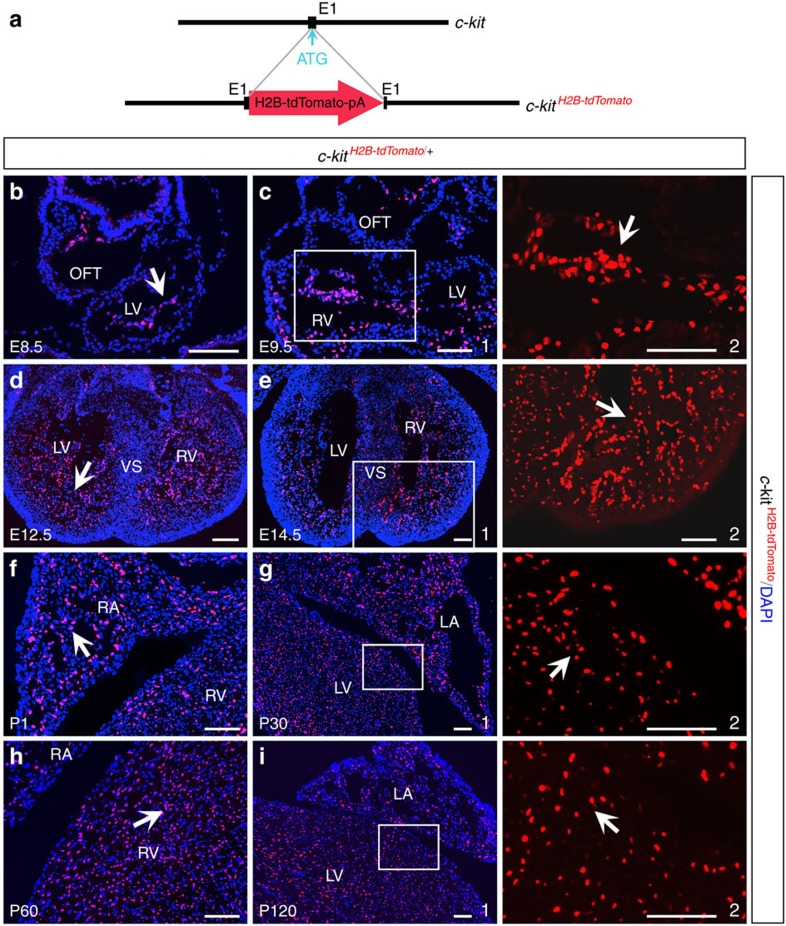
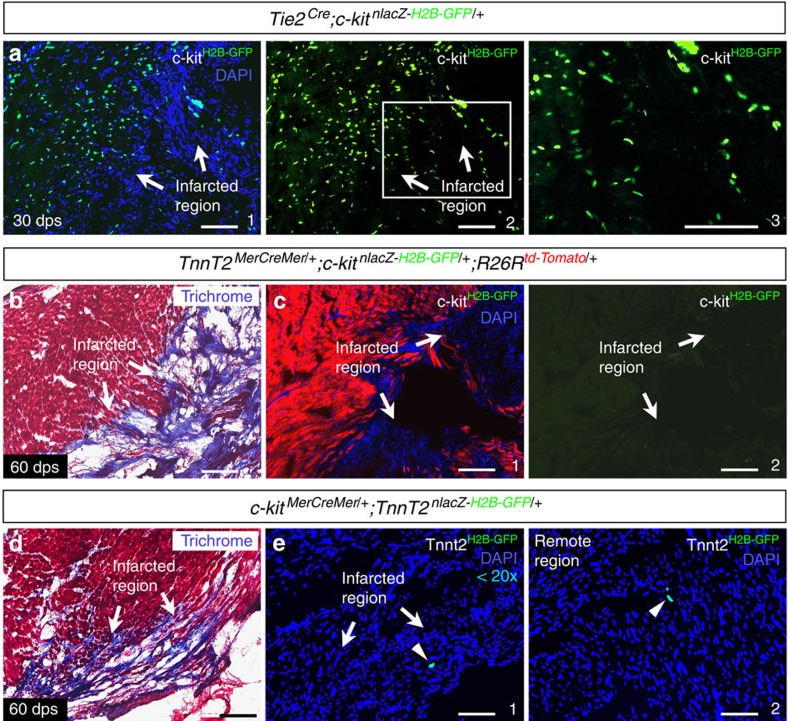
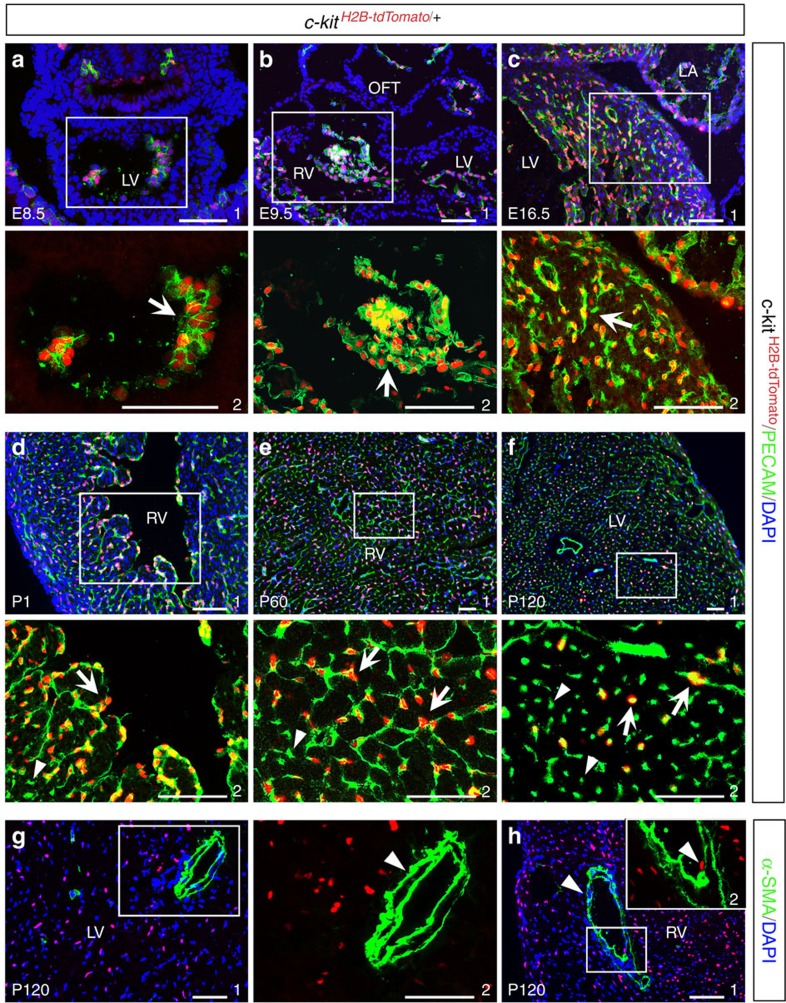
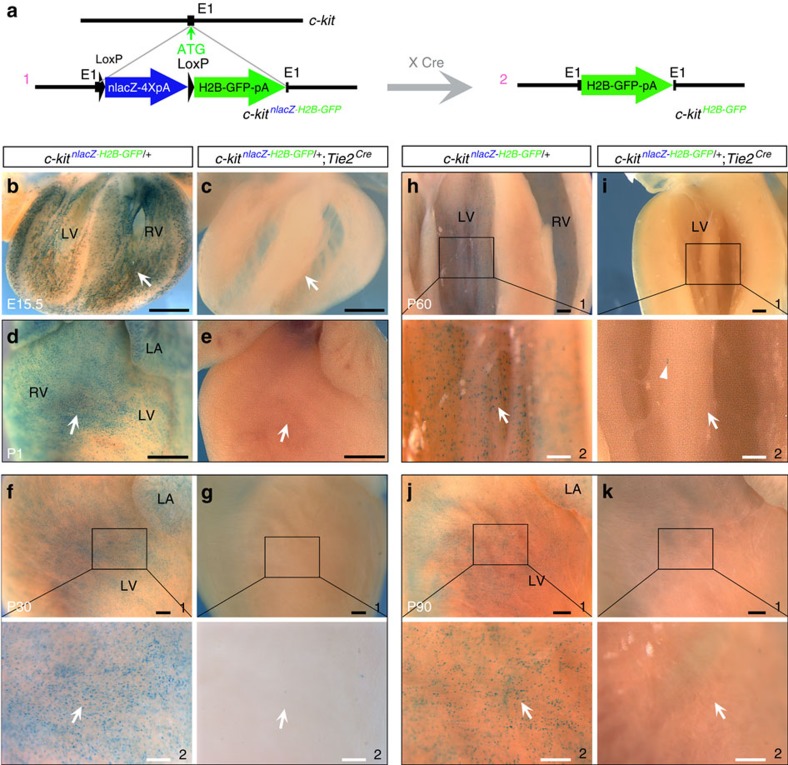
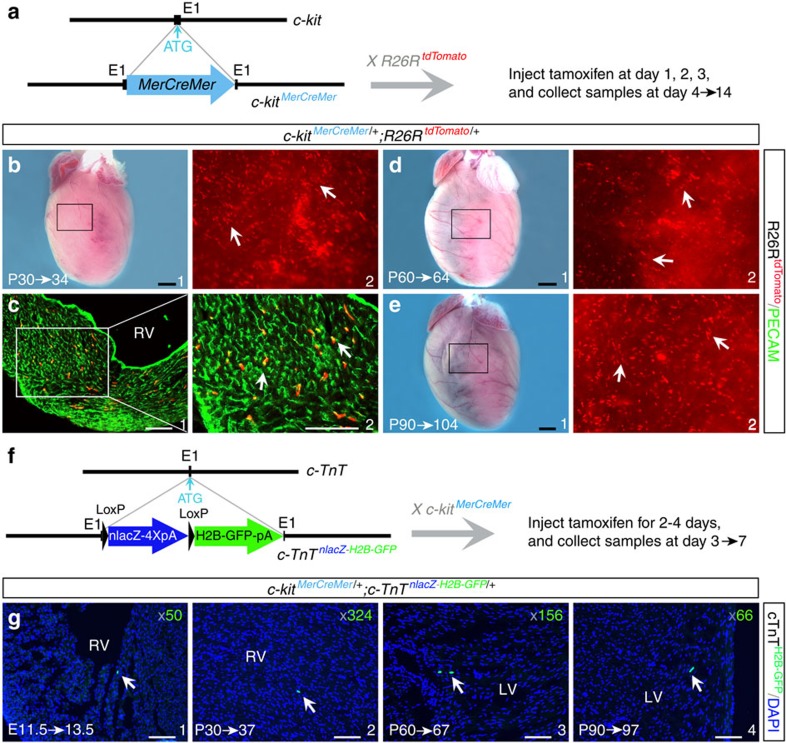
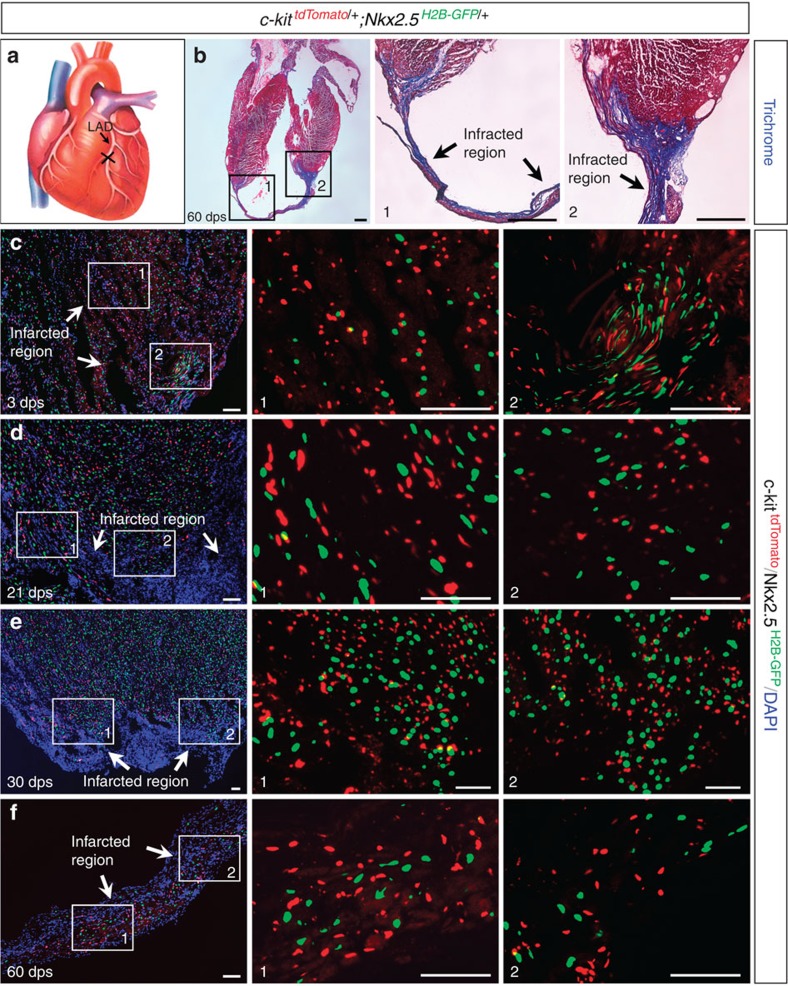
Identifying a bona fide population of cardiac stem cells (CSCs) is a critical step for developing cell-based therapies for heart failure patients. Previously, cardiac c-kit(+) cells were reported to be CSCs with a potential to become myocardial, endothelial and smooth muscle cells in vitro and after cardiac injury. Here we provide further insights into the nature of cardiac c-kit(+) cells. By targeting the c-kit locus with multiple reporter genes in mice, we find that c-kit expression rarely co-localizes with the expression of the cardiac progenitor and myogenic marker Nkx2.5, or that of the myocardial marker, cardiac troponin T (cTnT). Instead, c-kit predominantly labels a cardiac endothelial cell population in developing and adult hearts. After acute cardiac injury, c-kit(+) cells retain their endothelial identity and do not become myogenic progenitors or cardiomyocytes. Thus, our work strongly suggests that c-kit(+) cells in the murine heart are endothelial cells and not CSCs.
识别真正的心脏干细胞(CSCs)群体是为心力衰竭患者开发基于细胞的疗法的关键一步。此前,有报道称心脏c-kit(+)细胞是CSCs,在体外和心脏损伤后有潜力分化为心肌细胞、内皮细胞和平滑肌细胞。在此,我们对心脏c-kit(+)细胞的本质有了进一步的认识。通过在小鼠中用多个报告基因靶向c-kit基因座,我们发现c-kit的表达很少与心脏祖细胞和成肌标志物Nkx2.5的表达共定位,也很少与心肌标志物心肌肌钙蛋白T(cTnT)的表达共定位。相反,c-kit主要标记发育中和成年心脏中的心脏内皮细胞群体。急性心脏损伤后,c-kit(+)细胞保持其内皮细胞身份,不会成为成肌祖细胞或心肌细胞。因此,我们的研究强烈表明,小鼠心脏中的c-kit(+)细胞是内皮细胞而非CSCs。