Liang Xin, Shen Geoffrey Qiping, Guo Li
Department of Building and Real Estate, Hong Kong Polytechnic University, Hong Kong, China.
School of Economics and Management Engineering, Beijing University of Civil Engineering and Architecture, Beijing 100044, China.
Int J Environ Res Public Health. 2015 Oct 28;12(11):13823-42. doi: 10.3390/ijerph121113823.
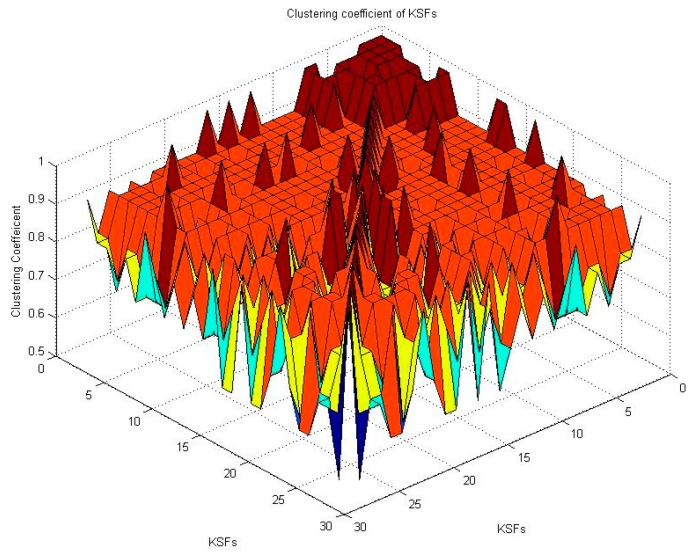
Green retrofits, which improve the environment and energy efficiency of buildings, are considered a potential solution for reducing energy consumption as well as improving human health and productivity. They represent some of the riskiest, most complex, and most uncertain projects to manage. As the foundation of project management, critical success factors (CSFs) have been emphasized by previous research. However, most studies identified and prioritized CSFs independently of stakeholders. This differs from the reality, where the success of green retrofits is tightly interrelated to the stakeholders of projects. To improve the analysis from a stakeholder perspective, the present study proposed an innovative method based on a two-mode social network analysis to integrate CSF analysis with stakeholders. The results of this method can provide further understanding of the interactions between stakeholders and CSFs, and the underlying relationship among CSFs through stakeholders. A pilot study was conducted to apply the proposed method and assess the CSFs for green retrofits in China. The five most significant CSFs are identified in the management of green retrofit. Furthermore, the interrelations between stakeholders and CSFs, coefficient and clusters of CSFs are likewise discussed.
绿色改造可改善建筑物的环境和能源效率,被视为降低能源消耗以及改善人类健康和生产力的一种潜在解决方案。它们是一些最难管理、最复杂且最具不确定性的项目。作为项目管理的基础,关键成功因素(CSF)已被先前的研究所强调。然而,大多数研究在识别关键成功因素并确定其优先级时并未考虑利益相关者。这与现实情况不同,在现实中绿色改造的成功与项目利益相关者紧密相关。为了从利益相关者的角度改进分析,本研究提出了一种基于双模式社会网络分析的创新方法,将关键成功因素分析与利益相关者相结合。该方法的结果可以进一步理解利益相关者与关键成功因素之间的相互作用,以及通过利益相关者体现的关键成功因素之间的潜在关系。进行了一项试点研究,以应用所提出的方法并评估中国绿色改造的关键成功因素。在绿色改造管理中确定了五个最重要的关键成功因素。此外,还讨论了利益相关者与关键成功因素之间的相互关系、关键成功因素的系数和聚类。