Kang Dong Ho, Heo Rok Won, Yi Chin-Ok, Kim Hwajin, Choi Chang Hwa, Roh Gu Seob
Department of Neurosurgery, Institute of Health Sciences, Gyeongsang National University School of Medicine, 15, Jinju-daero 816 Beon-gil, Jinju-si, Gyeongnam, Republic of Korea.
Department of Anatomy and Convergence Medical Science, Institute of Health Sciences, Gyeongsang National University School of Medicine, 15, Jinju-daero 816 Beon-gil, Jinju-si, Gyeongnam, Republic of Korea.
BMC Neurosci. 2015 Oct 30;16:72. doi: 10.1186/s12868-015-0202-2.
Obesity has deleterious effects on the brain, and metabolic dysfunction may exacerbate the outcomes of seizures and brain injuries. However, it is unclear whether obesity affects excitotoxicity-induced neuronal cell death. The purpose of this study was to investigate the effects of a high-fat diet (HFD) on neuroinflammation and oxidative stress in the hippocampus of kainic acid (KA)-treated mice.
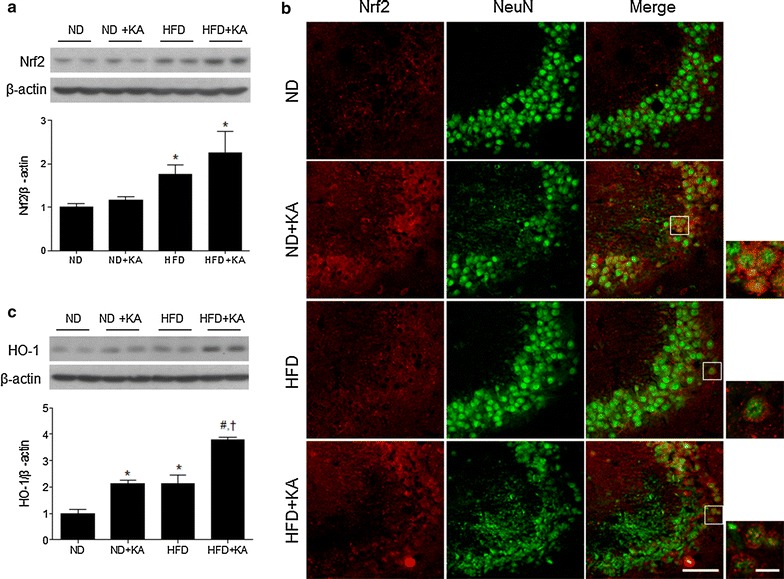
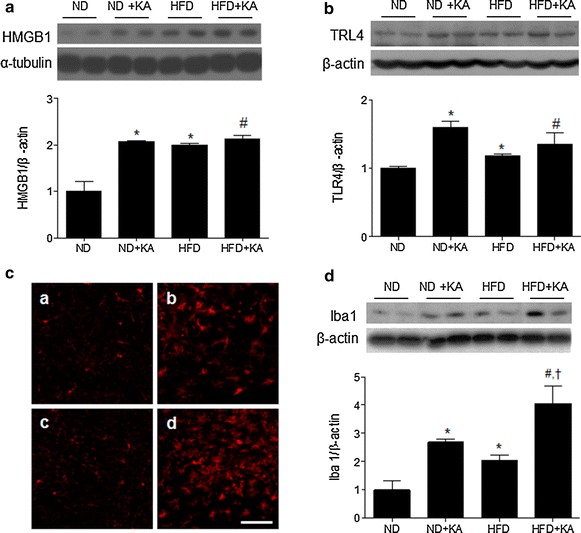
Mice were fed with a HFD or normal diet for 8 weeks and then received a systemic injection of KA. HFD-fed mice showed hypercholesterolemia, insulin resistance, and hepatic steatosis. HFD-fed mice showed greater susceptibility to KA-induced seizures, an increased number of terminal deoxynucleotidyl transferase dUTP nick end labeling (TUNEL)-positive cells, neuroinflammation, and oxidative stress. Furthermore, we found that KA treatment increased HFD-induced calpain1, nuclear factor E2-related factor 2, and heme oxygenase-1 expression in the hippocampus.
These findings imply that complex mechanisms affected by obesity-induced systemic inflammation, neuroinflammation, ER stress, calcium overload, and oxidative stress may contribute to neuronal death after brain injury.
肥胖对大脑有有害影响,代谢功能障碍可能会加剧癫痫发作和脑损伤的后果。然而,尚不清楚肥胖是否会影响兴奋性毒性诱导的神经元细胞死亡。本研究的目的是探讨高脂饮食(HFD)对 kainic 酸(KA)处理的小鼠海马体神经炎症和氧化应激的影响。
小鼠喂食 HFD 或正常饮食 8 周,然后接受 KA 的全身注射。喂食 HFD 的小鼠表现出高胆固醇血症、胰岛素抵抗和肝脂肪变性。喂食 HFD 的小鼠对 KA 诱导的癫痫发作更敏感,末端脱氧核苷酸转移酶 dUTP 缺口末端标记(TUNEL)阳性细胞数量增加,神经炎症和氧化应激增加。此外,我们发现 KA 处理增加了 HFD 诱导的海马体中钙蛋白酶 1、核因子 E2 相关因子 2 和血红素加氧酶-1 的表达。
这些发现表明,肥胖诱导的全身炎症、神经炎症、内质网应激、钙超载和氧化应激所影响的复杂机制可能导致脑损伤后神经元死亡。