Chuang Dennis Y, Simonyi Agnes, Kotzbauer Paul T, Gu Zezong, Sun Grace Y
Interdisciplinary Neuroscience Program, University of Missouri, Columbia, MO, USA.
Center for Translational Neuroscience, University of Missouri, Columbia, MO, USA.
J Neuroinflammation. 2015 Oct 31;12:199. doi: 10.1186/s12974-015-0419-0.
Oxidative stress and inflammation are important factors contributing to the pathophysiology of numerous neurological disorders, including Alzheimer's disease, Parkinson's disease, acute stroke, and infections of the brain. There is well-established evidence that proinflammatory cytokines and glutamate, as well as reactive oxygen species (ROS) and nitric oxide (NO), are produced upon microglia activation, and these are important factors contributing to inflammatory responses and cytotoxic damage to surrounding neurons and neighboring cells. Microglial cells express relatively high levels of cytosolic phospholipase A2 (cPLA2), an enzyme known to regulate membrane phospholipid homeostasis and release of arachidonic acid (AA) for synthesis of eicosanoids. The goal for this study is to elucidate the role of cPLA2IV in mediating the oxidative and inflammatory responses in microglial cells.
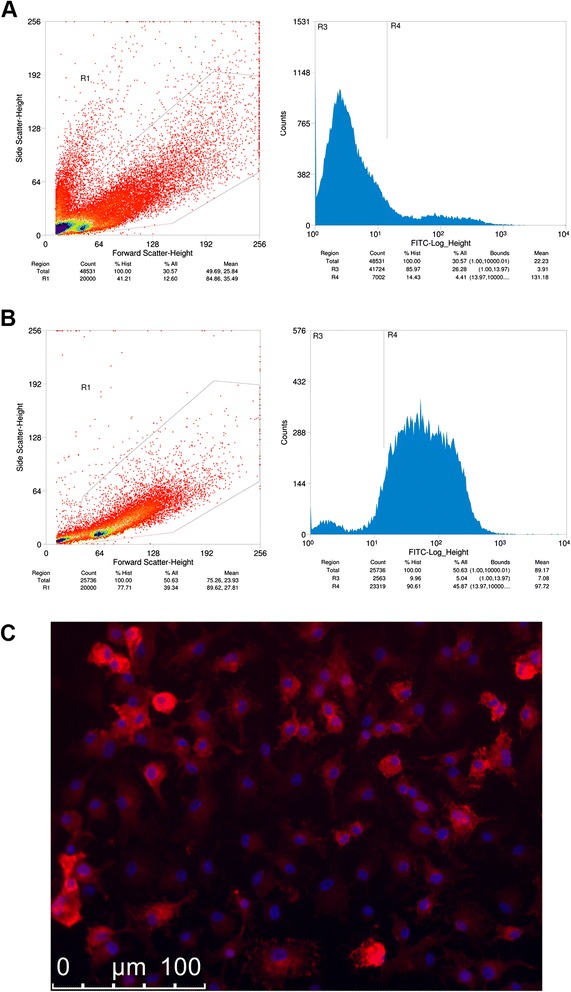
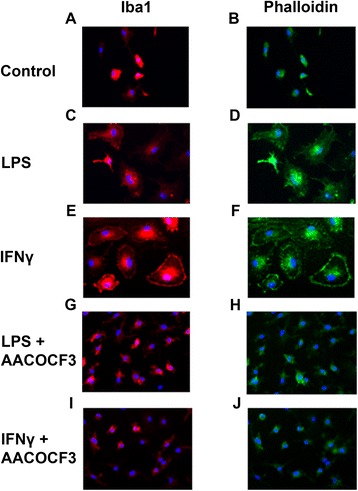
Experiments involved primary microglia cells isolated from transgenic mice deficient in cPLA2α or iPLA2β, as well as murine immortalized BV-2 microglial cells. Inhibitors of cPLA2/iPLA2/cyclooxygenase (COX)/lipoxygenase (LOX) were used in BV-2 microglial cell line. siRNA transfection was employed to knockdown cPLA2 expression in BV-2 cells. Griess reaction protocol was used to determine NO concentration, and CM-H2DCF-DA was used to detect ROS production in primary microglia and BV-2 cells. WST-1 assay was used to assess cell viability. Western blotting was used to assess protein expression levels. Immunocytochemical staining for phalloidin against F-actin was used to demonstrate cell morphology.
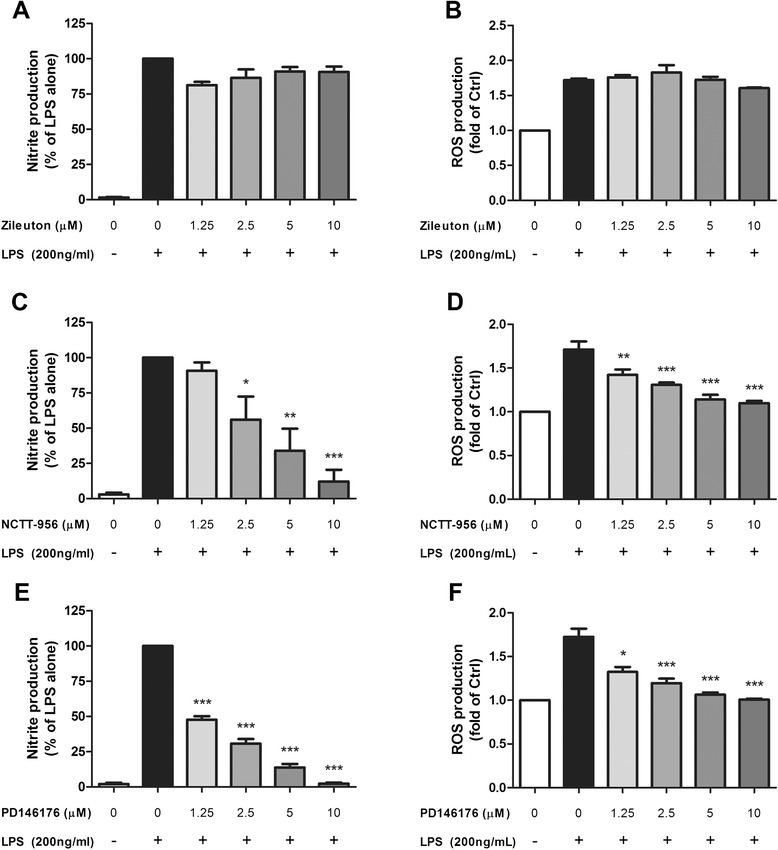
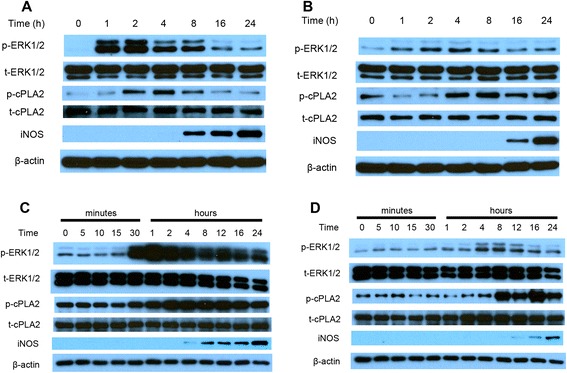
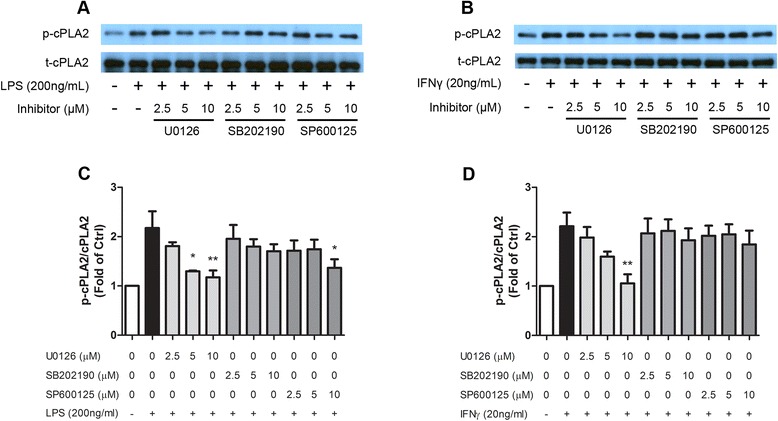
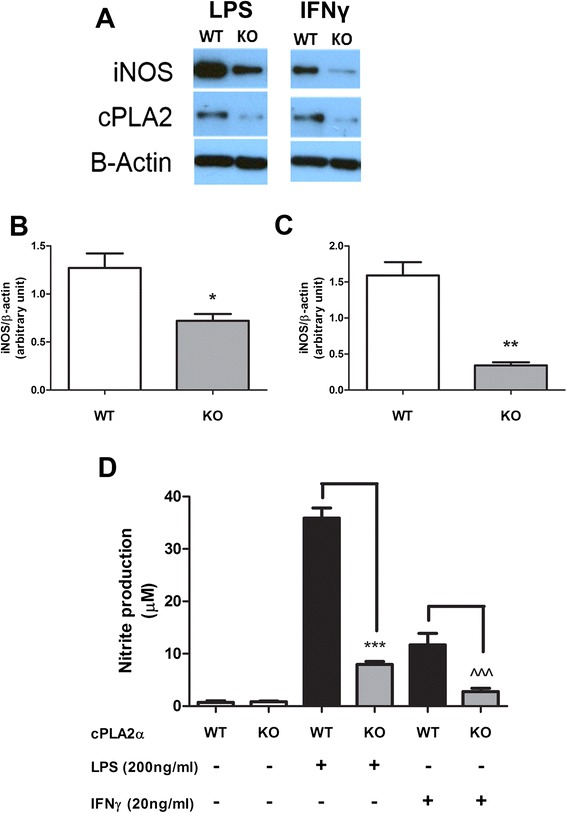
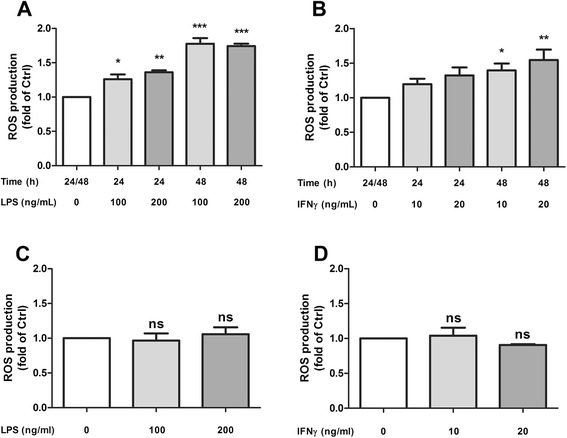
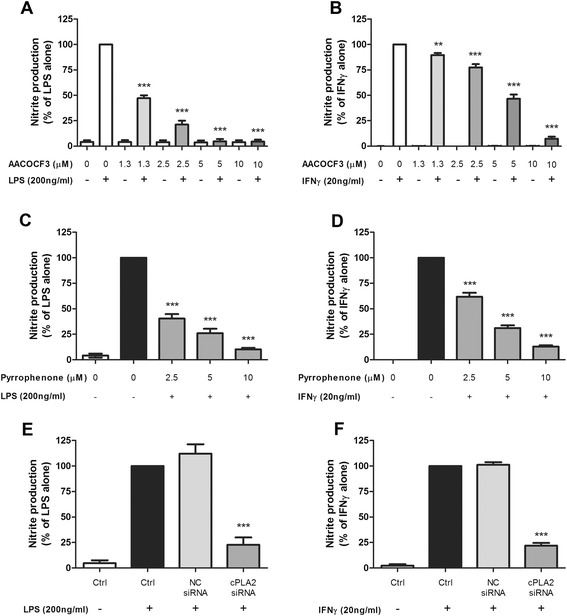
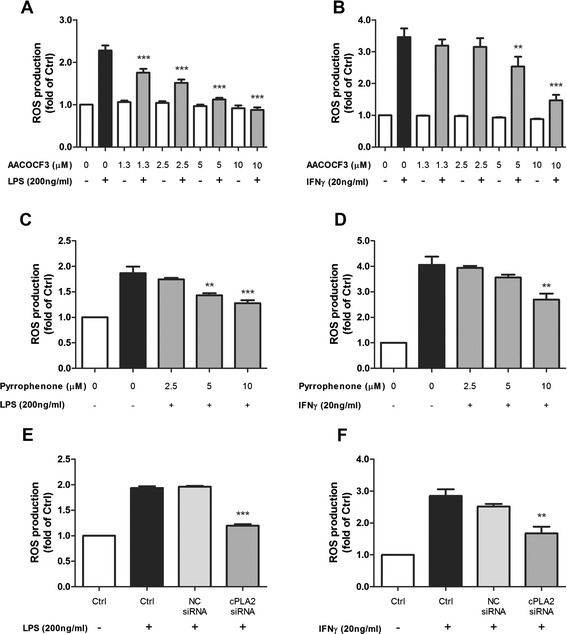
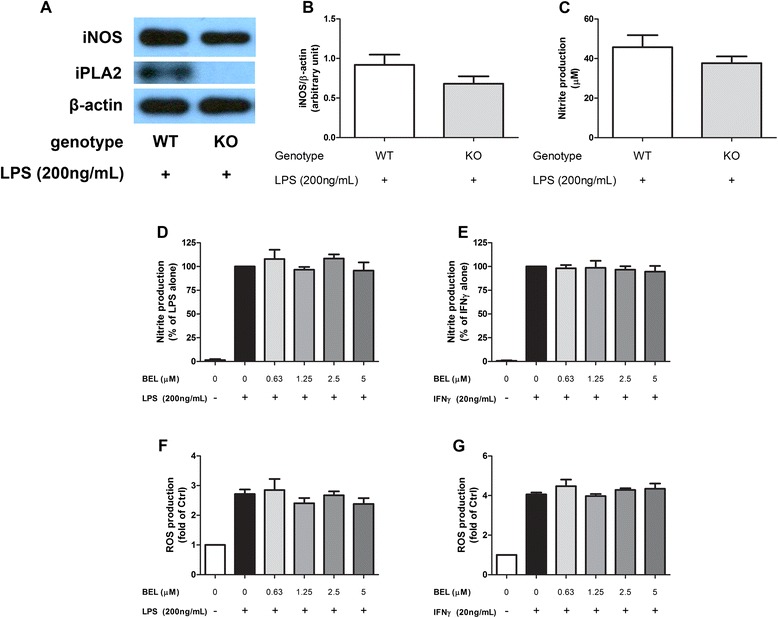
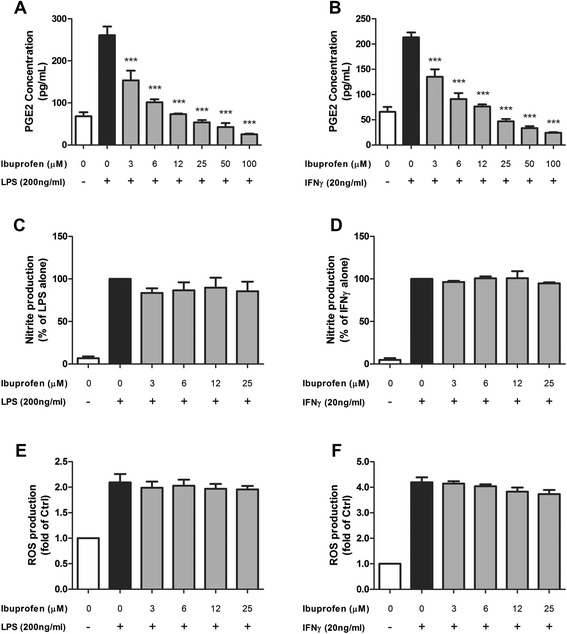
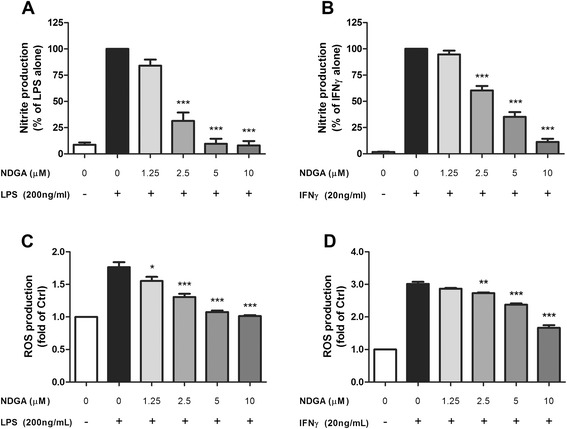
In both primary and BV-2 microglial cells, stimulation with lipopolysaccharide (LPS) or interferon gamma (IFNγ) resulted in a time-dependent increase in phosphorylation of cPLA2 together with ERK1/2. In BV-2 cells, LPS- and IFNγ-induced ROS and NO production was inhibited by arachidonyl trifluoromethyl ketone (AACOCF3) and pyrrophenone as well as RNA interference, but not BEL, suggesting a link between cPLA2, and not iPLA2, on LPS/IFNγ-induced nitrosative and oxidative stress in microglial cells. Primary microglial cells isolated from cPLA2α-deficient mice generated significantly less NO and ROS as compared with the wild-type mice. Microglia isolated from iPLA2β-deficient mice did not show a decrease in LPS-induced NO and ROS production. LPS/IFNγ induced morphological changes in primary microglia, and these changes were mitigated by AACOCF3. Interestingly, despite that LPS and IFNγ induced an increase in phospho-cPLA2 and prostaglandin E2 (PGE2) release, LPS- and IFNγ-induced NO and ROS production were not altered by the COX-1/2 inhibitor but were suppressed by the LOX-12 and LOX-15 inhibitors instead.
In summary, the results in this study demonstrated the role of cPLA2 in microglial activation with metabolic links to oxidative and inflammatory responses, and this was in part regulated by the AA metabolic pathways, namely the LOXs. Further studies with targeted inhibition of cPLA2/LOX in microglia during neuroinflammatory conditions can be valuable to investigate the therapeutic potential in ameliorating neurological disease pathology.
氧化应激和炎症是导致包括阿尔茨海默病、帕金森病、急性中风和脑部感染在内的多种神经疾病病理生理过程的重要因素。有充分证据表明,促炎细胞因子、谷氨酸以及活性氧(ROS)和一氧化氮(NO)在小胶质细胞激活时产生,这些是导致炎症反应以及对周围神经元和邻近细胞产生细胞毒性损伤的重要因素。小胶质细胞表达相对高水平的胞质磷脂酶A2(cPLA2),该酶已知可调节膜磷脂稳态并释放花生四烯酸(AA)以合成类二十烷酸。本研究的目的是阐明cPLA2IV在介导小胶质细胞氧化和炎症反应中的作用。
实验涉及从缺乏cPLA2α或iPLA2β的转基因小鼠中分离的原代小胶质细胞,以及小鼠永生化BV - 2小胶质细胞。在BV - 2小胶质细胞系中使用cPLA2/iPLA2/环氧化酶(COX)/脂氧合酶(LOX)抑制剂。采用siRNA转染来敲低BV - 2细胞中cPLA2的表达。采用Griess反应方案测定NO浓度,使用CM - H2DCF - DA检测原代小胶质细胞和BV - 2细胞中的ROS产生。采用WST - 1测定法评估细胞活力。使用蛋白质印迹法评估蛋白质表达水平。使用抗F - 肌动蛋白的鬼笔环肽进行免疫细胞化学染色以显示细胞形态。
在原代和BV - 2小胶质细胞中,用脂多糖(LPS)或干扰素γ(IFNγ)刺激导致cPLA2以及ERK1/2的磷酸化呈时间依赖性增加。在BV - 2细胞中,花生四烯酰三氟甲基酮(AACOCF3)和吡洛芬以及RNA干扰可抑制LPS和IFNγ诱导的ROS和NO产生,但BEL无此作用,这表明在小胶质细胞中,LPS/IFNγ诱导的亚硝化和氧化应激与cPLA2而非iPLA2之间存在联系。与野生型小鼠相比,从缺乏cPLA2α的小鼠中分离的原代小胶质细胞产生的NO和ROS明显更少。从缺乏iPLA2β的小鼠中分离的小胶质细胞在LPS诱导的NO和ROS产生方面未显示减少。LPS/IFNγ诱导原代小胶质细胞形态发生变化,而这些变化可被AACOCF3减轻。有趣的是,尽管LPS和IFNγ诱导磷酸化cPLA2和前列腺素E2(PGE2)释放增加,但LPS和IFNγ诱导的NO和ROS产生并未被COX - 1/2抑制剂改变,而是被LOX - 12和LOX - 15抑制剂抑制。
总之,本研究结果证明了cPLA2在小胶质细胞激活中与氧化和炎症反应存在代谢联系的作用,并且这部分受AA代谢途径即LOXs的调节。在神经炎症状态下对小胶质细胞中cPLA2/LOX进行靶向抑制的进一步研究对于探究改善神经疾病病理的治疗潜力可能具有重要价值。