Cisler Josh M, Sigel Benjamin A, Kramer Teresa L, Smitherman Sonet, Vanderzee Karin, Pemberton Joy, Kilts Clinton D
Brain Imaging Research Center, Department of Psychiatry, University of Arkansas for Medical Sciences, USA.
Brain Imaging Research Center, Department of Psychiatry, University of Arkansas for Medical Sciences, USA.
J Psychiatr Res. 2015 Dec;71:33-40. doi: 10.1016/j.jpsychires.2015.09.011. Epub 2015 Sep 25.
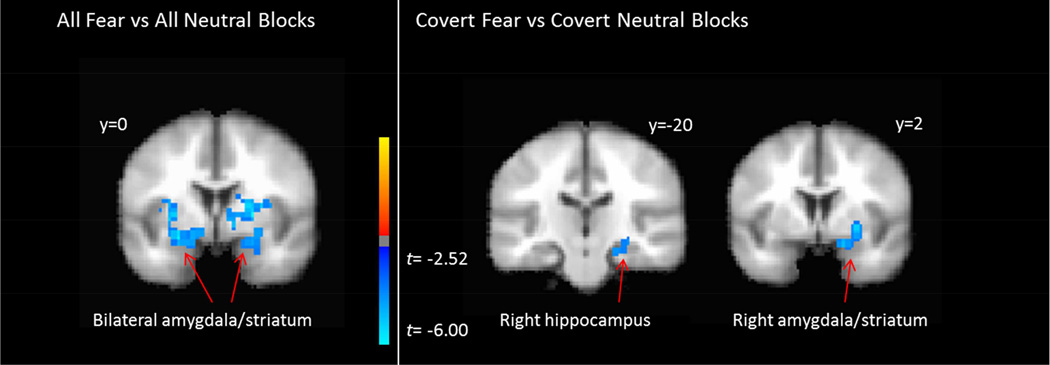
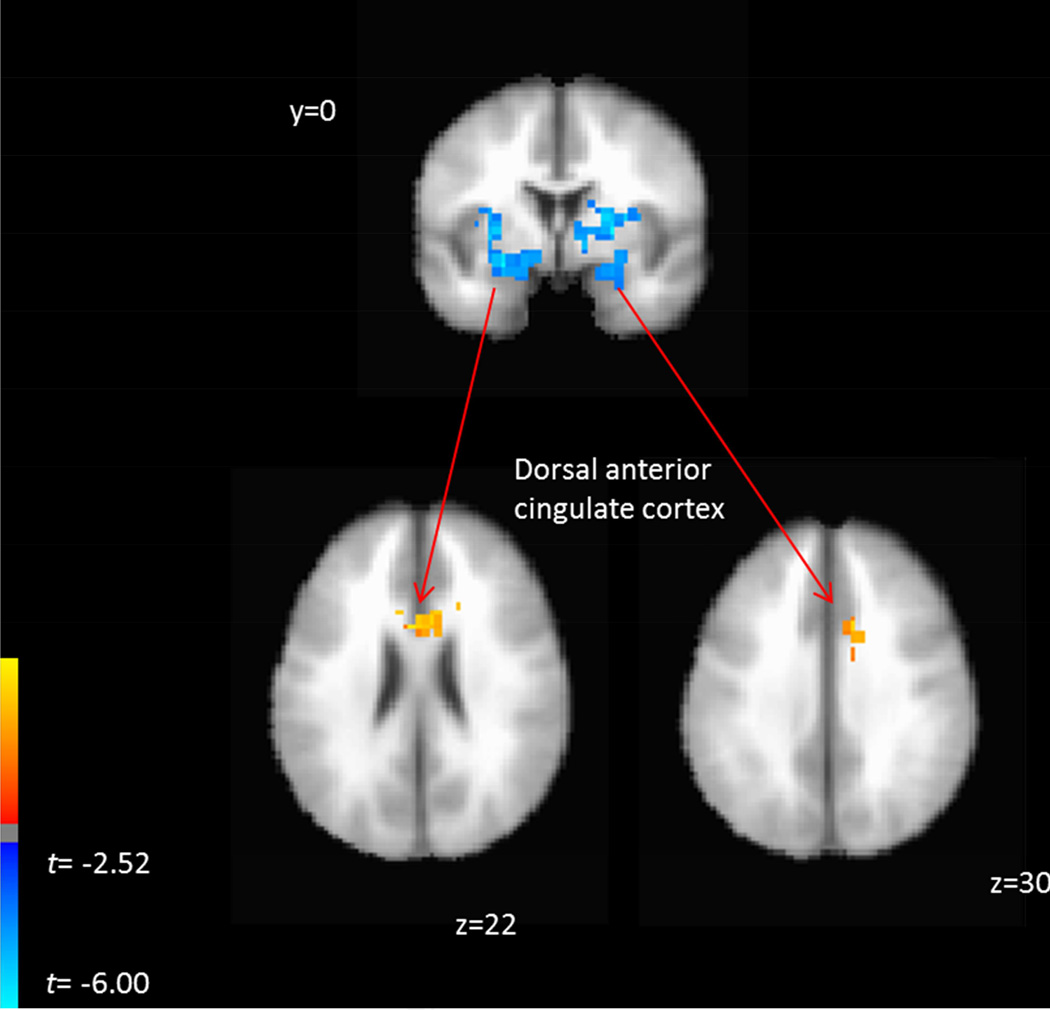
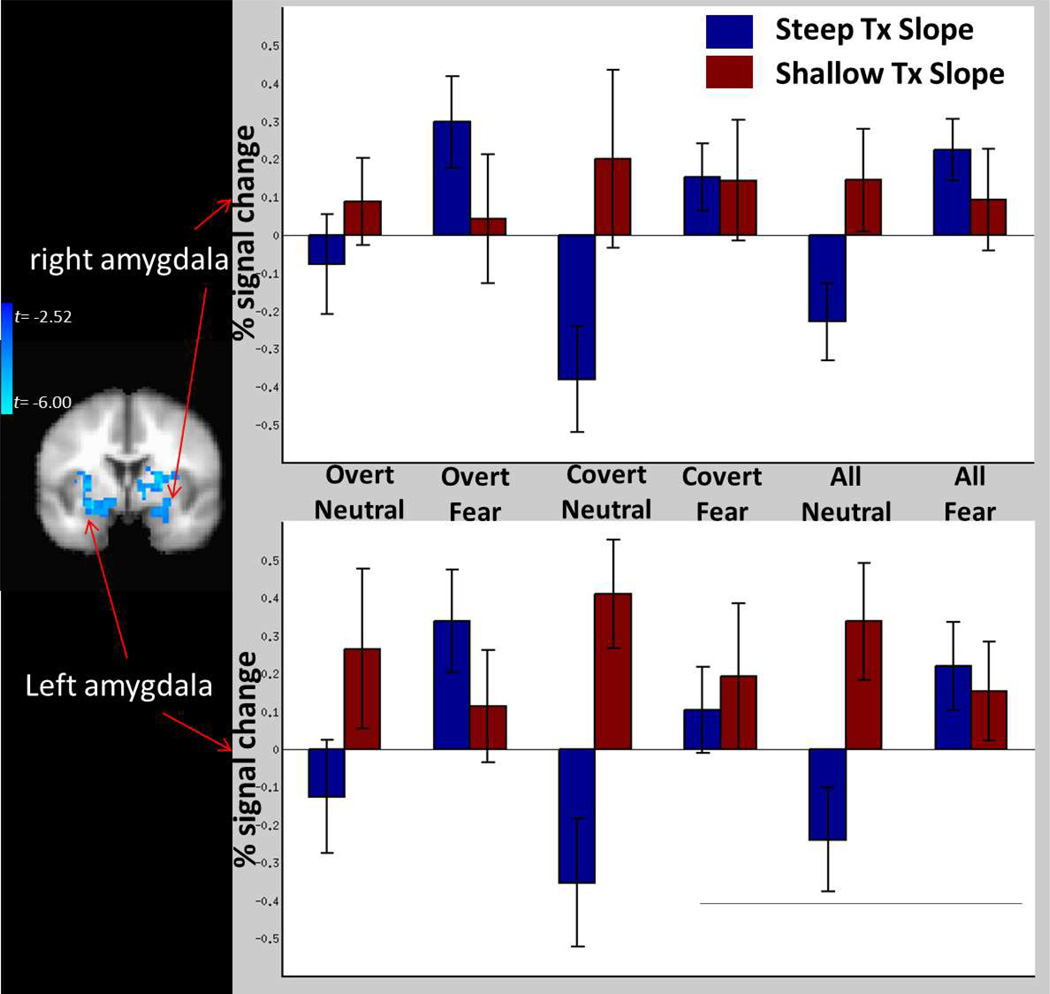
Trauma-Focused Cognitive-Behavioral Therapy (TF-CBT) is the gold standard treatment for pediatric PTSD. Nonetheless, clinical outcomes in TF-CBT are highly variable, indicating a need to identify reliable predictors that allow forecasting treatment response. Here, we test the hypothesis that functional neuroimaging correlates of emotion processing predict PTSD symptom reduction during Trauma-Focused Cognitive-Behavioral Therapy (TF-CBT) among adolescent girls with PTSD. Thirty-four adolescent girls with PTSD related to physical or sexual assault were enrolled in TF-CBT, delivered in an approximately 12 session format, in an open trial. Prior to treatment, they were engaged in an implicit threat processing task during 3T fMRI, during which they viewed faces depicting fearful or neutral expressions. Among adolescent girls completing TF-CBT (n = 23), slopes of PTSD symptom trajectories during TF-CBT were significantly related to pre-treatment degree of bilateral amygdala activation while viewing fearful vs neutral images. Adolescents with less symptom reduction were characterized by greater amygdala activation to both threat and neutral images (i.e., less threat-safety discrimination), whereas adolescents with greater symptom reduction were characterized by amygdala activation only to threat images. These clinical outcome relationships with pre-treatment bilateral amygdala activation remained when controlling for possible confounding demographic or clinical variables (e.g., concurrent psychotropic medication, comorbid diagnoses). While limited by a lack of a control group, these preliminary results suggest that pre-treatment amygdala reactivity to fear stimuli, a component of neurocircuitry models of PTSD, positively predicts symptom reduction during TF-CBT among assaulted adolescent girls, providing support for an objective measure for forecasting treatment response in this vulnerable population.
创伤聚焦认知行为疗法(TF-CBT)是治疗儿童创伤后应激障碍(PTSD)的金标准。尽管如此,TF-CBT的临床疗效差异很大,这表明需要确定可靠的预测指标,以便预测治疗反应。在此,我们检验这样一个假设:情绪加工的功能性神经影像关联能够预测创伤聚焦认知行为疗法(TF-CBT)期间遭受PTSD的青春期女孩的PTSD症状减轻情况。34名因身体或性侵犯而患有PTSD的青春期女孩参加了一项开放试验,接受了约12节课程形式的TF-CBT治疗。在治疗前,她们在3T功能磁共振成像(fMRI)过程中参与了一项内隐威胁加工任务,在此期间她们观看描绘恐惧或中性表情的面孔。在完成TF-CBT的青春期女孩(n = 23)中,TF-CBT期间PTSD症状轨迹的斜率与观看恐惧与中性图像时双侧杏仁核激活的治疗前程度显著相关。症状减轻较少的青少年表现为对威胁和中性图像的杏仁核激活程度更高(即威胁-安全辨别能力较弱),而症状减轻较多的青少年表现为仅对威胁图像有杏仁核激活。在控制了可能的混杂人口统计学或临床变量(如同时使用的精神药物、共病诊断)后,这些临床结果与治疗前双侧杏仁核激活的关系仍然存在。虽然因缺乏对照组而受到限制,但这些初步结果表明,治疗前杏仁核对恐惧刺激的反应性是PTSD神经回路模型的一个组成部分,它能正向预测遭受侵犯的青春期女孩在TF-CBT期间的症状减轻情况,为预测这一脆弱人群的治疗反应提供了一种客观测量方法。