Niu Dongdong, Xia Jing, Jiang Chunhao, Qi Beibei, Ling Xiaoyu, Lin Siyuan, Zhang Weixiong, Guo Jianhua, Jin Hailing, Zhao Hongwei
Department of Plant Pathology, College of Plant Protection, Nanjing Agriculture University, Nanjing, 210095, China.
Department of Plant Pathology and Microbiology, Center for Plant Cell Biology and Institute for Integrative Genome Biology, University of California, Riverside, California, CA-92521, USA.
J Integr Plant Biol. 2016 Apr;58(4):426-39. doi: 10.1111/jipb.12446. Epub 2016 Feb 5.
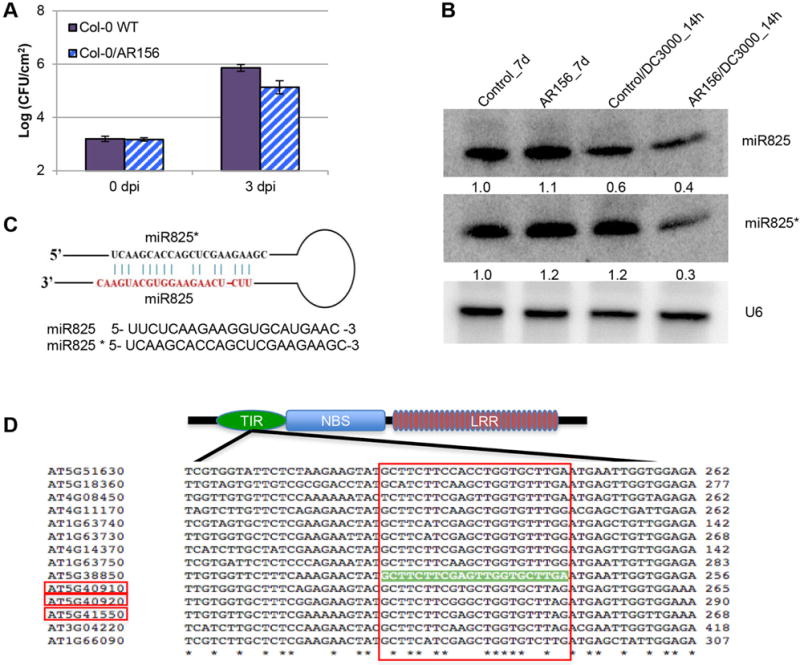
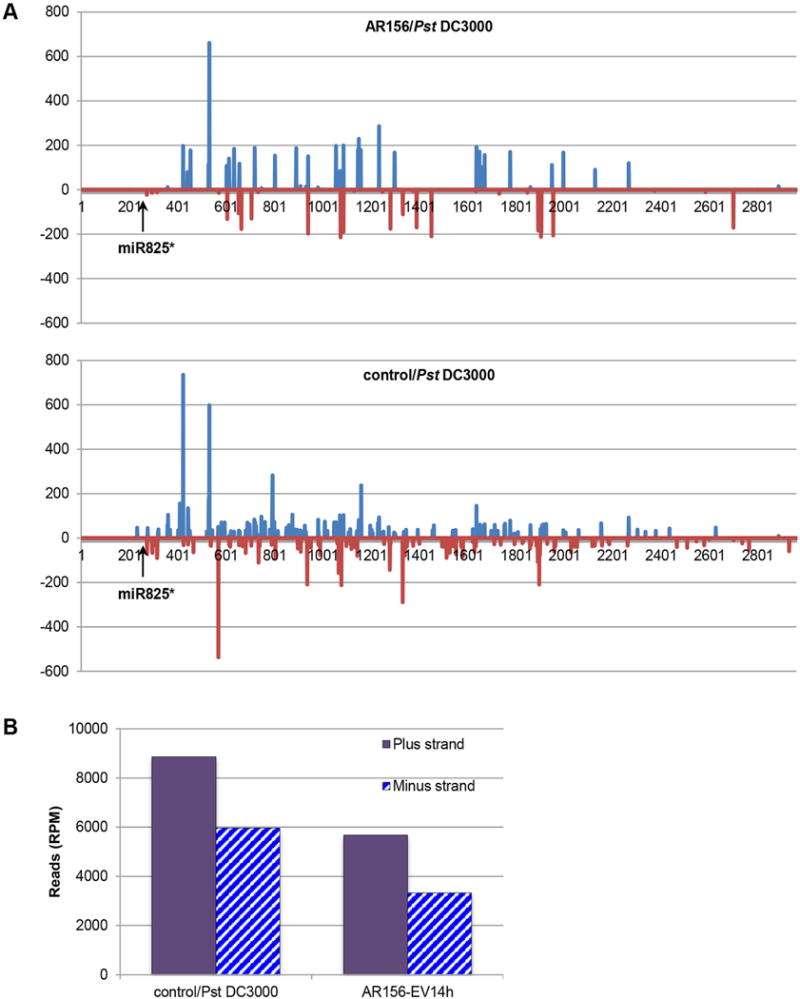
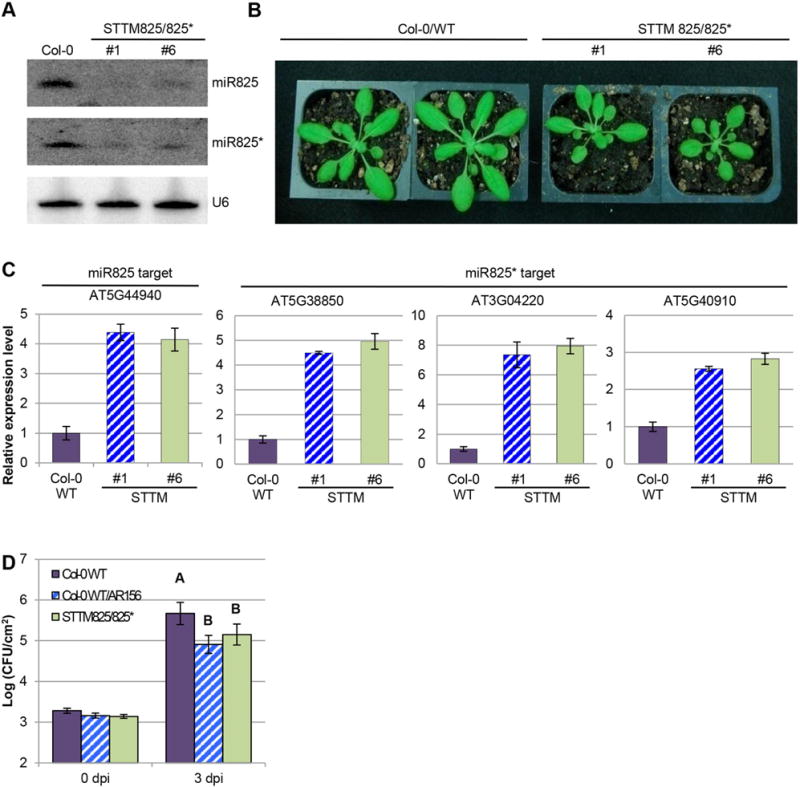
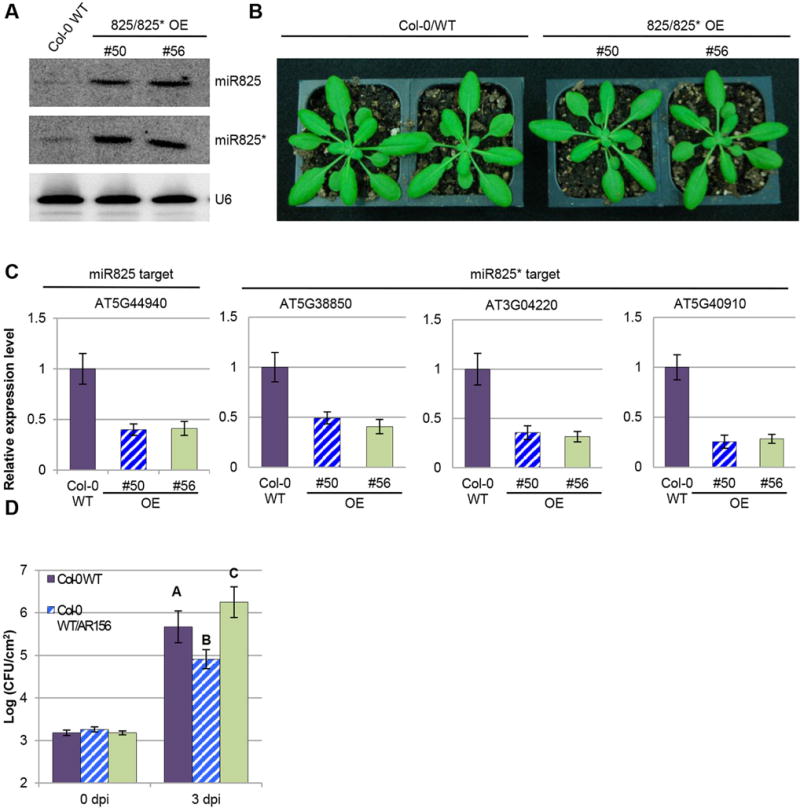
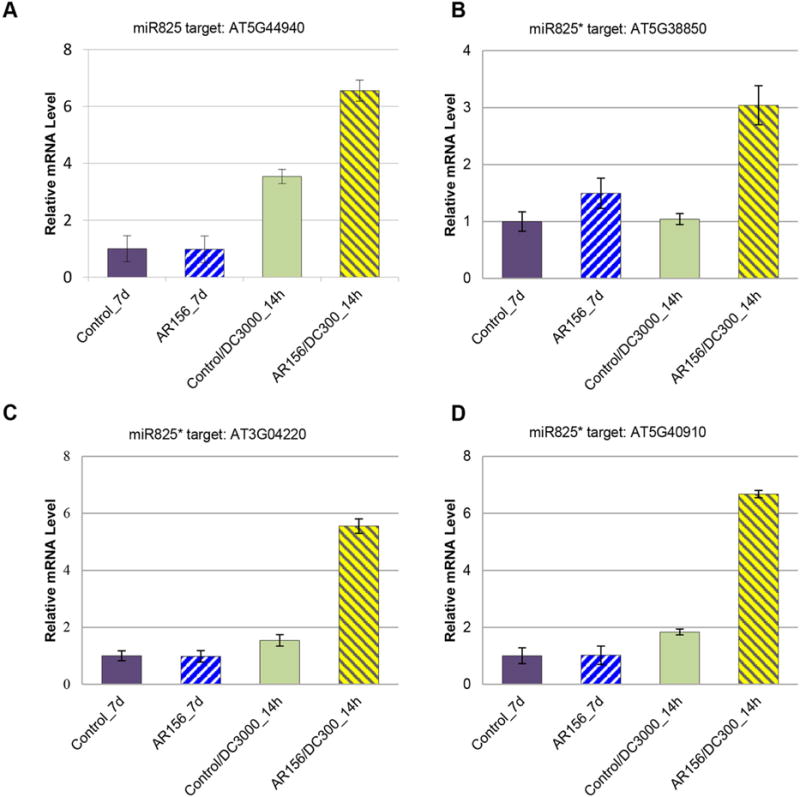
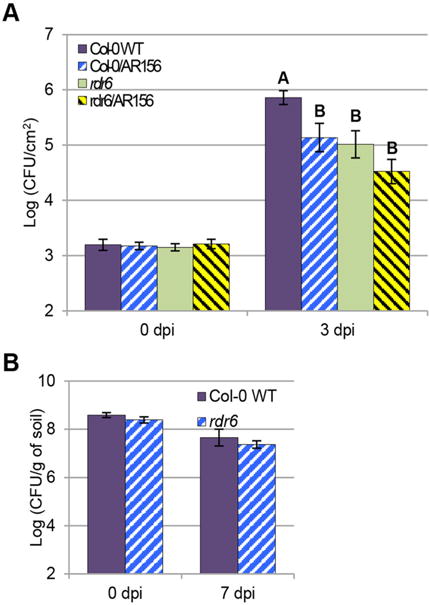
Small RNAs play an important role in plant immune responses. However, their regulatory function in induced systemic resistance (ISR) is nascent. Bacillus cereus AR156 is a plant growth-promoting rhizobacterium that induces ISR in Arabidopsis against bacterial infection. Here, by comparing small RNA profiles of Pseudomonas syringae pv. tomato (Pst) DC3000-infected Arabidopsis with and without AR156 pretreatment, we identified a group of Arabidopsis microRNAs (miRNAs) that are differentially regulated by AR156 pretreatment. miR825 and miR825* are two miRNA generated from a single miRNA gene. Northern blot analysis indicated that they were significantly downregulated in Pst DC3000-infected plants pretreated with AR156, in contrast to the plants without AR156 pretreatment. miR825 targets two ubiquitin-protein ligases, while miR825* targets toll-interleukin-like receptor (TIR)-nucleotide binding site (NBS) and leucine-rich repeat (LRR) type resistance (R) genes. The expression of these target genes negatively correlated with the expression of miR825 and miR825*. Moreover, transgenic plants showing reduced expression of miR825 and miR825* displayed enhanced resistance to Pst DC3000 infection, whereas transgenic plants overexpressing miR825 and miR825* were more susceptible. Taken together, our data indicates that Bacillus cereus AR156 pretreatment primes ISR to Pst infection by suppressing miR825 and miR825* and activating the defense related genes they targeted.
小RNA在植物免疫反应中发挥着重要作用。然而,它们在诱导系统抗性(ISR)中的调节功能尚处于起步阶段。蜡样芽孢杆菌AR156是一种促进植物生长的根际细菌,可在拟南芥中诱导ISR以抵抗细菌感染。在此,通过比较经AR156预处理和未经预处理的丁香假单胞菌番茄致病变种(Pst)DC3000感染的拟南芥的小RNA谱,我们鉴定出一组受AR156预处理差异调节的拟南芥微小RNA(miRNA)。miR825和miR825是由单个miRNA基因产生的两种miRNA。Northern印迹分析表明,与未经AR156预处理的植物相比,在经AR156预处理的Pst DC3000感染植物中它们显著下调。miR825靶向两种泛素蛋白连接酶,而miR825靶向Toll样白细胞介素受体(TIR)-核苷酸结合位点(NBS)和富含亮氨酸重复序列(LRR)型抗性(R)基因。这些靶基因的表达与miR825和miR825的表达呈负相关。此外,显示miR825和miR825表达降低的转基因植物对Pst DC3000感染表现出增强的抗性,而过度表达miR825和miR825的转基因植物更易感。综上所述,我们的数据表明,蜡样芽孢杆菌AR156预处理通过抑制miR825和miR825并激活它们靶向的防御相关基因,引发对Pst感染的ISR。