Yu Xiaobing, Zhao Dewei, Huang Shibo, Wang Benjie, Zhang Xiuzhi, Wang Wei, Wei Xiaowei
Department of Orthopaedics, The Affiliated Zhongshan Hospital of Dalian University, No. 6 Jiefang Street, Dalian, Liaoning, 116001, China.
BMC Musculoskelet Disord. 2015 Nov 2;16:329. doi: 10.1186/s12891-015-0790-0.
Avascular necrosis of femoral head and nonunion is a major complication after the treatment of displaced femoral neck fracture in young adults. The purpose of this study was to introduce a new technique using biodegradable magnesium screws and vascularised iliac grafting for displaced femoral neck fracture in young adults.
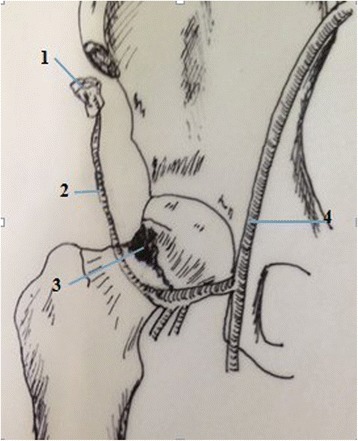
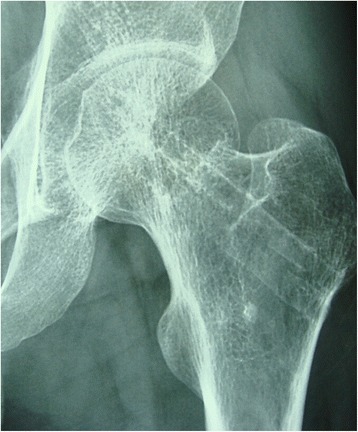
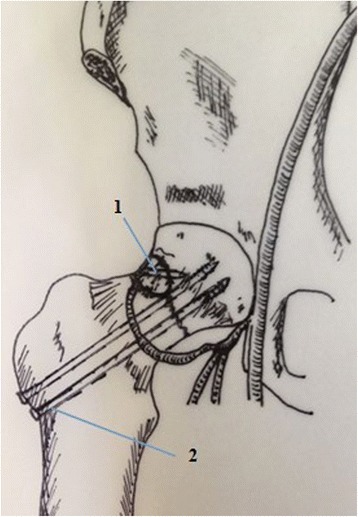
Totally 19 patients with displaced femoral neck fracture treated with this technique were retrospectively reviewed. The major steps of this technique included the harvesting of vascularized iliac graft, fixing of the fracture and biodegradable magnesium screws combined with vascularized iliac grafting implantation.
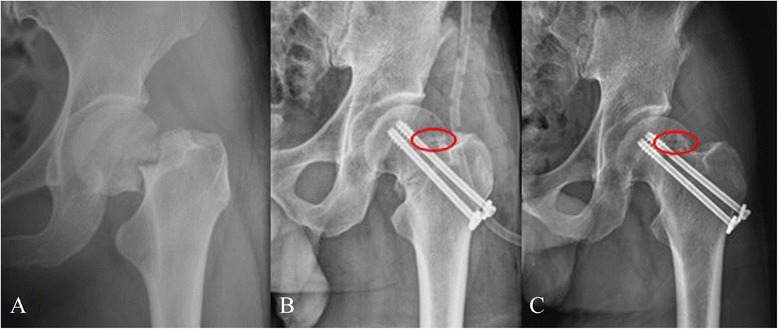
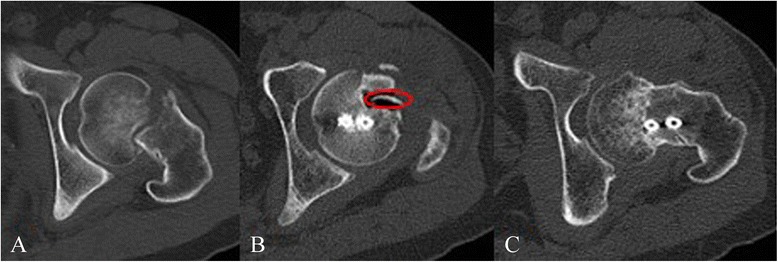
All patients were followed for an average of 16 months (range: 8-24 months). Clinical and radiological outcomes were evaluated. In 18 cases (94.7 %), the hip union was achieved at an average duration of 4.1 months (range: 3.6-5 months). The nonunion was observed in 1 hip (5.3 %) and the revision to a hip replacement was conducted after twelve months of the operation. According to the Harris hip score (HHS) that was available for 17 hips with satisfactory union, excellent results were achieved in 14 cases (HHS ≥ 90), fair results in 3 cases (HHS: 80-90), and poor result in 1 hip (HHS < 80). No patient developed avascular necrosis of femoral head after operation.
Biodegradable magnesium screws and vascularized iliac grafting based on the ascending branch of lateral femoral circumflex artery for displaced femoral neck fracture in young adults can provide the satisfactory results with a low rate of complications including avascular necrosis and nonunion.
This prospective and randomized controlled study was registered in the Chinese Clinical Trial Registry ( ChiCTR-TRC-13003238). Date of registration: 2013-3-21.
股骨头缺血性坏死和骨不连是年轻成人移位型股骨颈骨折治疗后的主要并发症。本研究的目的是介绍一种使用可生物降解镁螺钉和带血管蒂髂骨移植治疗年轻成人移位型股骨颈骨折的新技术。
回顾性分析19例采用该技术治疗的移位型股骨颈骨折患者。该技术的主要步骤包括切取带血管蒂髂骨、骨折固定以及可生物降解镁螺钉联合带血管蒂髂骨移植植入。
所有患者平均随访16个月(范围:8 - 24个月)。评估临床和影像学结果。18例(94.7%)平均在4.1个月(范围:3.6 - 5个月)实现髋关节愈合。1例(5.3%)出现骨不连,术后12个月改行髋关节置换术。根据17例愈合良好的髋关节的Harris髋关节评分(HHS),14例(HHS≥90)结果优秀,3例(HHS:80 - 90)结果良好,1例髋关节(HHS<80)结果差。术后无患者发生股骨头缺血性坏死。
基于旋股外侧动脉升支的可生物降解镁螺钉和带血管蒂髂骨移植治疗年轻成人移位型股骨颈骨折可取得满意效果,包括股骨头缺血性坏死和骨不连在内的并发症发生率低。
本前瞻性随机对照研究已在中国临床试验注册中心注册(ChiCTR - TRC - 13003238)。注册日期:2013年3月21日。