Stoney Patrick N, Helfer Gisela, Rodrigues Diana, Morgan Peter J, McCaffery Peter
School of Medical Sciences, Institute of Medical Sciences, University of Aberdeen, Foresterhill, Aberdeen, Scotland, AB25 2ZD, United Kingdom.
Rowett Institute of Nutrition and Health, University of Aberdeen, Bucksburn, Aberdeen, Scotland, AB21 9SB, United Kingdom.
Glia. 2016 Mar;64(3):425-39. doi: 10.1002/glia.22938. Epub 2015 Nov 3.
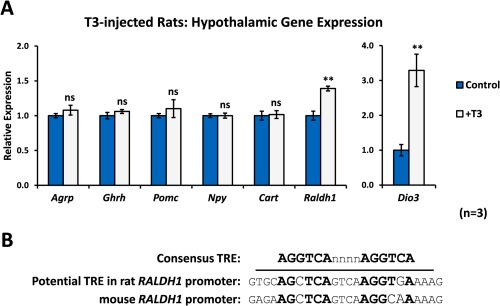
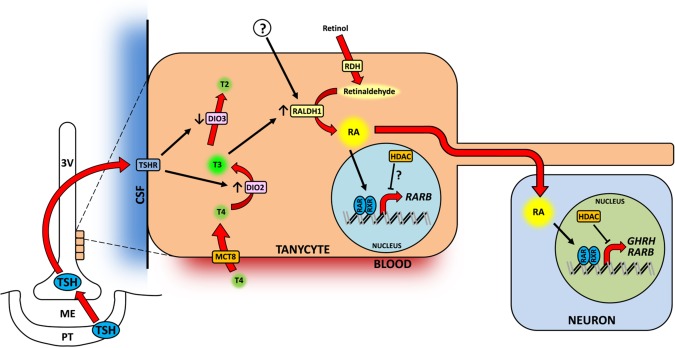
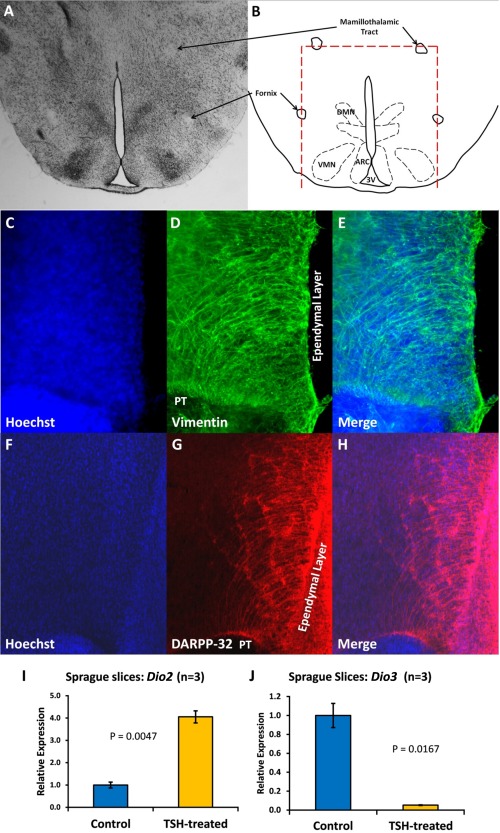
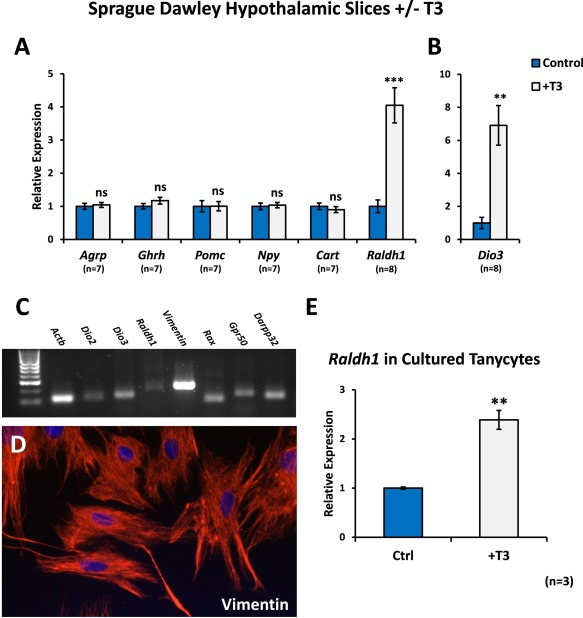
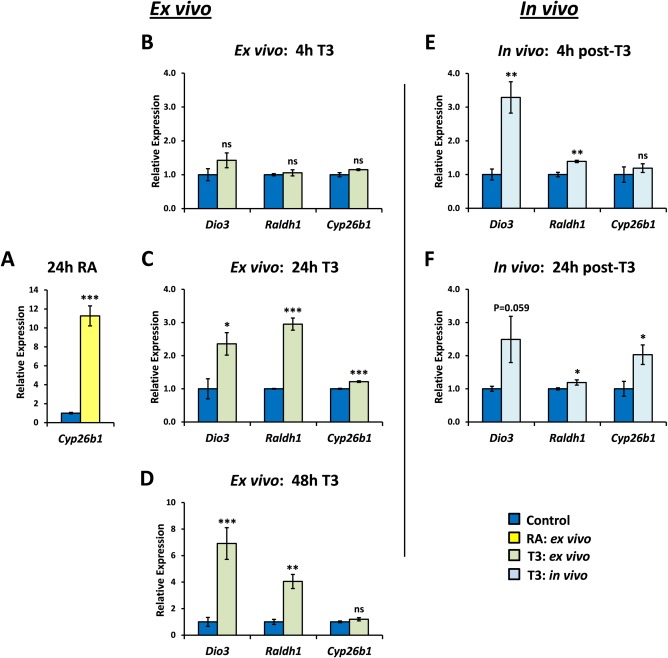
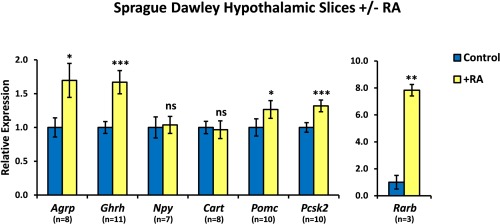
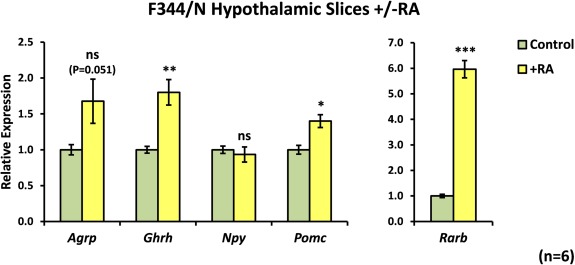
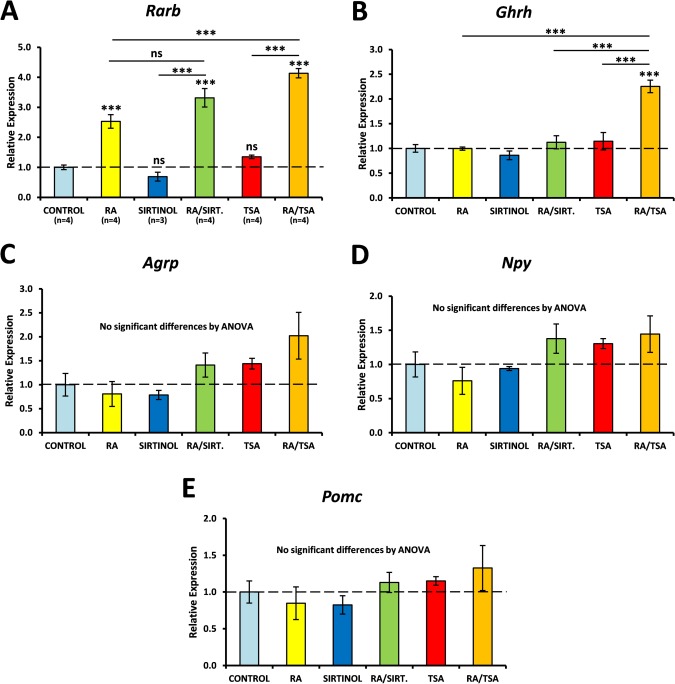
Thyroid hormone (TH) is essential for adult brain function and its actions include several key roles in the hypothalamus. Although TH controls gene expression via specific TH receptors of the nuclear receptor class, surprisingly few genes have been demonstrated to be directly regulated by TH in the hypothalamus, or the adult brain as a whole. This study explored the rapid induction by TH of retinaldehyde dehydrogenase 1 (Raldh1), encoding a retinoic acid (RA)-synthesizing enzyme, as a gene specifically expressed in hypothalamic tanycytes, cells that mediate a number of actions of TH in the hypothalamus. The resulting increase in RA may then regulate gene expression via the RA receptors, also of the nuclear receptor class. In vivo exposure of the rat to TH led to a significant and rapid increase in hypothalamic Raldh1 within 4 hours. That this may lead to an in vivo increase in RA is suggested by the later induction by TH of the RA-responsive gene Cyp26b1. To explore the actions of RA in the hypothalamus as a potential mediator of TH control of gene regulation, an ex vivo hypothalamic rat slice culture method was developed in which the Raldh1-expressing tanycytes were maintained. These slice cultures confirmed that TH did not act on genes regulating energy balance but could induce Raldh1. RA has the potential to upregulate expression of genes involved in growth and appetite, Ghrh and Agrp. This regulation is acutely sensitive to epigenetic changes, as has been shown for TH action in vivo. These results indicate that sequential triggering of two nuclear receptor signalling systems has the capability to mediate some of the functions of TH in the hypothalamus.
甲状腺激素(TH)对成人大脑功能至关重要,其作用包括在下丘脑中发挥的几个关键作用。尽管TH通过核受体类的特定TH受体控制基因表达,但令人惊讶的是,在下丘脑或整个成人大脑中,很少有基因被证明受TH直接调控。本研究探讨了TH对视网膜醛脱氢酶1(Raldh1)的快速诱导作用,Raldh1编码一种视黄酸(RA)合成酶,是一种在下丘脑伸展细胞中特异性表达的基因,伸展细胞介导TH在下丘脑中的多种作用。随后RA的增加可能通过同样属于核受体类的RA受体调节基因表达。大鼠体内暴露于TH导致4小时内下丘脑Raldh1显著快速增加。TH对RA反应性基因Cyp26b1的后续诱导表明这可能导致体内RA增加。为了探索RA在下丘脑中作为TH控制基因调控潜在介质的作用,开发了一种体外下丘脑大鼠脑片培养方法,其中维持表达Raldh1的伸展细胞。这些脑片培养证实TH不作用于调节能量平衡的基因,但可诱导Raldh1。RA有可能上调参与生长和食欲的基因Ghrh和Agrp的表达。这种调节对表观遗传变化极为敏感,正如TH在体内的作用所示。这些结果表明,两个核受体信号系统的顺序触发有能力介导TH在下丘脑中的一些功能。