Institute of Medical Sciences, University of Aberdeen, Foresterhill, Aberdeen AB25 2ZD, Scotland, UK.
Rowett Institute of Nutrition and Health, University of Aberdeen, Greenburn Road, Bucksburn, Aberdeen AB21 9SB, Scotland, UK; Faculty of Life Sciences, University of Bradford, Richmond Road, Bradford BD7 1DP, UK.
Brain Behav Immun. 2017 Mar;61:340-352. doi: 10.1016/j.bbi.2016.12.013. Epub 2016 Dec 18.
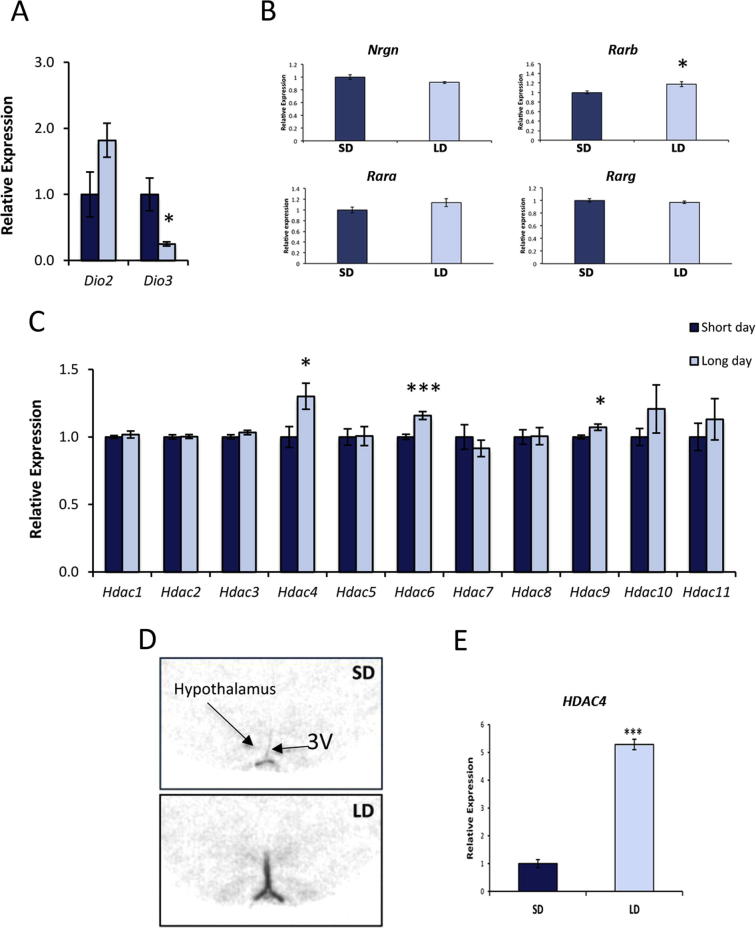
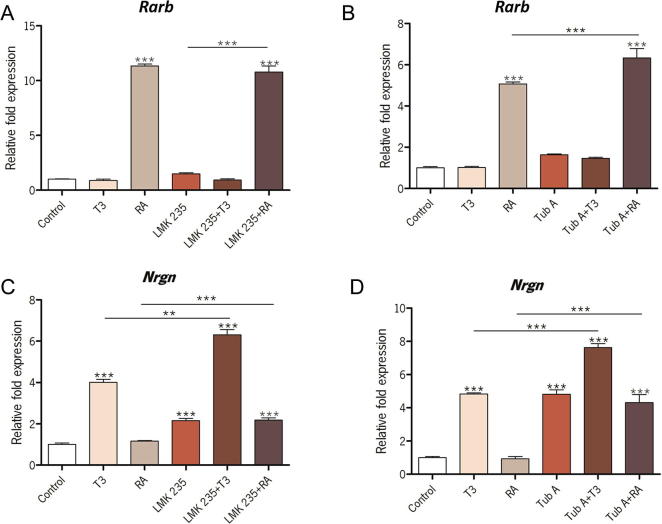
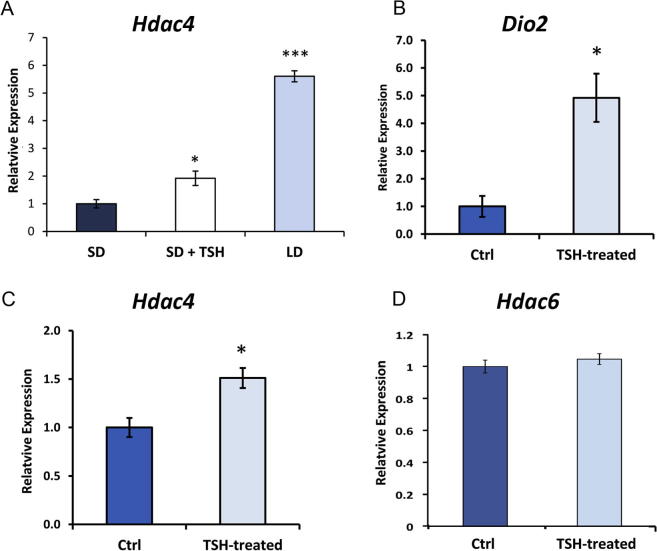
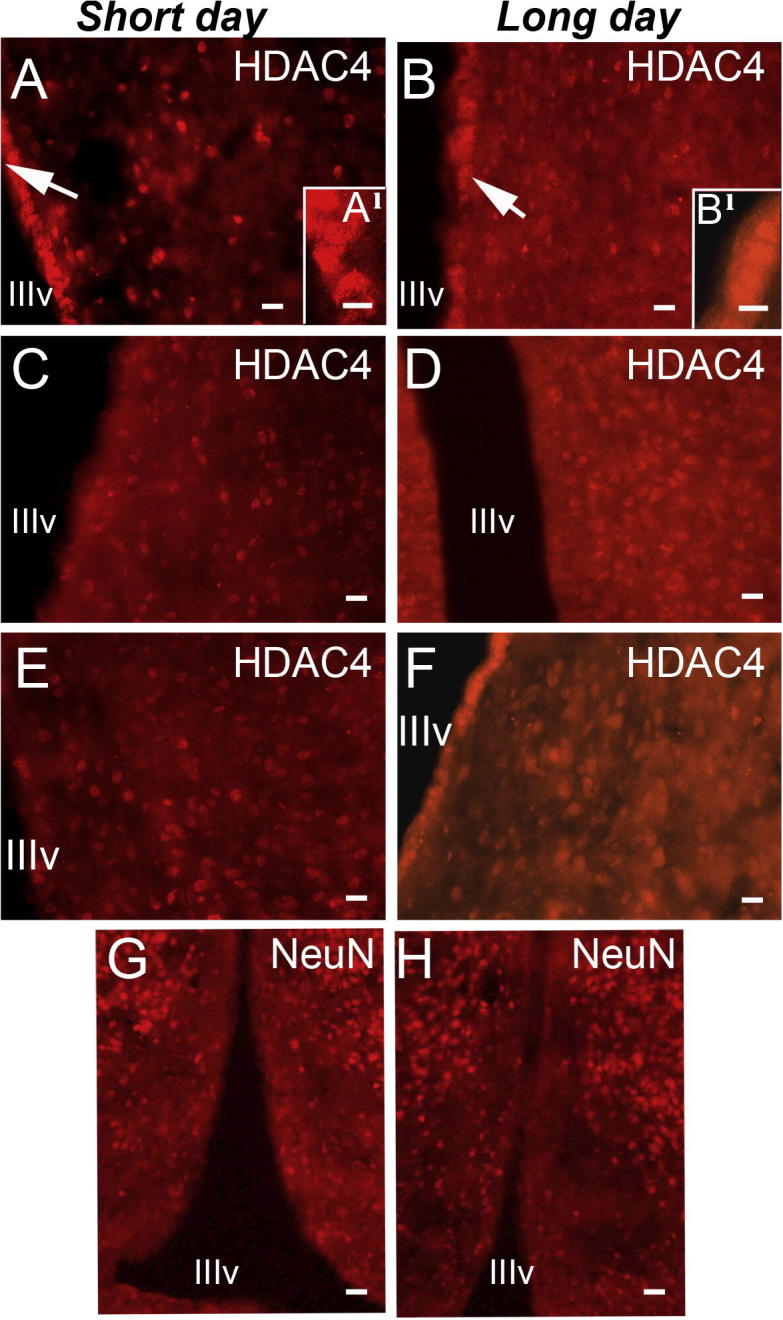
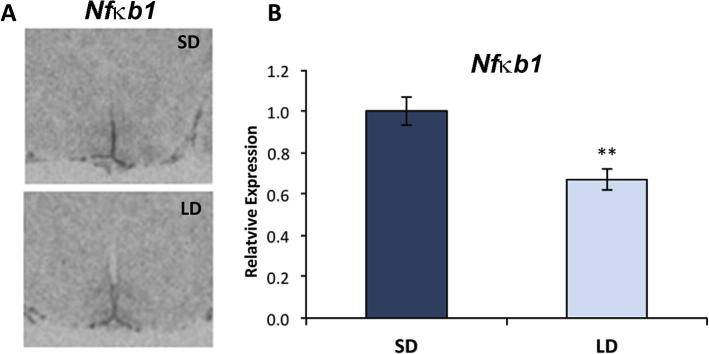
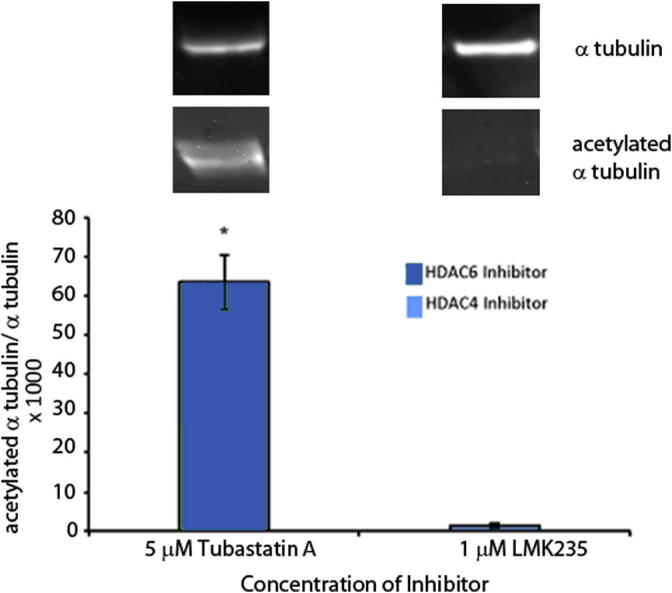
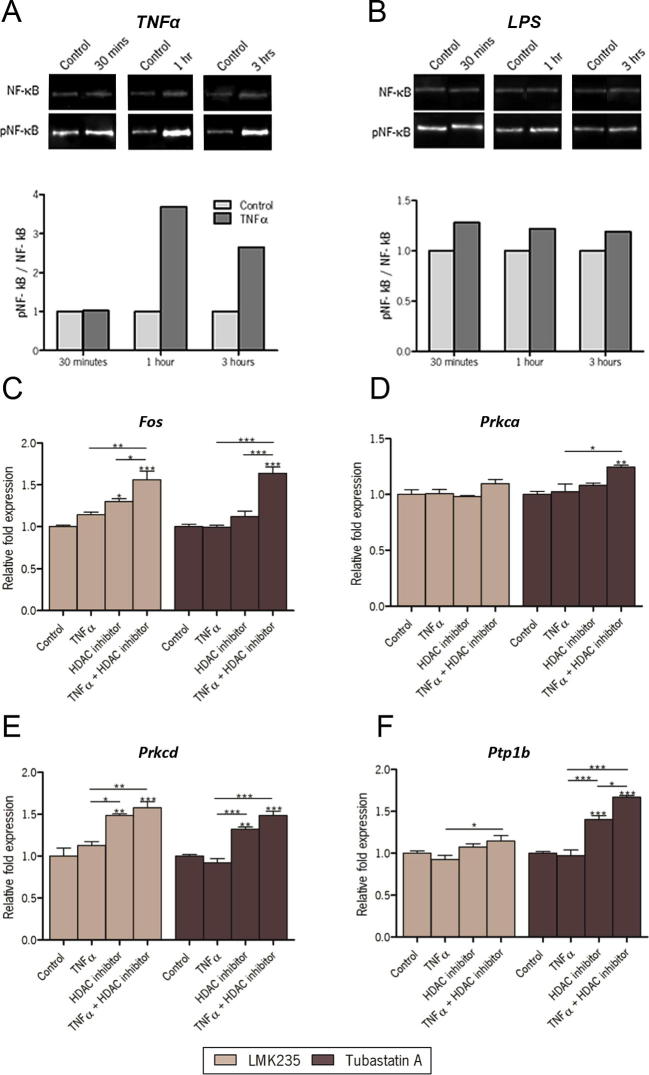
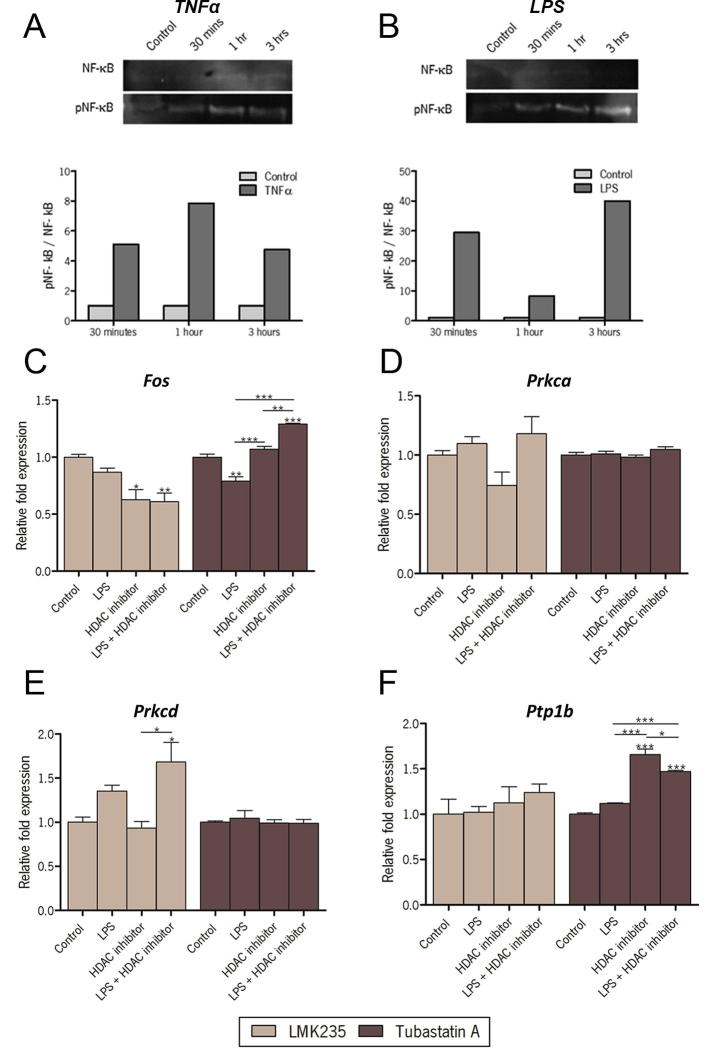
Seasonal animals undergo changes in physiology and behavior between summer and winter conditions. These changes are in part driven by a switch in a series of hypothalamic genes under transcriptional control by hormones and, of recent interest, inflammatory factors. Crucial to the control of transcription are histone deacetylases (HDACs), generally acting to repress transcription by local histone modification. Seasonal changes in hypothalamic HDAC transcripts were investigated in photoperiod-sensitive F344 rats by altering the day-length (photoperiod). HDAC4, 6 and 9 were found to change in expression. The potential influence of HDACs on two hypothalamic signaling pathways that regulate transcription, inflammatory and nuclear receptor signaling, was investigated. For inflammatory signaling the focus was on NF-κB because of the novel finding made that its expression is seasonally regulated in the rat hypothalamus. For nuclear receptor signaling it was discovered that expression of retinoic acid receptor beta was regulated seasonally. HDAC modulation of NF-κB-induced pathways was examined in a hypothalamic neuronal cell line and primary hypothalamic tanycytes. HDAC4/5/6 inhibition altered the control of gene expression (Fos, Prkca, Prkcd and Ptp1b) by inducers of NF-κB that activate inflammation. These inhibitors also modified the action of nuclear receptor ligands thyroid hormone and retinoic acid. Thus seasonal changes in HDAC4 and 6 have the potential to epigenetically modify multiple gene regulatory pathways in the hypothalamus that could act to limit inflammatory pathways in the hypothalamus during long-day summer-like conditions.
季节性动物在夏季和冬季条件之间经历生理和行为上的变化。这些变化部分是由激素和最近引起关注的炎症因子转录控制下的一系列下丘脑基因的转变所驱动的。组蛋白去乙酰化酶(HDACs)对转录的控制至关重要,通常通过局部组蛋白修饰来抑制转录。通过改变光照时间(光周期),研究了光周期敏感的 F344 大鼠下丘脑 HDAC 转录本在季节性变化中的情况。发现 HDAC4、6 和 9 的表达发生了变化。研究了 HDACs 对调节转录的两种下丘脑信号通路(炎症和核受体信号)的潜在影响。对于炎症信号,重点是 NF-κB,因为新发现其在大鼠下丘脑呈季节性调节。对于核受体信号,发现视黄酸受体β的表达呈季节性调节。在下丘脑神经元细胞系和原代下丘脑成纤维细胞中检查了 HDAC 对 NF-κB 诱导途径的调节。HDAC4/5/6 抑制改变了 NF-κB 诱导物(激活炎症)对基因表达(Fos、Prkca、Prkcd 和 Ptp1b)的控制。这些抑制剂还改变了甲状腺激素和视黄酸等核受体配体的作用。因此,HDAC4 和 6 的季节性变化有可能在表观遗传上修饰下丘脑的多个基因调控途径,从而在夏季长日条件下限制下丘脑的炎症途径。