Grouleff Julie, Ladefoged Lucy Kate, Koldsø Heidi, Schiøtt Birgit
Center for Insoluble Protein Structures and Interdisciplinary Nanoscience Center, Department of Chemistry, Aarhus University Aarhus, Denmark.
Department of Biochemistry, University of Oxford Oxford, UK.
Front Pharmacol. 2015 Oct 16;6:235. doi: 10.3389/fphar.2015.00235. eCollection 2015.
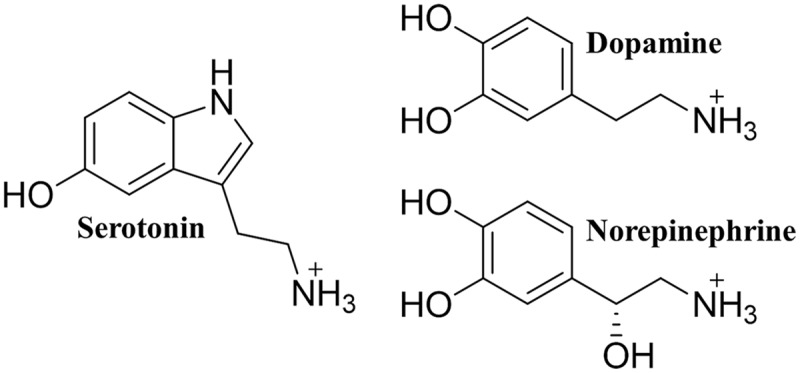
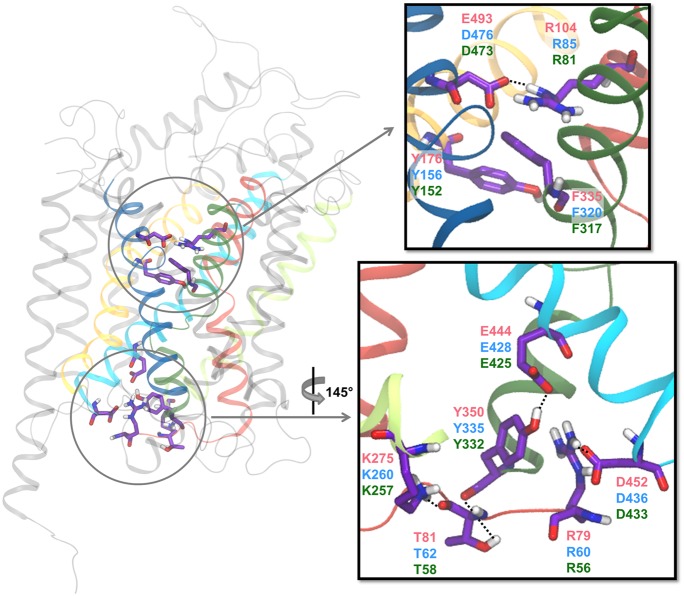
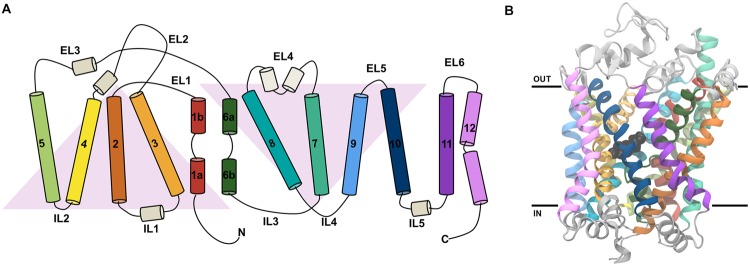
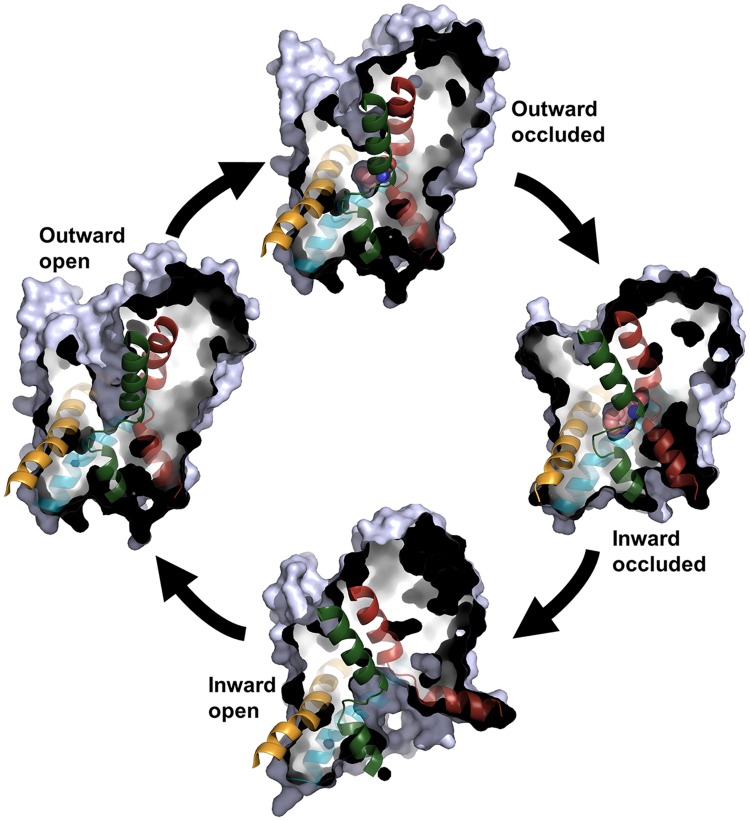
The human monoamine transporters (MATs) facilitate the reuptake of the neurotransmitters serotonin, dopamine, and norepinephrine from the synaptic cleft. Imbalance in monoaminergic neurotransmission is linked to various diseases including major depression, attention deficit hyperactivity disorder, schizophrenia, and Parkinson's disease. Inhibition of the MATs is thus an important strategy for treatment of such diseases. The MATs are sodium-coupled transport proteins belonging to the neurotransmitter/Na(+) symporter (NSS) family, and the publication of the first high-resolution structure of a NSS family member, the bacterial leucine transporter LeuT, in 2005, proved to be a major stepping stone for understanding this family of transporters. Structural data allows for the use of computational methods to study the MATs, which in turn has led to a number of important discoveries. The process of substrate translocation across the membrane is an intrinsically dynamic process. Molecular dynamics simulations, which can provide atomistic details of molecular motion on ns to ms timescales, are therefore well-suited for studying transport processes. In this review, we outline how molecular dynamics simulations have provided insight into the large scale motions associated with transport of the neurotransmitters, as well as the presence of external and internal gates, the coupling between ion and substrate transport, and differences in the conformational changes induced by substrates and inhibitors.
人类单胺转运体(MATs)有助于从突触间隙重新摄取神经递质5-羟色胺、多巴胺和去甲肾上腺素。单胺能神经传递失衡与多种疾病相关,包括重度抑郁症、注意力缺陷多动障碍、精神分裂症和帕金森病。因此,抑制MATs是治疗此类疾病的重要策略。MATs是属于神经递质/Na(+)共转运体(NSS)家族的钠偶联转运蛋白,2005年首个NSS家族成员细菌亮氨酸转运体LeuT的高分辨率结构的发表,被证明是理解这个转运体家族的一个重要里程碑。结构数据使得利用计算方法研究MATs成为可能,这反过来又带来了许多重要发现。底物跨膜转运过程本质上是一个动态过程。分子动力学模拟能够在纳秒到毫秒时间尺度上提供分子运动的原子细节,因此非常适合研究转运过程。在这篇综述中,我们概述了分子动力学模拟如何为与神经递质转运相关的大规模运动、外部和内部门控的存在、离子与底物转运之间的偶联以及底物和抑制剂诱导的构象变化差异提供了深入了解。