Mohan Kumar Dipu, Lin Mingqun, Xiong Qingming, Webber Mathew James, Kural Comert, Rikihisa Yasuko
Department of Veterinary Biosciences, The Ohio State University, Columbus, Ohio, USA.
Interdisciplinary Biophysics Graduate Program, The Ohio State University, Columbus, Ohio, USA.
mBio. 2015 Nov 3;6(6):e01541-15. doi: 10.1128/mBio.01541-15.
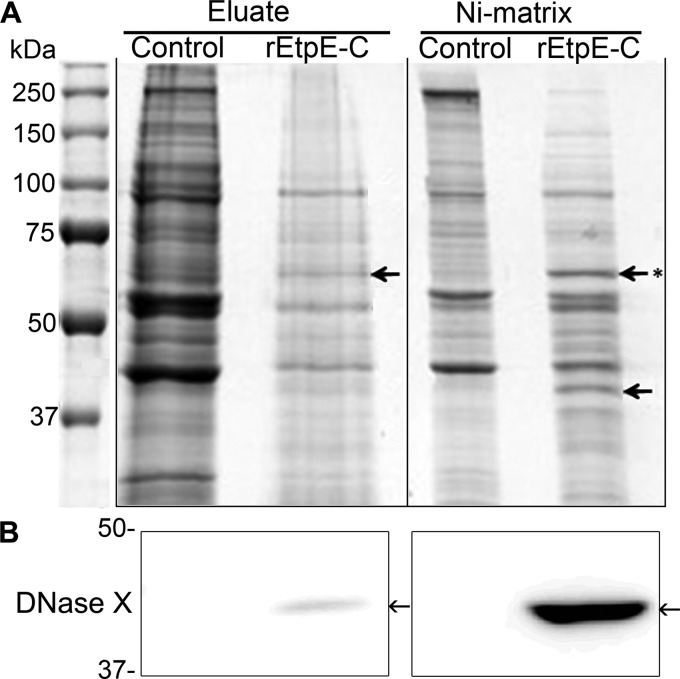
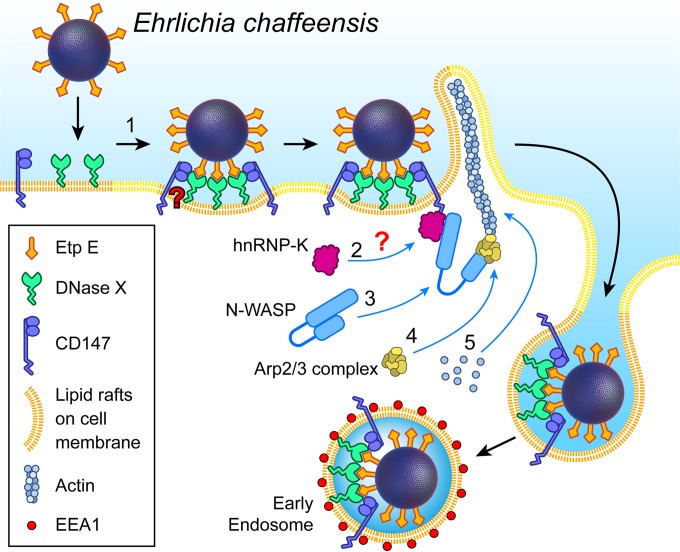
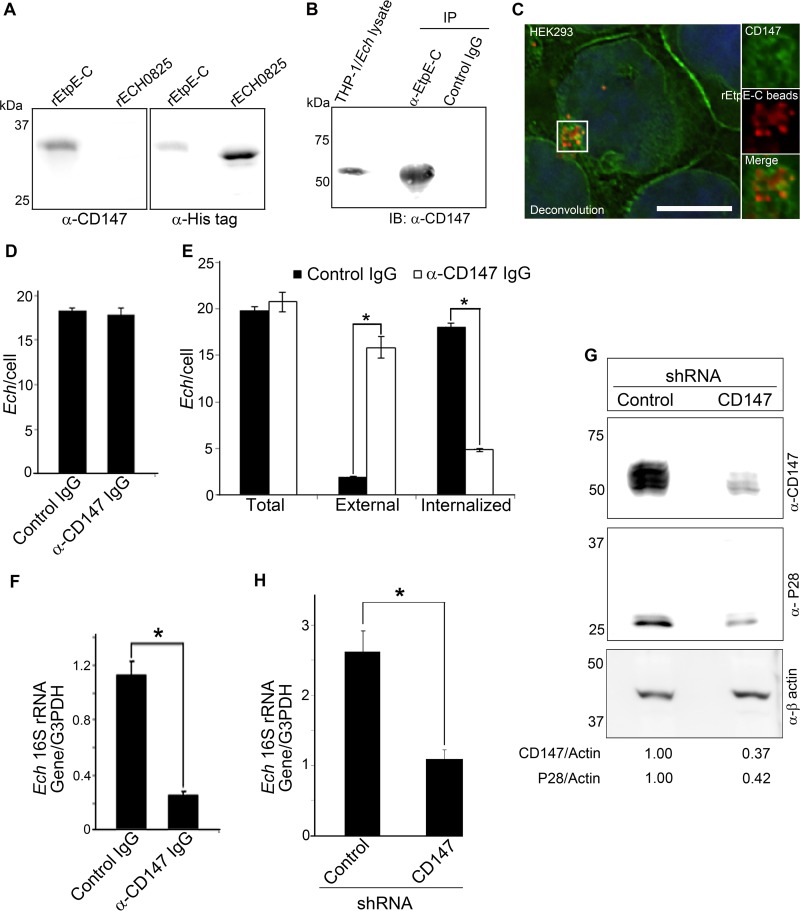
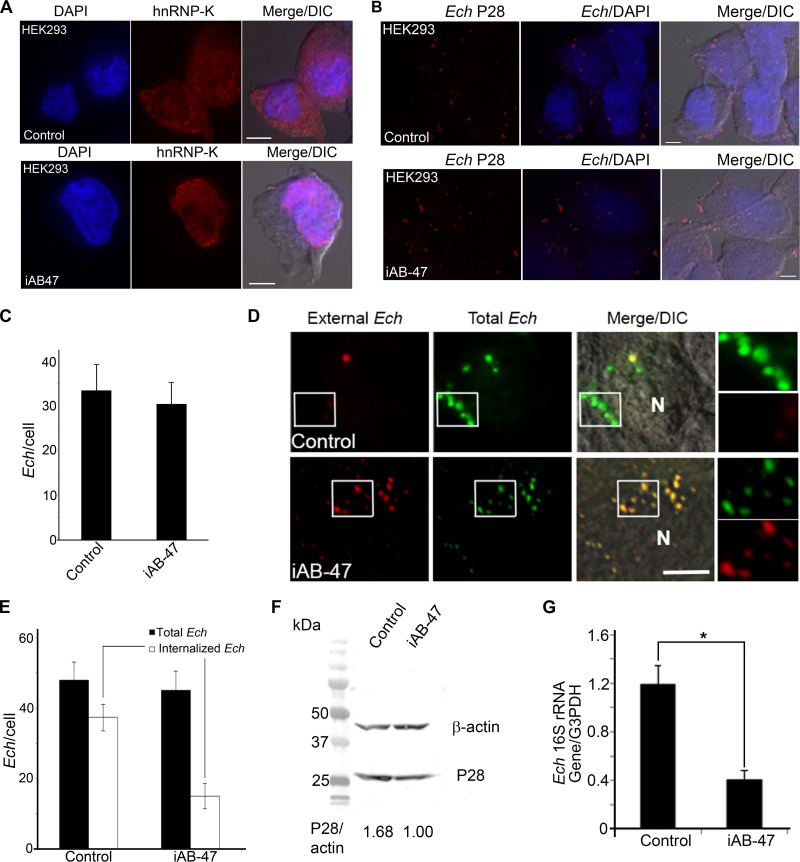
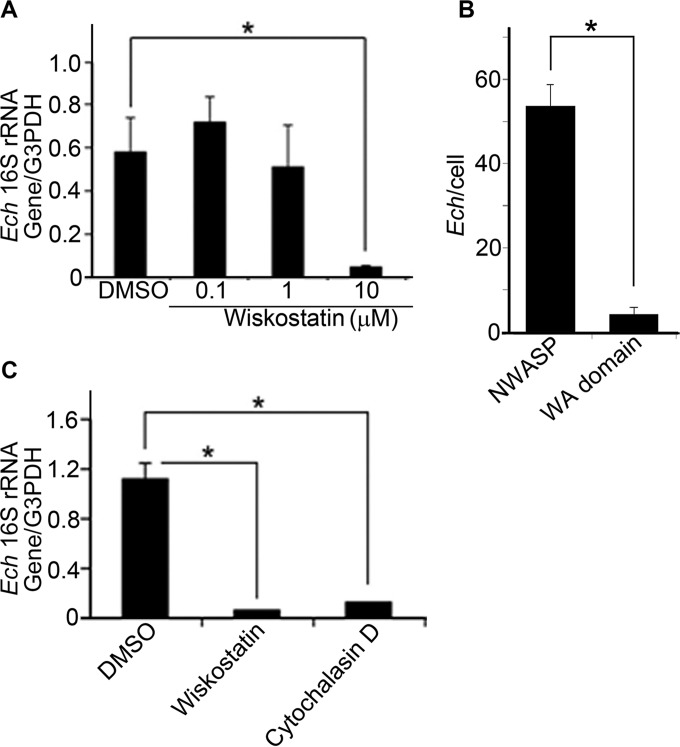
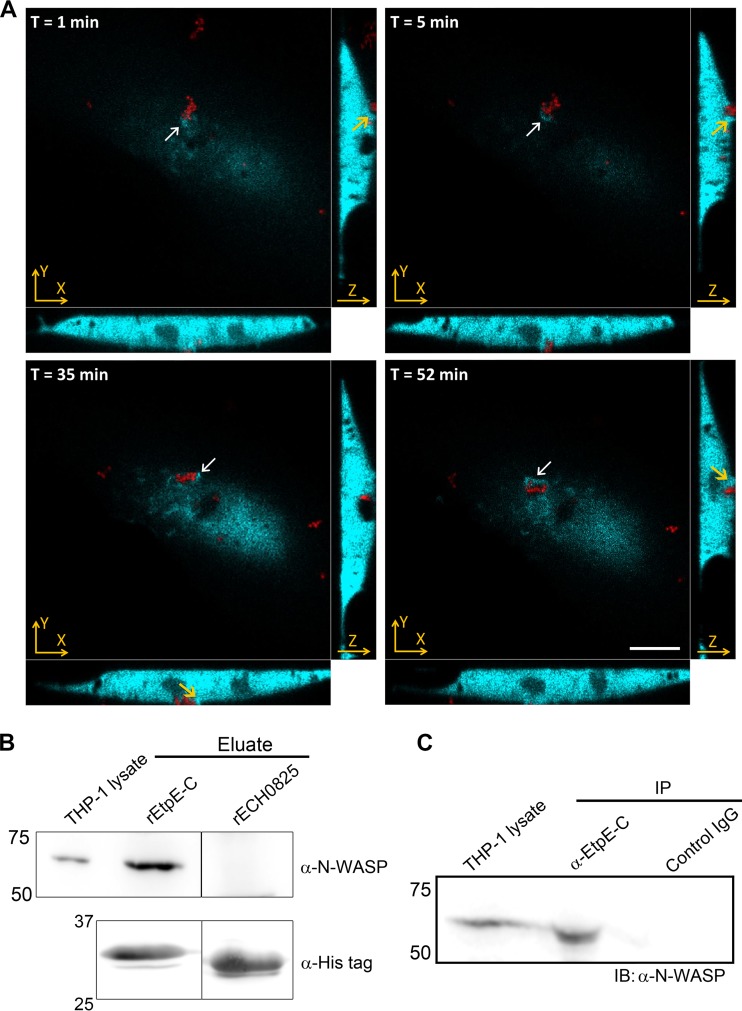
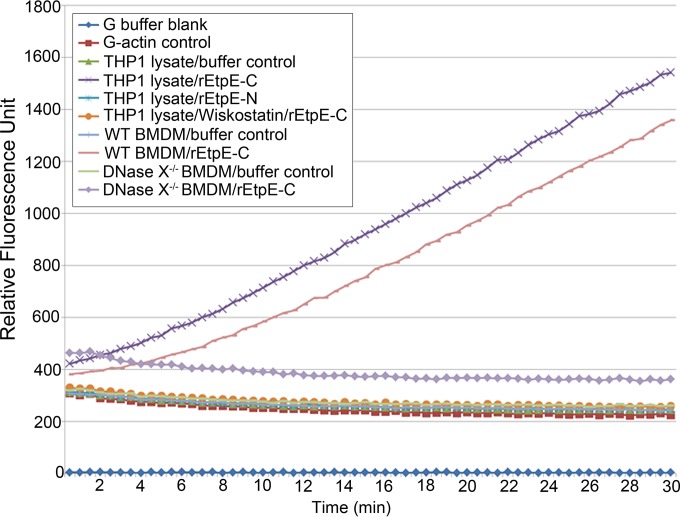
Obligate intracellular bacteria, such as Ehrlichia chaffeensis, perish unless they can enter eukaryotic cells. E. chaffeensis is the etiological agent of human monocytic ehrlichiosis, an emerging infectious disease. To infect cells, Ehrlichia uses the C terminus of the outer membrane invasin entry-triggering protein (EtpE) of Ehrlichia (EtpE-C), which directly binds the mammalian cell surface glycosylphosphatidyl inositol-anchored protein, DNase X. How this binding drives Ehrlichia entry is unknown. Here, using affinity pulldown of host cell lysates with recombinant EtpE-C (rEtpE-C), we identified two new human proteins that interact with EtpE-C: CD147 and heterogeneous nuclear ribonucleoprotein K (hnRNP-K). The interaction of CD147 with rEtpE-C was validated by far-Western blotting and coimmunoprecipitation of native EtpE with endogenous CD147. CD147 was ubiquitous on the cell surface and also present around foci of rEtpE-C-coated-bead entry. Functional neutralization of surface-exposed CD147 with a specific antibody inhibited Ehrlichia internalization and infection but not binding. Downregulation of CD147 by short hairpin RNA (shRNA) impaired E. chaffeensis infection. Functional ablation of cytoplasmic hnRNP-K by a nanoscale intracellular antibody markedly attenuated bacterial entry and infection but not binding. EtpE-C also interacted with neuronal Wiskott-Aldrich syndrome protein (N-WASP), which is activated by hnRNP-K. Wiskostatin, which inhibits N-WASP activation, and cytochalasin D, which inhibits actin polymerization, inhibited Ehrlichia entry. Upon incubation with host cell lysate, EtpE-C but not an EtpE N-terminal fragment stimulated in vitro actin polymerization in an N-WASP- and DNase X-dependent manner. Time-lapse video images revealed N-WASP recruitment at EtpE-C-coated bead entry foci. Thus, EtpE-C binding to DNase X drives Ehrlichia entry by engaging CD147 and hnRNP-K and activating N-WASP-dependent actin polymerization.
Ehrlichia chaffeensis, an obligate intracellular bacterium, causes a blood-borne disease called human monocytic ehrlichiosis, one of the most prevalent life-threatening emerging tick-transmitted infectious diseases in the United States. The survival of Ehrlichia bacteria, and hence, their ability to cause disease, depends on their specific mode of entry into eukaryotic host cells. Understanding the mechanism by which E. chaffeensis enters cells will create new opportunities for developing effective therapies to prevent bacterial entry and disease in humans. Our findings reveal a novel cellular signaling pathway triggered by an ehrlichial surface protein called EtpE to induce its infectious entry. The results are also important from the viewpoint of human cell physiology because three EtpE-interacting human proteins, DNase X, CD147, and hnRNP-K, are hitherto unknown partners that drive the uptake of small particles, including bacteria, into human cells.
专性细胞内细菌,如恰菲埃立克体,除非能进入真核细胞否则就会死亡。恰菲埃立克体是人类单核细胞埃立克体病的病原体,这是一种新出现的传染病。为了感染细胞,埃立克体利用埃立克体外膜侵袭素进入触发蛋白(EtpE)的C末端(EtpE-C),它直接结合哺乳动物细胞表面糖基磷脂酰肌醇锚定蛋白DNase X。这种结合如何驱动埃立克体进入尚不清楚。在这里,我们用重组EtpE-C(rEtpE-C)对宿主细胞裂解物进行亲和拉下实验,鉴定出两种与EtpE-C相互作用的新人类蛋白:CD147和不均一核核糖核蛋白K(hnRNP-K)。通过远缘Western印迹法以及天然EtpE与内源性CD147的共免疫沉淀验证了CD147与rEtpE-C的相互作用。CD147在细胞表面普遍存在,并且也出现在包被rEtpE-C的珠子进入位点周围。用特异性抗体对表面暴露的CD147进行功能中和可抑制埃立克体的内化和感染,但不影响其结合。通过短发夹RNA(shRNA)下调CD147会损害恰菲埃立克体的感染。用纳米级细胞内抗体对细胞质hnRNP-K进行功能消除可显著减弱细菌的进入和感染,但不影响其结合。EtpE-C还与神经元Wiskott-Aldrich综合征蛋白(N-WASP)相互作用,后者由hnRNP-K激活。抑制N-WASP激活的威斯科他汀和抑制肌动蛋白聚合的细胞松弛素D可抑制埃立克体进入。与宿主细胞裂解物孵育后,EtpE-C而非EtpE N末端片段以N-WASP和DNase X依赖的方式刺激体外肌动蛋白聚合。延时视频图像显示N-WASP在包被EtpE-C的珠子进入位点处募集。因此,EtpE-C与DNase X的结合通过结合CD147和hnRNP-K并激活N-WASP依赖的肌动蛋白聚合来驱动埃立克体进入。
专性细胞内细菌恰菲埃立克体可引发一种血液传播疾病,即人类单核细胞埃立克体病,它是美国最普遍的危及生命的新出现的蜱传播传染病之一。埃立克体细菌的存活以及因此导致疾病的能力取决于它们进入真核宿主细胞的特定方式。了解恰菲埃立克体进入细胞的机制将为开发有效的疗法以预防细菌进入和人类疾病创造新机会。我们的发现揭示了一种由埃立克体表面蛋白EtpE触发的新型细胞信号通路,以诱导其感染性进入。从人类细胞生理学的角度来看,这些结果也很重要,因为三种与EtpE相互作用的人类蛋白DNase X、CD147和hnRNP-K是迄今未知的驱动包括细菌在内的小颗粒进入人类细胞的伙伴。