Brown Ashley N, Drusano George L, Adams Jonathan R, Rodriquez Jaime L, Jambunathan Kalyani, Baluya Dodge L, Brown David L, Kwara Awewura, Mirsalis Jon C, Hafner Richard, Louie Arnold
Department of Medicine, Institute for Therapeutic Innovation, University of Florida, Orlando, Florida, USA
Department of Medicine, Institute for Therapeutic Innovation, University of Florida, Orlando, Florida, USA.
mBio. 2015 Nov 3;6(6):e01741-15. doi: 10.1128/mBio.01741-15.
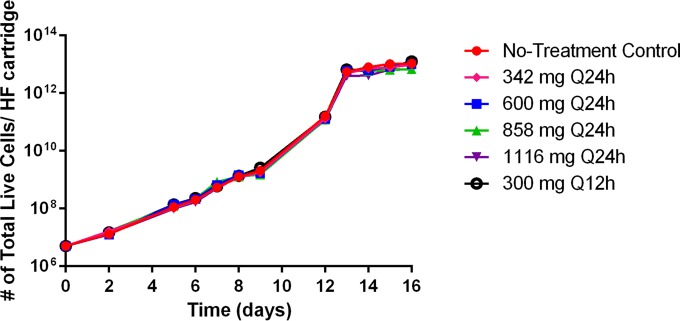
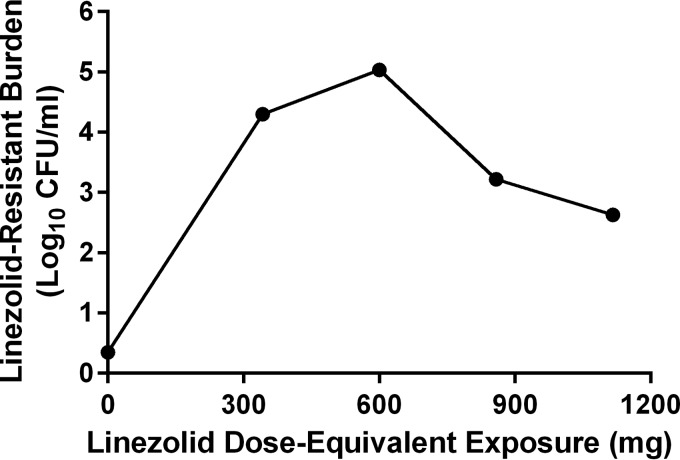
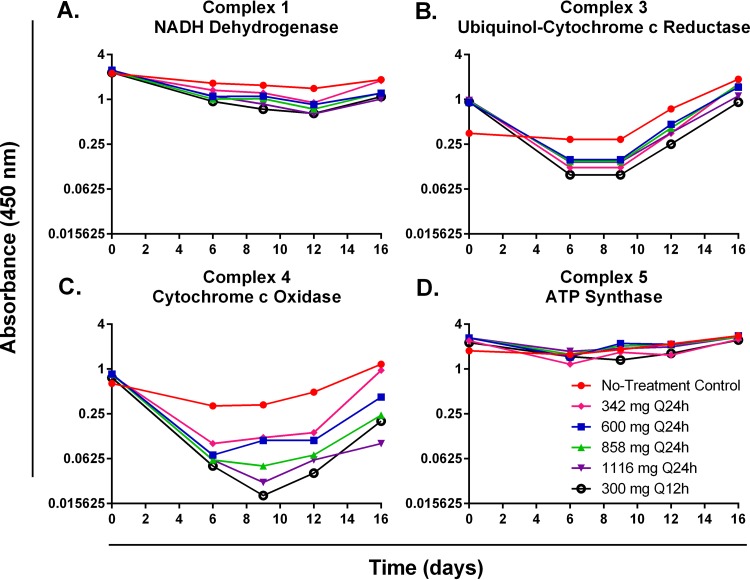
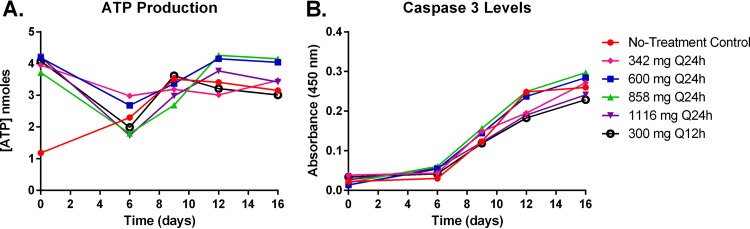
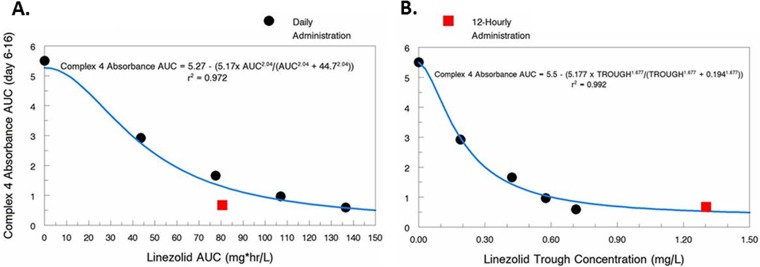
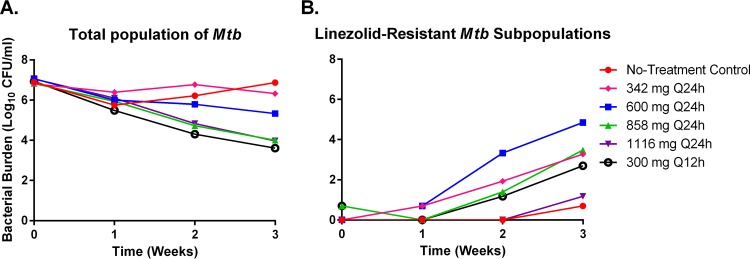
Linezolid is an oxazolidinone with potent activity against Mycobacterium tuberculosis. Linezolid toxicity in patients correlates with the dose and duration of therapy. These toxicities are attributable to the inhibition of mitochondrial protein synthesis. Clinically relevant linezolid regimens were simulated in the in vitro hollow-fiber infection model (HFIM) system to identify the linezolid therapies that minimize toxicity, maximize antibacterial activity, and prevent drug resistance. Linezolid inhibited mitochondrial proteins in an exposure-dependent manner, with toxicity being driven by trough concentrations. Once-daily linezolid killed M. tuberculosis in an exposure-dependent manner. Further, 300 mg linezolid given every 12 hours generated more bacterial kill but more toxicity than 600 mg linezolid given once daily. None of the regimens prevented linezolid resistance. These findings show that with linezolid monotherapy, a clear tradeoff exists between antibacterial activity and toxicity. By identifying the pharmacokinetic parameters linked with toxicity and antibacterial activity, these data can provide guidance for clinical trials evaluating linezolid in multidrug antituberculosis regimens.
The emergence and spread of multidrug-resistant M. tuberculosis are a major threat to global public health. Linezolid is an oxazolidinone that is licensed for human use and has demonstrated potent activity against multidrug-resistant M. tuberculosis. However, long-term use of linezolid has shown to be toxic in patients, often resulting in thrombocytopenia. We examined therapeutic linezolid regimens in an in vitro model to characterize the exposure-toxicity relationship. The antibacterial activity against M. tuberculosis was also assessed for these regimens, including the amplification or suppression of resistant mutant subpopulations by the chosen regimen. Higher exposures of linezolid resulted in greater antibacterial activity, but with more toxicity and, for some regimens, increased resistant mutant subpopulation amplification, illustrating the trade-off between activity and toxicity. These findings can provide valuable insight for designing optimal dosage regimens for linezolid that are part of the long combination courses used to treat multidrug-resistant M. tuberculosis.
利奈唑胺是一种噁唑烷酮类药物,对结核分枝杆菌具有强大活性。患者的利奈唑胺毒性与治疗剂量和疗程相关。这些毒性归因于线粒体蛋白合成的抑制。在体外中空纤维感染模型(HFIM)系统中模拟了临床相关的利奈唑胺治疗方案,以确定能将毒性降至最低、使抗菌活性最大化并预防耐药性的利奈唑胺治疗方法。利奈唑胺以暴露依赖性方式抑制线粒体蛋白,毒性由谷浓度驱动。每日一次的利奈唑胺以暴露依赖性方式杀死结核分枝杆菌。此外,每12小时给予300mg利奈唑胺比每日一次给予600mg利奈唑胺产生更多的细菌杀灭,但毒性更大。没有一种治疗方案能预防利奈唑胺耐药性。这些发现表明,对于利奈唑胺单药治疗,抗菌活性和毒性之间存在明显的权衡。通过确定与毒性和抗菌活性相关的药代动力学参数,这些数据可为评估利奈唑胺在多药抗结核治疗方案中的临床试验提供指导。
耐多药结核分枝杆菌的出现和传播是对全球公共卫生的重大威胁。利奈唑胺是一种已获许可用于人类的噁唑烷酮类药物,已证明对耐多药结核分枝杆菌具有强大活性。然而,长期使用利奈唑胺已显示对患者有毒性,常导致血小板减少。我们在体外模型中研究了利奈唑胺治疗方案,以表征暴露 - 毒性关系。还评估了这些治疗方案对结核分枝杆菌的抗菌活性,包括所选方案对耐药突变亚群的扩增或抑制。利奈唑胺的暴露量越高,抗菌活性越强,但毒性越大,并且对于某些治疗方案,耐药突变亚群的扩增增加,这说明了活性与毒性之间的权衡。这些发现可为设计利奈唑胺的最佳给药方案提供有价值的见解,利奈唑胺是用于治疗耐多药结核分枝杆菌的长疗程联合治疗方案的一部分。