Kannan Aarthi, Lin Zhenyu, Shao Qiang, Zhao Stephanie, Fang Bin, Moreno Mauricio A, Vural Emre, Stack Brendan C, Suen James Y, Kannan Krishnaswamy, Gao Ling
Department of Dermatology, University of Arkansas for Medical Sciences, Little Rock, AR 72205, USA.
Current address: Cancer Center, Union Hospital, Tongji Medical College, Huazhong University of Science and Technology, Wuhan 430000, China.
Oncotarget. 2016 Feb 9;7(6):6576-92. doi: 10.18632/oncotarget.5878.
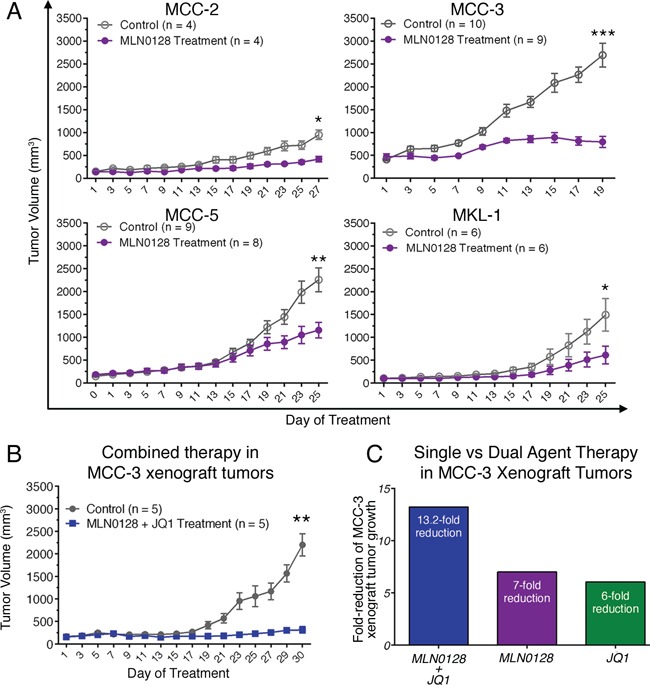
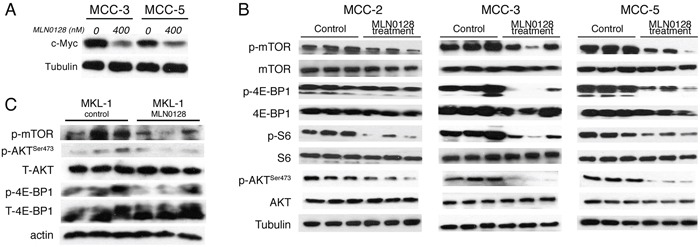
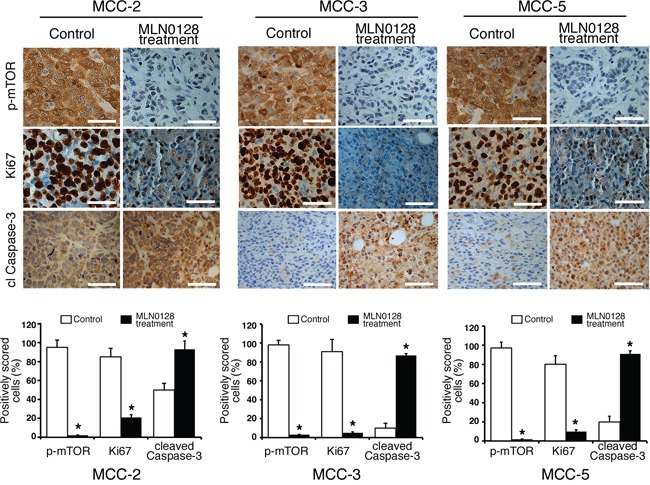
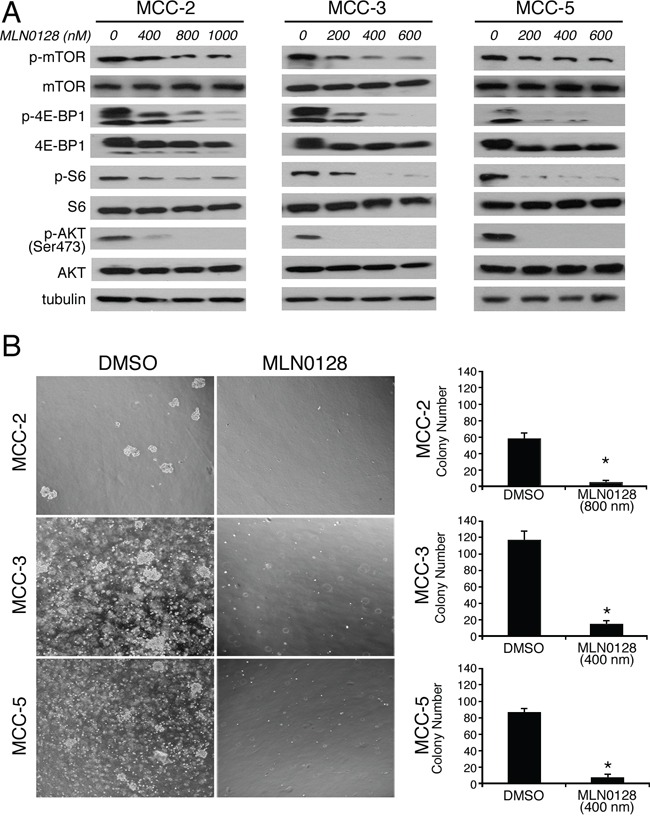
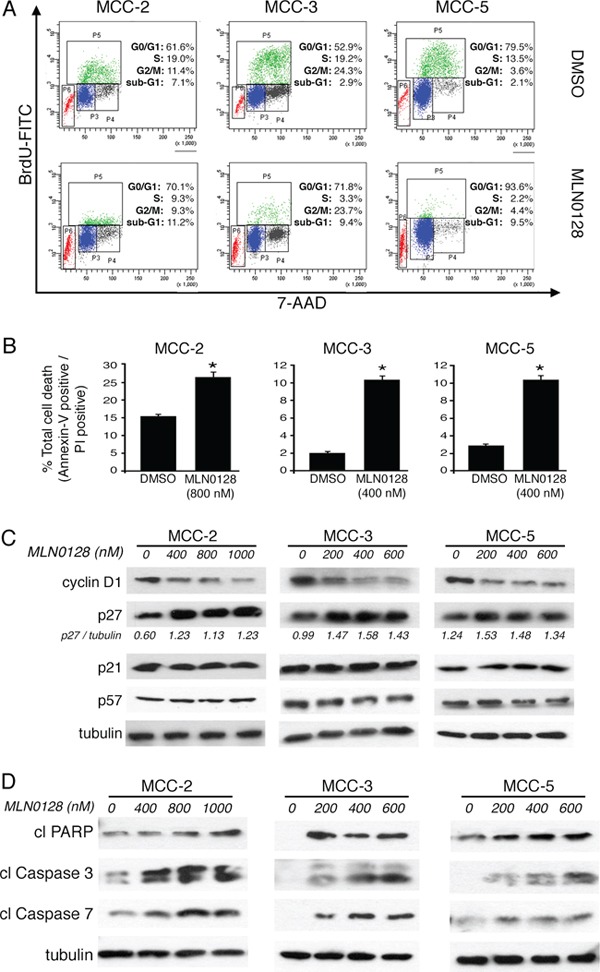
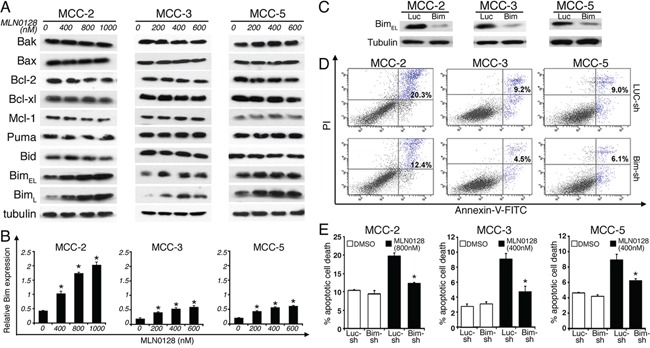
Merkel cell carcinoma (MCC) is an aggressive neuroendocrine skin cancer. Pathologic activation of PI3K/mTOR pathway and elevated expression of c-Myc are frequently detected in MCC. Yet, there is no targeted therapy presently available for this lethal disease. Recently, MLN0128, a second-generation dual TORC1/2 inhibitor is shown to have therapeutic efficacy in preclinical studies. MLN0128 is currently in clinical trials as a potential therapy for advanced cancers. Here we characterize the therapeutic efficacy of MLN0128 in the preclinical setting of MCC and delineate downstream targets of mTORC1/2 in MCC cellular systems. MLN0128 significantly attenuates xenograft MCC tumor growth independent of Merkel cell polyomavirus. Moreover, MLN0128 markedly diminishes MCC cell proliferation and induces apoptosis. Further investigations indicate that senescence does not contribute to MLN0128-mediated repression of xenograft MCC tumor growth. Finally, we also observe robust antitumor effects of MLN0128 when administered as a dual therapy with JQ1, a bromodomain protein BRD4 inhibitor. These results suggest dual blockade of PI3K/mTOR pathway and c-Myc axis is effective in the control of MCC tumor growth. Our results demonstrate that MLN0128 is potent as monotherapy or as a member of combination therapy with JQ1 for advanced MCC.
默克尔细胞癌(MCC)是一种侵袭性神经内分泌皮肤癌。PI3K/mTOR通路的病理激活和c-Myc的表达升高在MCC中经常被检测到。然而,目前对于这种致命疾病尚无靶向治疗方法。最近,第二代双TORC1/2抑制剂MLN0128在临床前研究中显示出治疗效果。MLN0128目前正在进行临床试验,作为晚期癌症的一种潜在治疗方法。在此,我们在MCC的临床前环境中表征了MLN0128的治疗效果,并在MCC细胞系统中描绘了mTORC1/2的下游靶点。MLN0128显著减弱异种移植MCC肿瘤的生长,且与默克尔细胞多瘤病毒无关。此外,MLN0128显著减少MCC细胞增殖并诱导凋亡。进一步研究表明,衰老并不促成MLN0128介导的异种移植MCC肿瘤生长的抑制。最后,当与溴结构域蛋白BRD4抑制剂JQ1联合使用时,我们也观察到MLN0128具有强大的抗肿瘤作用。这些结果表明,PI3K/mTOR通路和c-Myc轴的双重阻断在控制MCC肿瘤生长方面是有效的。我们的结果证明,MLN0128作为单一疗法或作为与JQ1联合治疗晚期MCC的一部分具有强大的作用。