Svanberg Ingvar
Uppsala Centre for Russian and Eurasian Research, Uppsala University, Box 514, SE-751 20, Uppsala, Sweden.
J Ethnobiol Ethnomed. 2015 Nov 4;11:76. doi: 10.1186/s13002-015-0064-9.
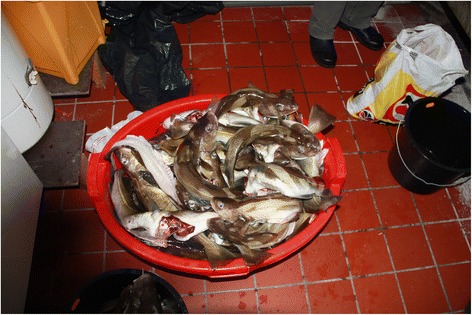
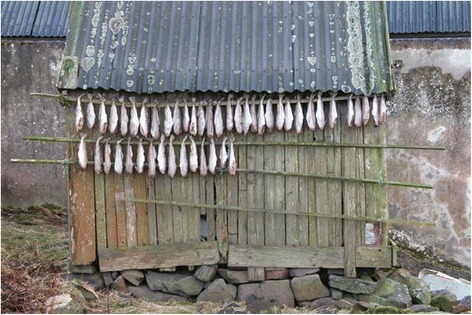
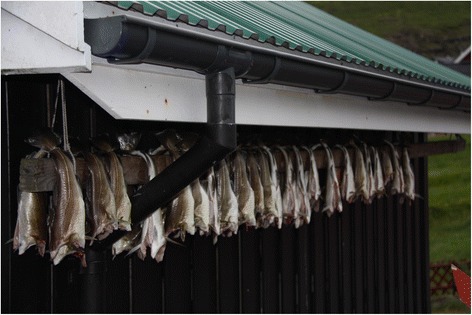
Fish has played an important role in the diet of the population of the mid-Atlantic Faroe Islands. Dried and fermented fish in particular have been an essential storable protein source in an economy where weather conditions and seasonal fluctuations affect the availability of food. For generations the islanders have prepared ræstur fiskur, a home-made air-dried and fermented fish dish made of Atlantic cod (Gadus morhua L.) or saithe (Pollachius virens (L.)). Fermenting the fish is an efficient and valuable cultural strategy for preserving fish.
This ethnobiological study investigates the historical and present use of fermented fish in Faroese cuisine and examines its preservation as an everyday food that Faroese men pride themselves on making in high quality. This study is based on field notes collected through interviews and observations on the Faroe Islands since the mid-1990s.
Processed fish could be stored for a long period of time; this was important in an economy where weather conditions and seasonal fluctuations affect food availability dramatically. For this reason, home-made air-dried fish has been central to the food security of the Faroese people. Usually consumed with tallow from sheep, the dish was once appreciated customarily on Christmas Eve and New Year's Eve, but has been largely replaced by Danish dishes. However, it has survived as everyday food until today.
The presence of small-scale fishing, changing economic conditions, socially acquired taste-preferences, and the importance of old-fashioned dishes as key symbols of cultural identity, all contribute to the survival of ræstur fiskur in Faroese food culture. Today, the dish is not only an essential food source, but its consumption is also an important act of identification and solidarity with the national identity of the islanders.
鱼类在大西洋中部法罗群岛居民的饮食中一直扮演着重要角色。特别是经过干燥和发酵的鱼类,在一个天气条件和季节波动会影响食物供应的经济环境中,一直是一种重要的可储存蛋白质来源。几代以来,岛民们一直制作ræstur fiskur,这是一种用大西洋鳕鱼(Gadus morhua L.)或黑线鳕(Pollachius virens (L.))制作的自制风干发酵鱼菜肴。发酵鱼类是保存鱼类的一种高效且有价值的文化策略。
这项民族生物学研究调查了发酵鱼类在法罗群岛美食中的历史和当前用途,并将其作为法罗群岛男性引以为傲的高质量日常食物进行保存研究。本研究基于自20世纪90年代中期以来通过在法罗群岛的访谈和观察收集的田野笔记。
加工后的鱼类可以长时间储存;在一个天气条件和季节波动会极大影响食物供应的经济环境中,这一点很重要。因此,自制风干鱼一直是法罗群岛人民食品安全的核心。这道菜通常与羊脂一起食用,曾经在平安夜和新年前夜被人们传统地享用,但现在已基本被丹麦菜肴所取代。然而,它作为日常食物一直留存至今。
小规模捕鱼的存在、不断变化的经济状况、社会习得的口味偏好以及传统菜肴作为文化身份关键象征的重要性,都促成了ræstur fiskur在法罗群岛饮食文化中的留存。如今,这道菜不仅是一种重要的食物来源,其食用也是与岛民民族身份认同和团结的重要行为。