Ureña Enric, Pirone Lucia, Chafino Silvia, Pérez Coralia, Sutherland James D, Lang Valérie, Rodriguez Manuel S, Lopitz-Otsoa Fernando, Blanco Francisco J, Barrio Rosa, Martín David
Institute of Evolutionary Biology (CSIC-Universitat Pompeu Fabra), Barcelona, Spain.
CIC bioGUNE, Bizkaia Technology Park, Derio, Bizkaia, Spain.
Mol Biol Evol. 2016 Feb;33(2):568-84. doi: 10.1093/molbev/msv242. Epub 2015 Nov 4.
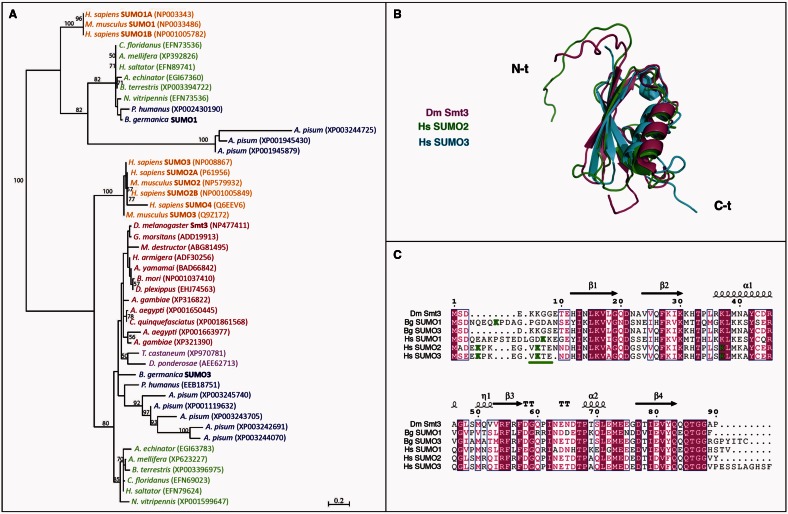
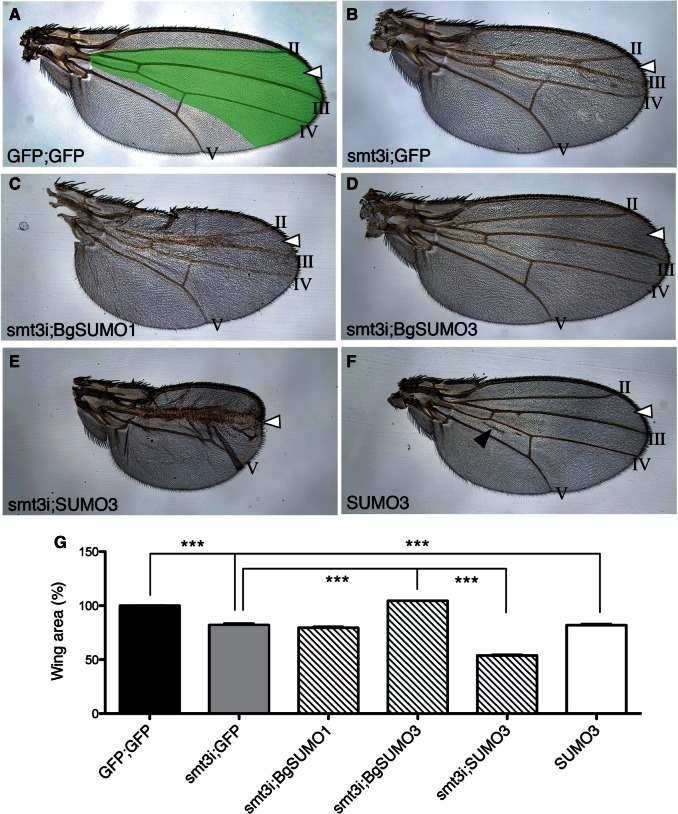
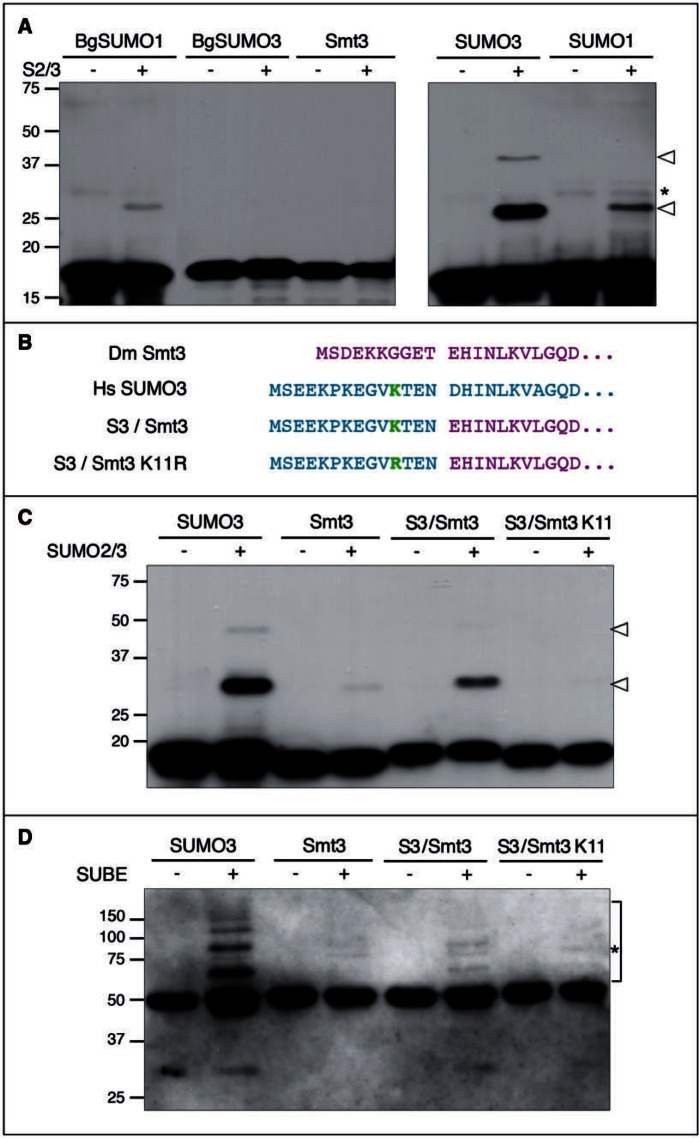
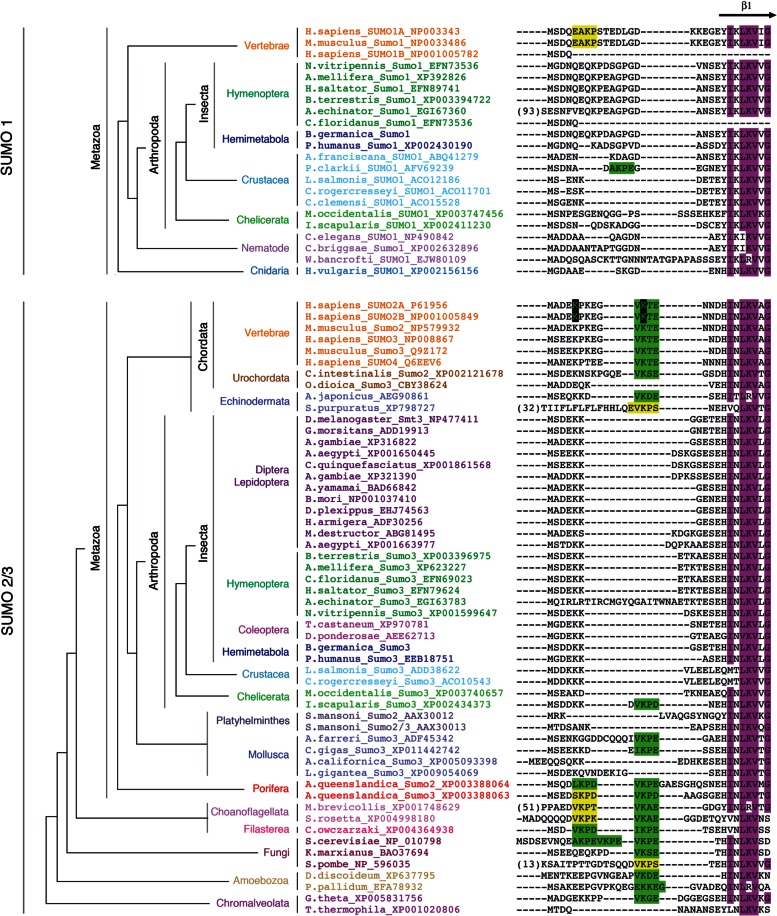
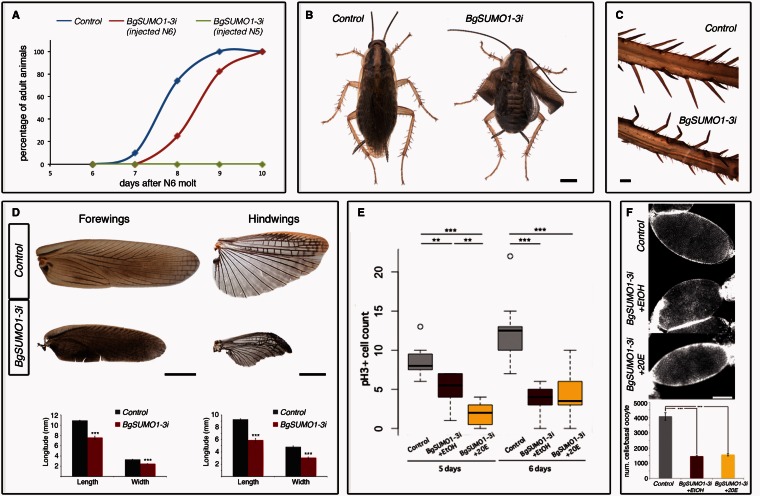
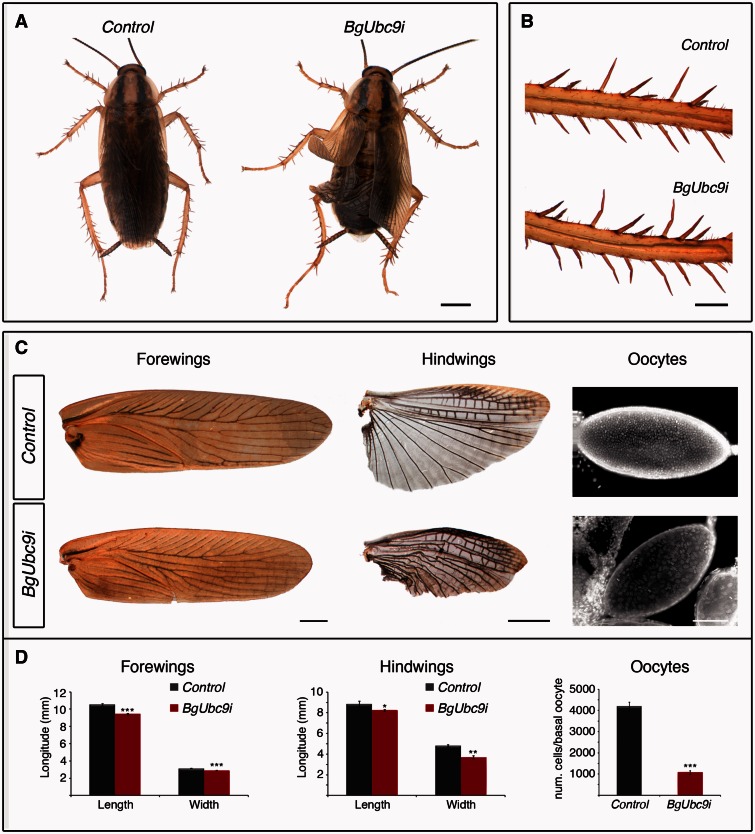
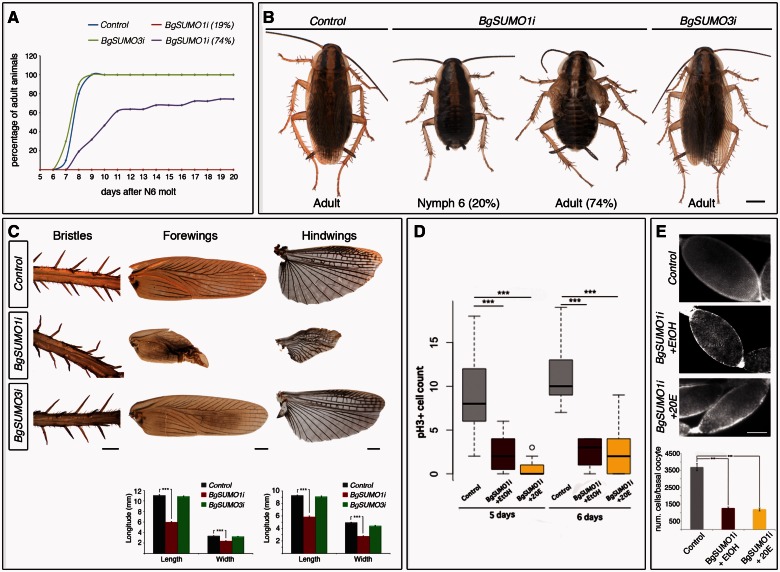
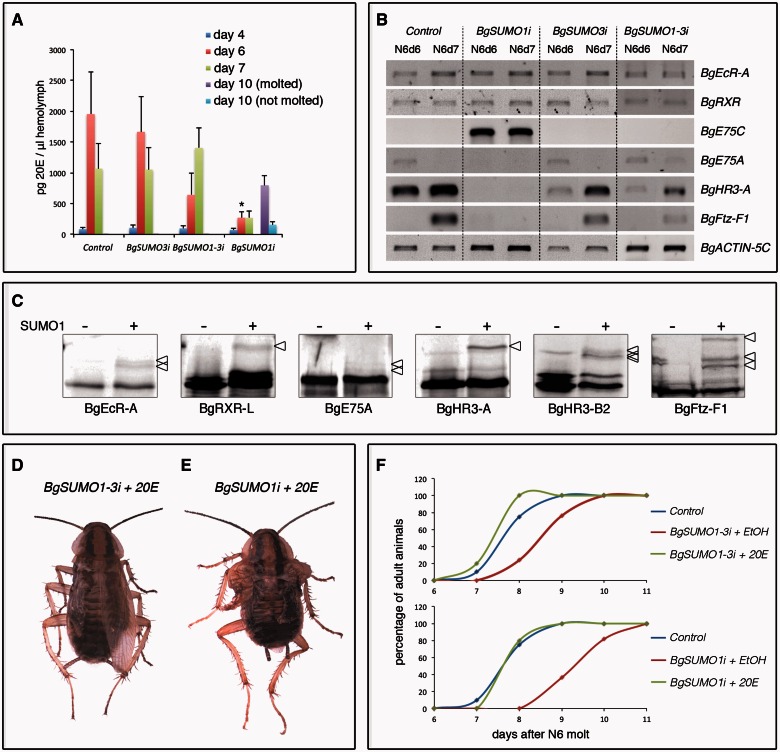
SUMOylation, the covalent binding of Small Ubiquitin-like Modifier (SUMO) to target proteins, is a posttranslational modification that regulates critical cellular processes in eukaryotes. In insects, SUMOylation has been studied in holometabolous species, particularly in the dipteran Drosophila melanogaster, which contains a single SUMO gene (smt3). This has led to the assumption that insects contain a single SUMO gene. However, the analysis of insect genomes shows that basal insects contain two SUMO genes, orthologous to vertebrate SUMO1 and SUMO2/3. Our phylogenetical analysis reveals that the SUMO gene has been duplicated giving rise to SUMO1 and SUMO2/3 families early in Metazoan evolution, and that later in insect evolution the SUMO1 gene has been lost after the Hymenoptera divergence. To explore the consequences of this loss, we have examined the characteristics and different biological functions of the two SUMO genes (SUMO1 and SUMO3) in the hemimetabolous cockroach Blattella germanica and compared them with those of Drosophila Smt3. Here, we show that the metamorphic role of the SUMO genes is evolutionary conserved in insects, although there has been a regulatory switch from SUMO1 in basal insects to SUMO3 in more derived ones. We also show that, unlike vertebrates, insect SUMO3 proteins cannot form polySUMO chains due to the loss of critical lysine residues within the N-terminal part of the protein. Furthermore, the formation of polySUMO chains by expression of ectopic human SUMO3 has a deleterious effect in Drosophila. These findings contribute to the understanding of the functional consequences of the evolution of SUMO genes.
小泛素样修饰物(SUMO)与靶蛋白的共价结合即SUMO化,是一种调节真核生物中关键细胞过程的翻译后修饰。在昆虫中,已在全变态物种中研究了SUMO化,特别是在双翅目黑腹果蝇中,其含有单个SUMO基因(smt3)。这导致人们假定昆虫含有单个SUMO基因。然而,昆虫基因组分析表明,基础昆虫含有两个SUMO基因,与脊椎动物的SUMO1和SUMO2/3直系同源。我们的系统发育分析表明,SUMO基因在后生动物进化早期发生了复制,产生了SUMO1和SUMO2/3家族,并且在昆虫进化后期,SUMO1基因在膜翅目分化后丢失。为了探究这种丢失的后果,我们研究了半变态蟑螂德国小蠊中两个SUMO基因(SUMO1和SUMO3)的特征和不同生物学功能,并将它们与果蝇的Smt3进行了比较。在这里,我们表明SUMO基因的变态作用在昆虫中是进化保守的,尽管存在从基础昆虫中的SUMO1到更多进化昆虫中的SUMO3的调节转换。我们还表明,与脊椎动物不同,昆虫SUMO3蛋白由于在蛋白质N端部分关键赖氨酸残基的缺失而不能形成多聚SUMO链。此外,异位表达人SUMO3形成多聚SUMO链对果蝇有有害影响。这些发现有助于理解SUMO基因进化的功能后果。