Wang Jiaqi, Zheng Xueli, Wang Xuexue, Zhong Daibin, Zhou Guofa
Department of Pathogen Biology, School of Public Health, Southern Medical University, Guangzhou 510515, China.
Program in Public Health, School of Medicine, University of California, Irvine, CA 92617, USA.
Microorganisms. 2024 Dec 5;12(12):2508. doi: 10.3390/microorganisms12122508.
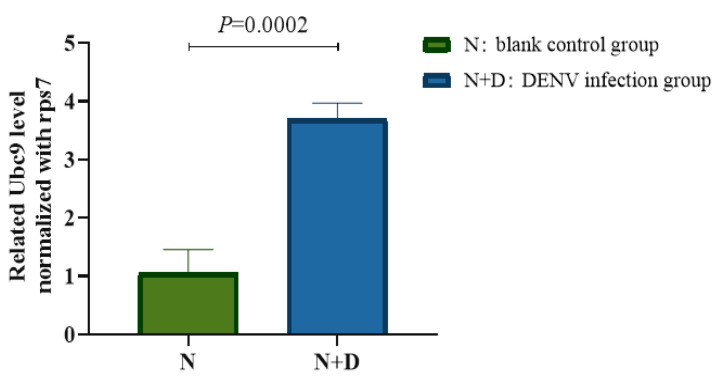
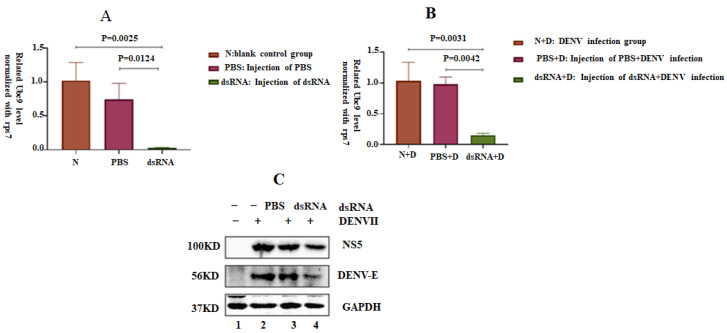
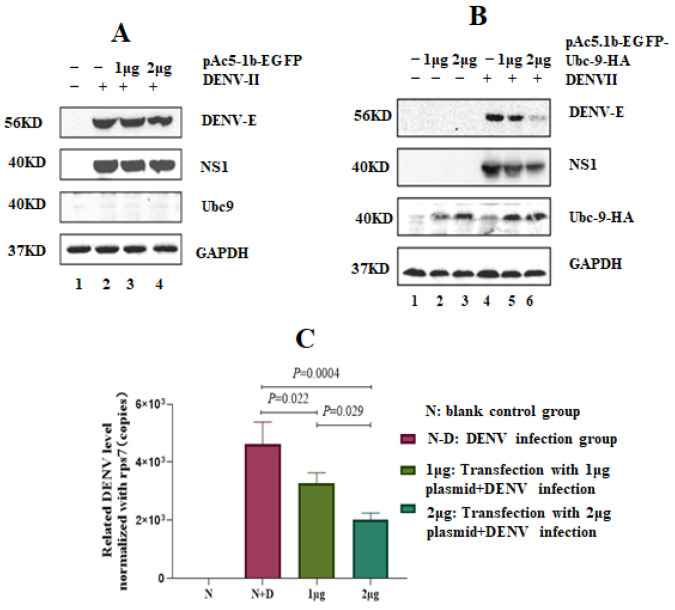
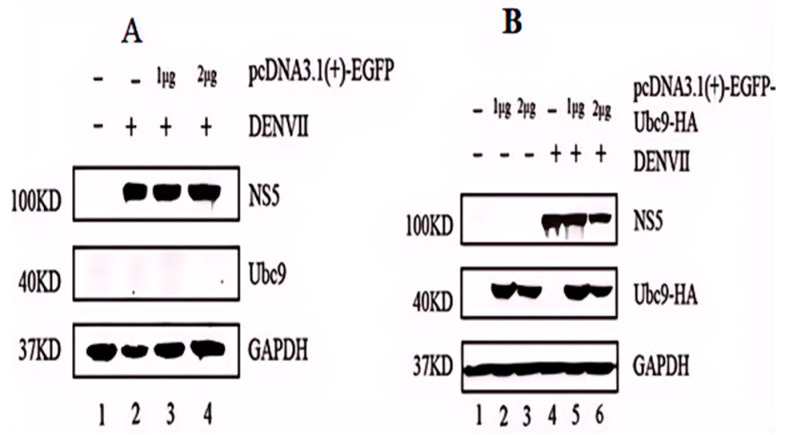
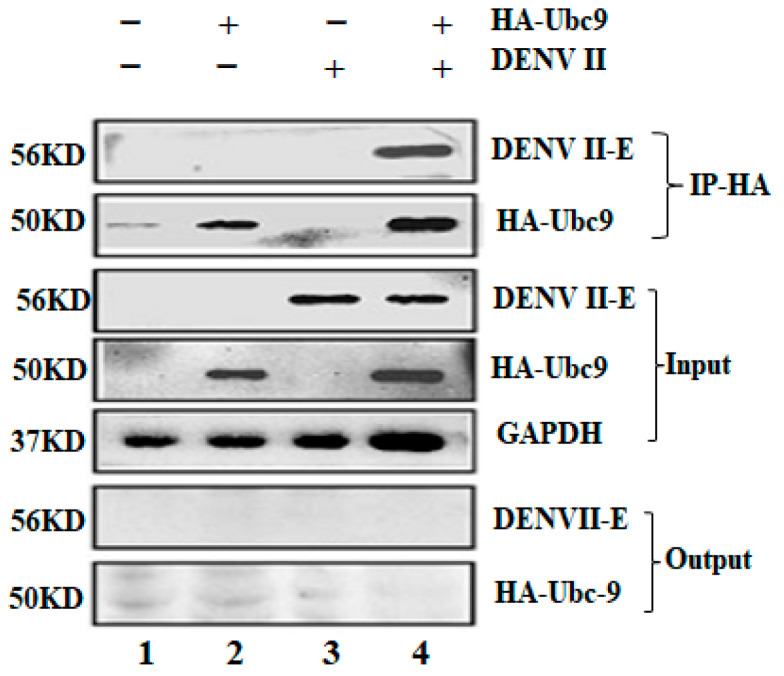
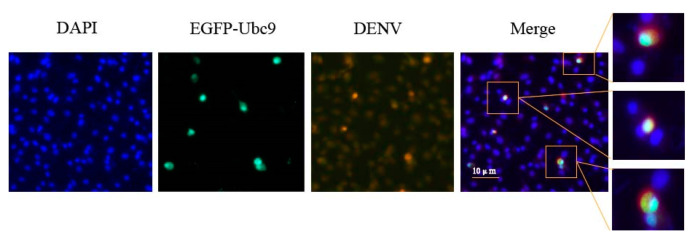
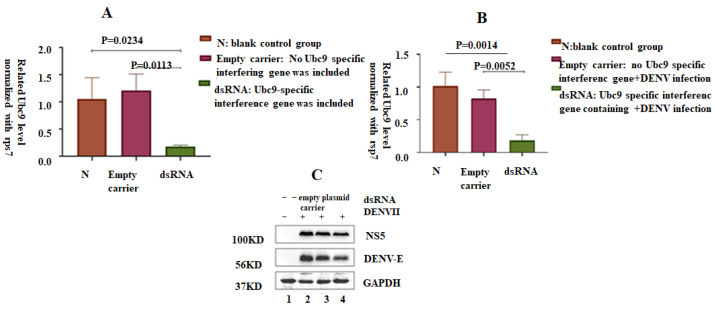
, a major vector of dengue virus (DENV), has a global distribution. Identifying the key components of the ubiquitin system of essential for the replication of viruses could help identify targets for developing broad-spectrum antiviral strategies. This study explores the interaction between E2 ubiquitin-conjugating enzymes (Ubc9) and DENV-2 proteins (NS1, NS5, and E) using cell culture and mosquito models. The replication of DENV-2 and the knockdown efficiency of the Ubc9 gene were assessed through reverse transcription-quantitative polymerase chain reaction. The DENV-2-related protein expression was evaluated via Western blot analysis. The interaction between Ubc9 and DENV E and NS5 proteins was investigated through confocal immunofluorescence and co-immunoprecipitation. RNA interference technology was employed to silence Ubc9 expression in C6/36 cells and in mosquitoes. The expression level of Ubc9 in the DENV-2-infected group was 3.5-fold higher than that in the control group. The Ubc9 gene expression in the midgut tissue of the mosquito was significantly upregulated. Transfection of C6/36 and BHK-21 cells with the pAc5.1b-EGFP-Ubc9-HA vector led to the overexpression of Ubc9, which decreased the transcription levels of DENV E and NS1, NS5 proteins. The difference was statistically significant (F = 24.27, < 0.01). The expression levels of DENV NS5 and E proteins significantly decreased after infection with DENV-2, suggesting that the depletion of Ubc9 may limit the replication of DENV-2. Ubc9 regulates DENV-2 replication through SUMOylation in the cells and , potentially affecting vector competence and DENV transmission. This is the first study to demonstrate that the Ubc9 of plays a significant role in regulating the replication of DENV in both mosquito cells and the mosquito itself. The study results may prove useful in designing appropriate therapeutic approaches for dengue and associated complications.
登革病毒(DENV)的主要传播媒介伊蚊分布于全球。确定伊蚊泛素系统中对病毒复制至关重要的关键成分,有助于确定开发广谱抗病毒策略的靶点。本研究使用细胞培养和蚊虫模型,探讨E2泛素结合酶(Ubc9)与登革病毒2型(DENV-2)蛋白(NS1、NS5和E)之间的相互作用。通过逆转录定量聚合酶链反应评估DENV-2的复制及Ubc9基因的敲低效率。通过蛋白质免疫印迹分析评估DENV-2相关蛋白的表达。通过共聚焦免疫荧光和免疫共沉淀研究Ubc9与DENV E和NS5蛋白之间的相互作用。采用RNA干扰技术沉默C6/36细胞和蚊虫中Ubc9的表达。DENV-2感染组中Ubc9的表达水平比对照组高3.5倍。蚊虫中肠组织中Ubc9基因表达显著上调。用pAc5.1b-EGFP-Ubc9-HA载体转染C6/36和BHK-21细胞导致Ubc9过表达,这降低了DENV E以及NS1、NS5蛋白的转录水平。差异具有统计学意义(F = 24.27,P < 0.01)。感染DENV-2后,DENV NS5和E蛋白的表达水平显著降低,表明Ubc9的缺失可能会限制DENV-2的复制。Ubc9通过细胞中的SUMO化修饰调节DENV-2复制,并且可能影响媒介能力和DENV传播。这是第一项证明伊蚊的Ubc9在调节DENV在蚊虫细胞和蚊虫自身中的复制中起重要作用的研究。研究结果可能有助于设计针对登革热及相关并发症的合适治疗方法。