Zeke András, Bastys Tomas, Alexa Anita, Garai Ágnes, Mészáros Bálint, Kirsch Klára, Dosztányi Zsuzsanna, Kalinina Olga V, Reményi Attila
Lendület Protein Interaction Group, Institute of Enzymology Research Center for Natural Sciences Hungarian Academy of Sciences, Budapest, Hungary.
Max Planck Institute for Informatics, Saarbrücken, Germany Graduate School of Computer Science, Saarland University, Saarbrücken, Germany.
Mol Syst Biol. 2015 Nov 3;11(11):837. doi: 10.15252/msb.20156269.
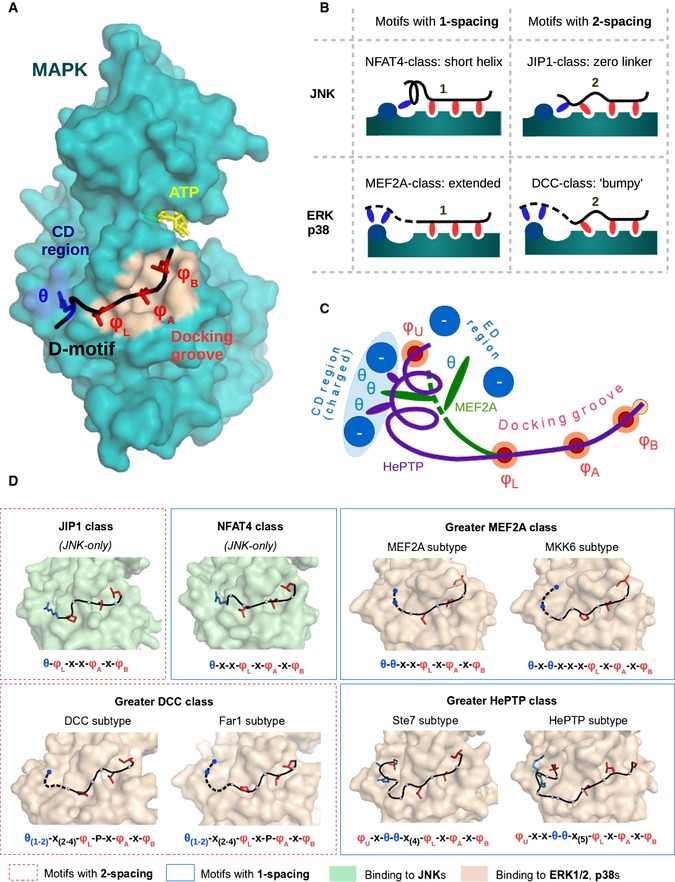
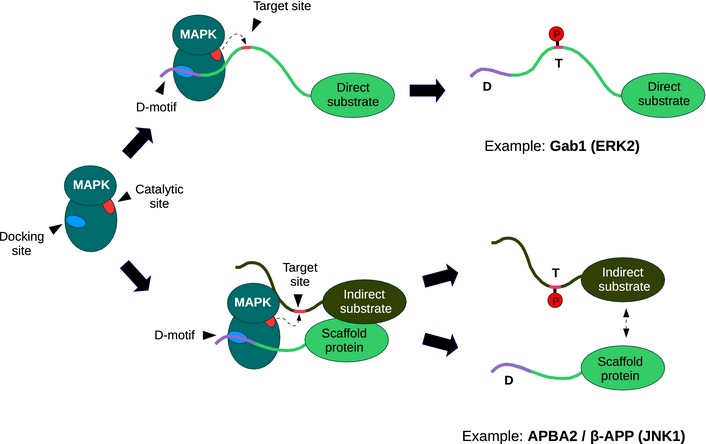
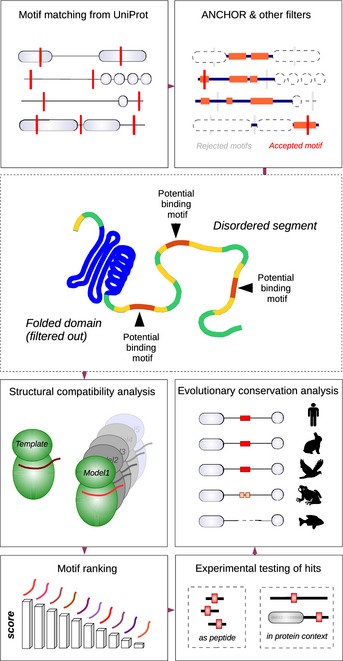
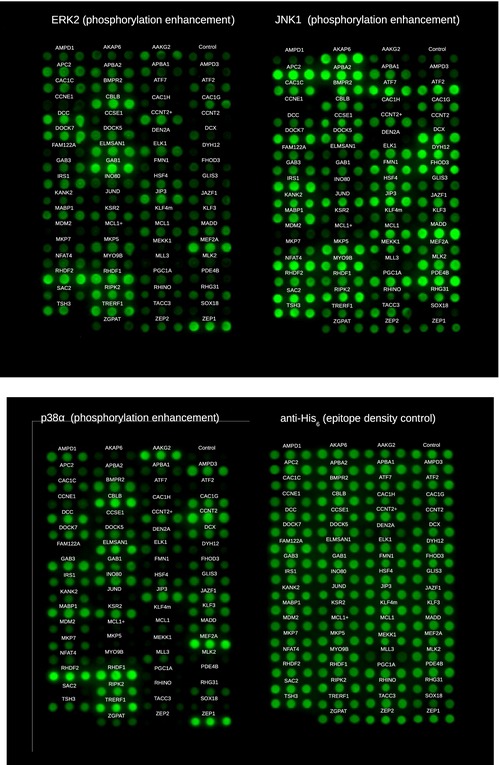
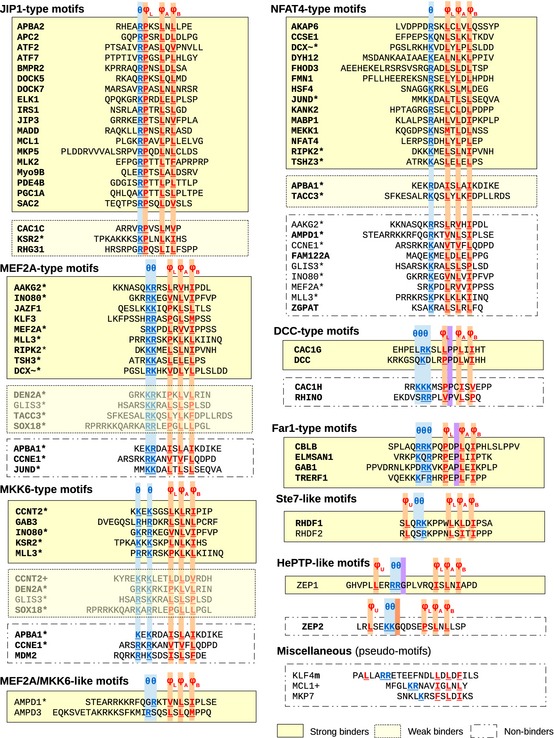
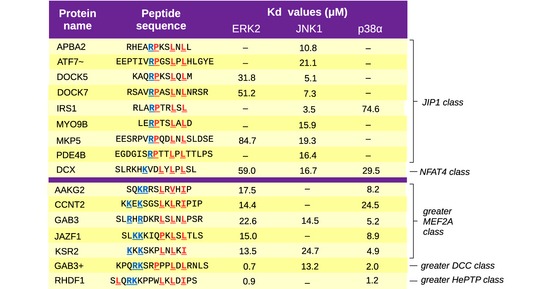
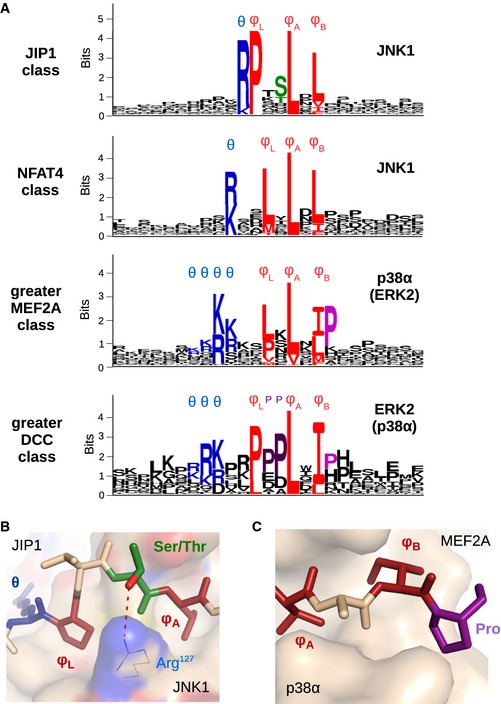
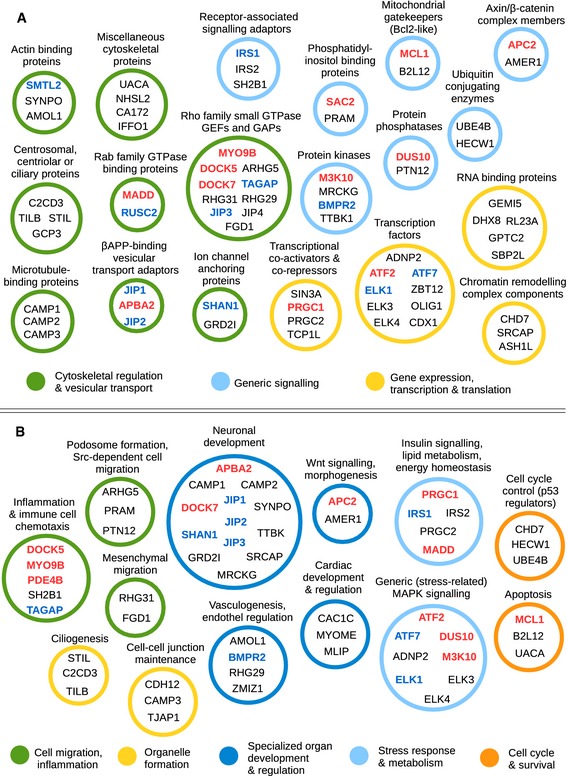
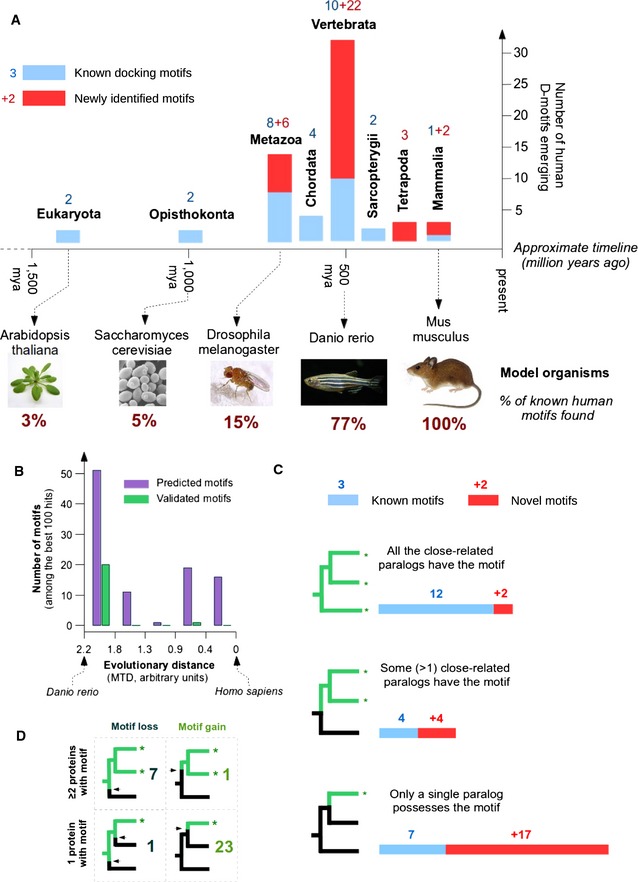
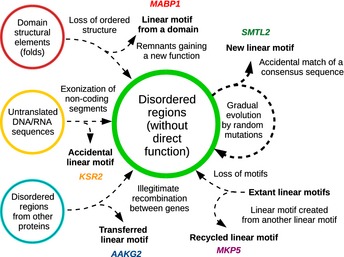
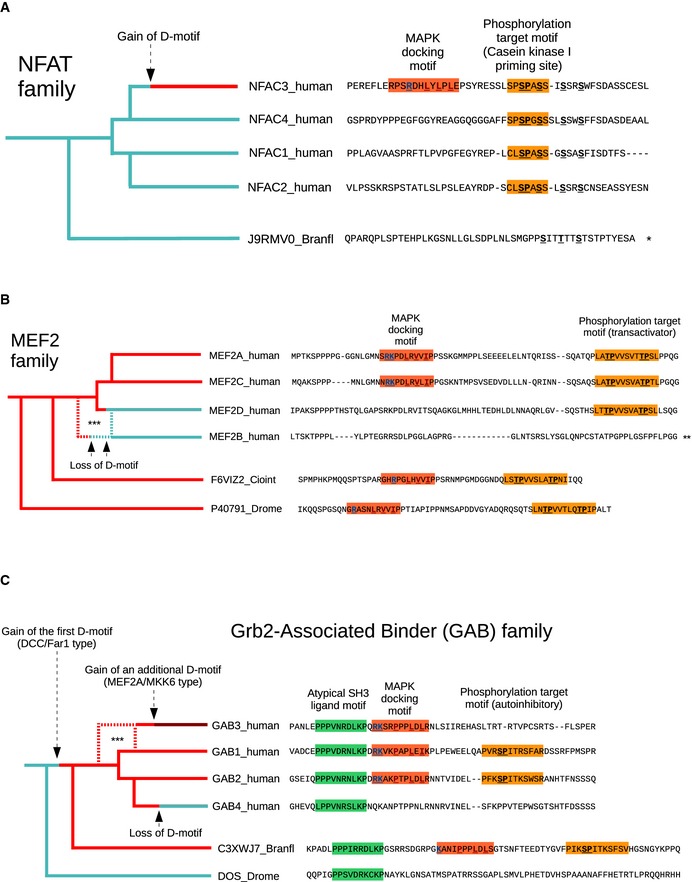
Mitogen-activated protein kinases (MAPK) are broadly used regulators of cellular signaling. However, how these enzymes can be involved in such a broad spectrum of physiological functions is not understood. Systematic discovery of MAPK networks both experimentally and in silico has been hindered because MAPKs bind to other proteins with low affinity and mostly in less-characterized disordered regions. We used a structurally consistent model on kinase-docking motif interactions to facilitate the discovery of short functional sites in the structurally flexible and functionally under-explored part of the human proteome and applied experimental tools specifically tailored to detect low-affinity protein-protein interactions for their validation in vitro and in cell-based assays. The combined computational and experimental approach enabled the identification of many novel MAPK-docking motifs that were elusive for other large-scale protein-protein interaction screens. The analysis produced an extensive list of independently evolved linear binding motifs from a functionally diverse set of proteins. These all target, with characteristic binding specificity, an ancient protein interaction surface on evolutionarily related but physiologically clearly distinct three MAPKs (JNK, ERK, and p38). This inventory of human protein kinase binding sites was compared with that of other organisms to examine how kinase-mediated partnerships evolved over time. The analysis suggests that most human MAPK-binding motifs are surprisingly new evolutionarily inventions and newly found links highlight (previously hidden) roles of MAPKs. We propose that short MAPK-binding stretches are created in disordered protein segments through a variety of ways and they represent a major resource for ancient signaling enzymes to acquire new regulatory roles.
丝裂原活化蛋白激酶(MAPK)是广泛应用的细胞信号调节因子。然而,这些酶如何参与如此广泛的生理功能尚不清楚。由于MAPK与其他蛋白质的结合亲和力较低,且大多在特征较少的无序区域,因此在实验和计算机模拟中系统地发现MAPK网络受到了阻碍。我们使用了一种关于激酶对接基序相互作用的结构一致模型,以促进在人类蛋白质组结构灵活且功能研究不足的部分中发现短功能位点,并应用专门设计用于检测低亲和力蛋白质 - 蛋白质相互作用的实验工具,在体外和基于细胞的实验中对其进行验证。计算和实验相结合的方法使得能够鉴定出许多新型的MAPK对接基序,这些基序对于其他大规模蛋白质 - 蛋白质相互作用筛选来说是难以捉摸的。分析从功能多样的蛋白质集合中产生了一份广泛的独立进化线性结合基序清单。这些基序都以特征性的结合特异性靶向进化相关但生理上明显不同的三种MAPK(JNK、ERK和p38)上的一个古老蛋白质相互作用表面。将这份人类蛋白激酶结合位点清单与其他生物体的清单进行比较,以研究激酶介导的伙伴关系如何随时间演变。分析表明,大多数人类MAPK结合基序是令人惊讶的新进化发明,新发现的联系突出了MAPK(以前隐藏的)作用。我们提出,短的MAPK结合片段通过多种方式在无序蛋白质片段中产生,它们代表了古老信号酶获得新调节作用的主要资源。