Poli Elizabeth, Zhang Jing, Nwachukwu Chika, Zheng Yonglan, Adedokun Babatunde, Olopade Olufunmilayo I, Han Yoo-Jeong
Center for Clinical Cancer Genetics and Global Health, Section of Hematology/Oncology, Department of Medicine, University of Chicago, Chicago, IL, United States of America.
PLoS One. 2015 Nov 5;10(11):e0142224. doi: 10.1371/journal.pone.0142224. eCollection 2015.
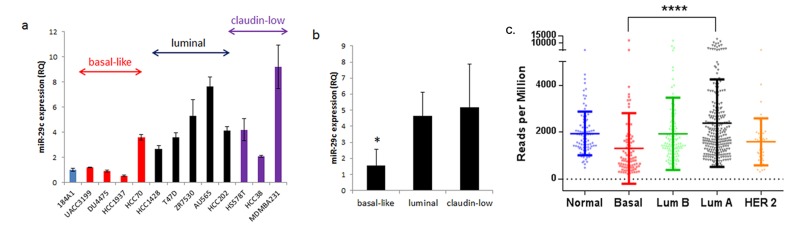
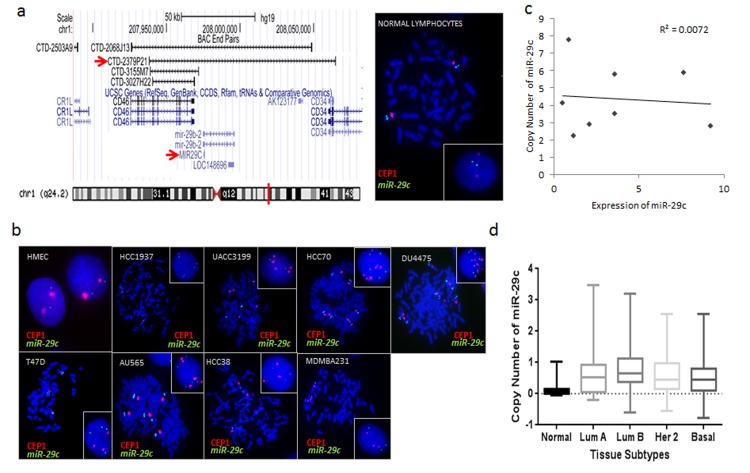
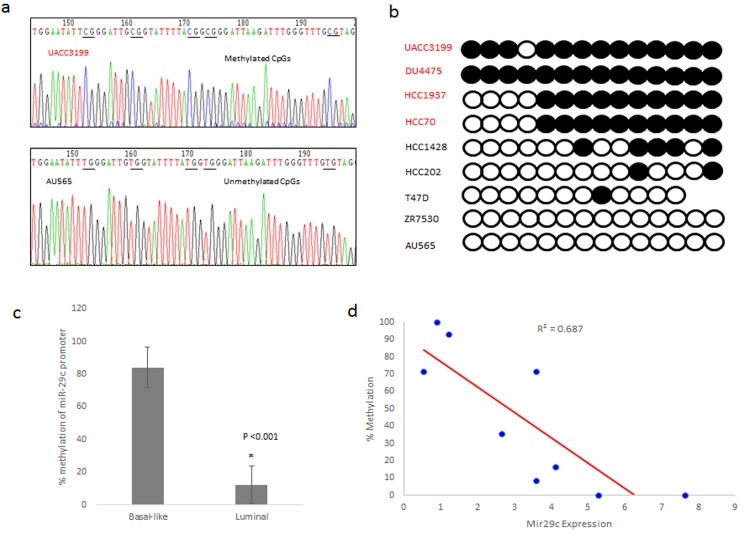
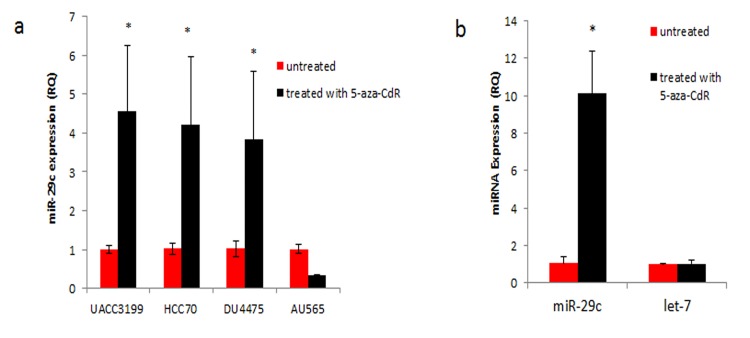
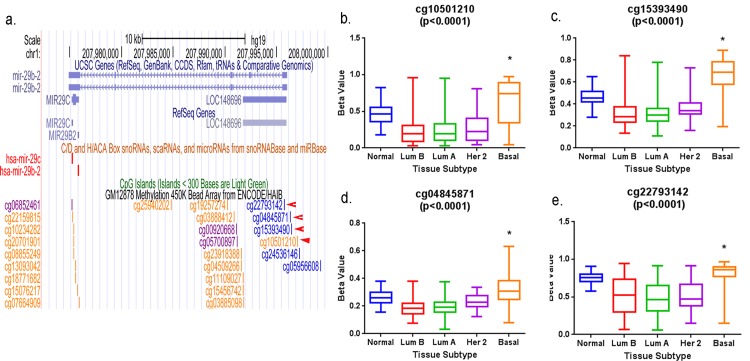
Basal-like breast cancer is a molecularly distinct subtype of breast cancer that is highly aggressive and has a poor prognosis. MicroRNA-29c (miR-29c) has been shown to be significantly down-regulated in basal-like breast tumors and to be involved in cell invasion and sensitivity to chemotherapy. However, little is known about the genetic and regulatory factors contributing to the altered expression of miR-29c in basal-like breast cancer. We here report that epigenetic modifications at the miR-29c promoter, rather than copy number variation of the gene, may drive the lower expression of miR-29c in basal-like breast cancer. Bisulfite sequencing of CpG sites in the miR-29c promoter region showed higher methylation in basal-like breast cancer cell lines compared to luminal subtype cells with a significant inverse correlation between expression and methylation of miR-29c. Analysis of primary breast tumors using The Cancer Genome Atlas (TCGA) dataset confirmed significantly higher levels of methylation of the promoter in basal-like breast tumors compared to all other subtypes. Furthermore, inhibition of CpG methylation with 5-aza-CdR increases miR-29c expression in basal-like breast cancer cells. Flourescent In Situ Hybridization (FISH) revealed chromosomal abnormalities at miR-29c loci in breast cancer cell lines, but with no correlation between copy number variation and expression of miR-29c. Our data demonstrated that dysregulation of miR-29c in basal-like breast cancer cells may be in part driven by methylation at CpG sites. Epigenetic control of the miR-29c promoter by epigenetic modifiers may provide a potential therapeutic target to overcome the aggressive behavior of these cancers.
基底样乳腺癌是一种分子特征独特的乳腺癌亚型,具有高度侵袭性且预后较差。微小RNA-29c(miR-29c)已被证明在基底样乳腺肿瘤中显著下调,并参与细胞侵袭和化疗敏感性。然而,关于导致基底样乳腺癌中miR-29c表达改变的遗传和调控因素知之甚少。我们在此报告,miR-29c启动子处的表观遗传修饰而非该基因的拷贝数变异,可能导致基底样乳腺癌中miR-29c表达降低。miR-29c启动子区域CpG位点的亚硫酸氢盐测序显示,与管腔亚型细胞相比,基底样乳腺癌细胞系中的甲基化程度更高,且miR-29c的表达与甲基化之间存在显著的负相关。使用癌症基因组图谱(TCGA)数据集对原发性乳腺肿瘤进行分析证实,与所有其他亚型相比,基底样乳腺肿瘤中启动子的甲基化水平显著更高。此外,用5-氮杂-2'-脱氧胞苷抑制CpG甲基化可增加基底样乳腺癌细胞中miR-29c的表达。荧光原位杂交(FISH)揭示了乳腺癌细胞系中miR-29c基因座的染色体异常,但拷贝数变异与miR-29c的表达之间无相关性。我们的数据表明,基底样乳腺癌细胞中miR-29c的失调可能部分是由CpG位点的甲基化驱动的。表观遗传修饰剂对miR-29c启动子的表观遗传控制可能为克服这些癌症的侵袭性行为提供潜在的治疗靶点。