Bonnet Agnes, Servin Bertrand, Mulsant Philippe, Mandon-Pepin Beatrice
INRA, UMR 1388 GenPhySE (Génétique, Physiologie et Systèmes d'Elevage), F-31326 Castanet-Tolosan, France.
Université de Toulouse, INP, ENSAT, GenPhySE (Génétique, Physiologie et Systèmes d'Elevage), F-31326 Castanet-Tolosan, France.
PLoS One. 2015 Nov 5;10(11):e0141482. doi: 10.1371/journal.pone.0141482. eCollection 2015.
The successful achievement of early ovarian folliculogenesis is important for fertility and reproductive life span. This complex biological process requires the appropriate expression of numerous genes at each developmental stage, in each follicular compartment. Relatively little is known at present about the molecular mechanisms that drive this process, and most gene expression studies have been performed in rodents and without considering the different follicular compartments.
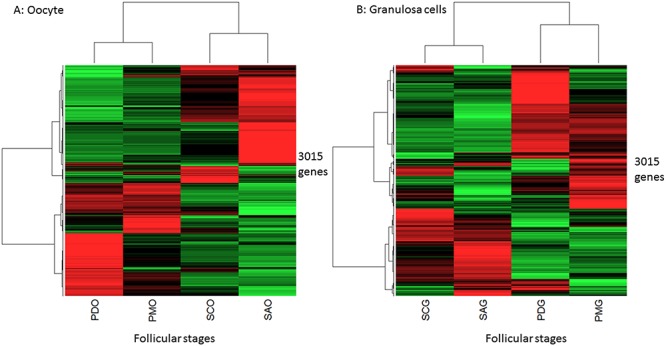
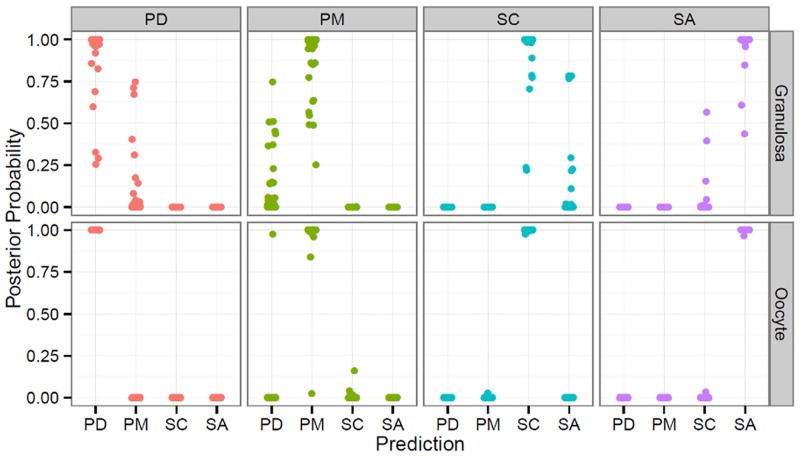
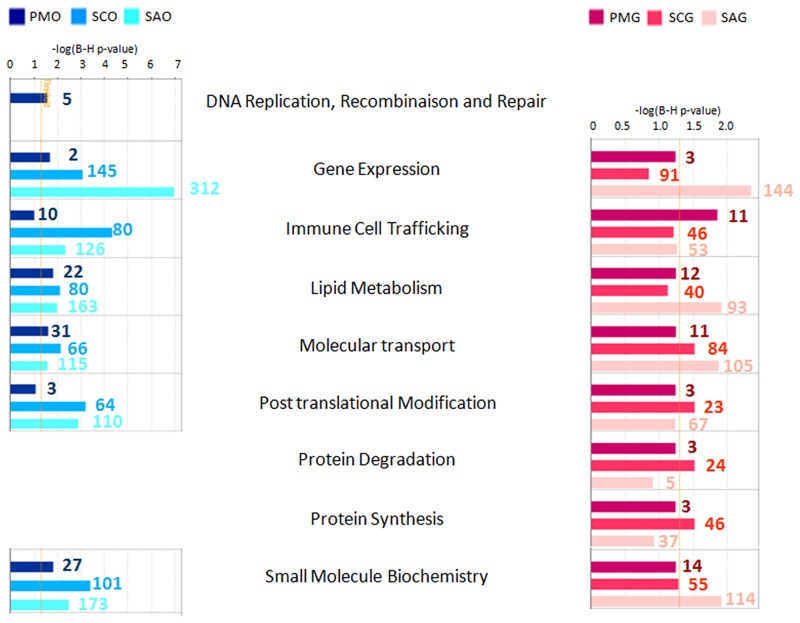
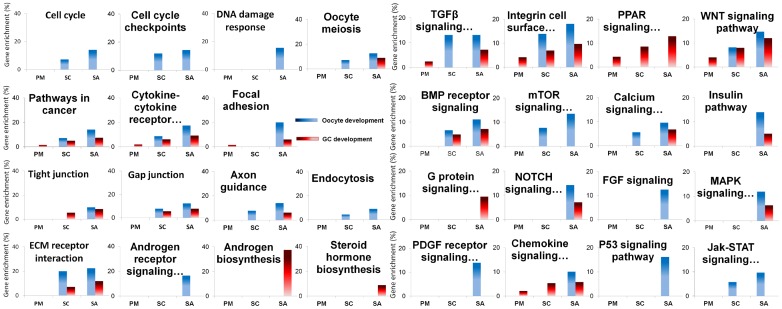
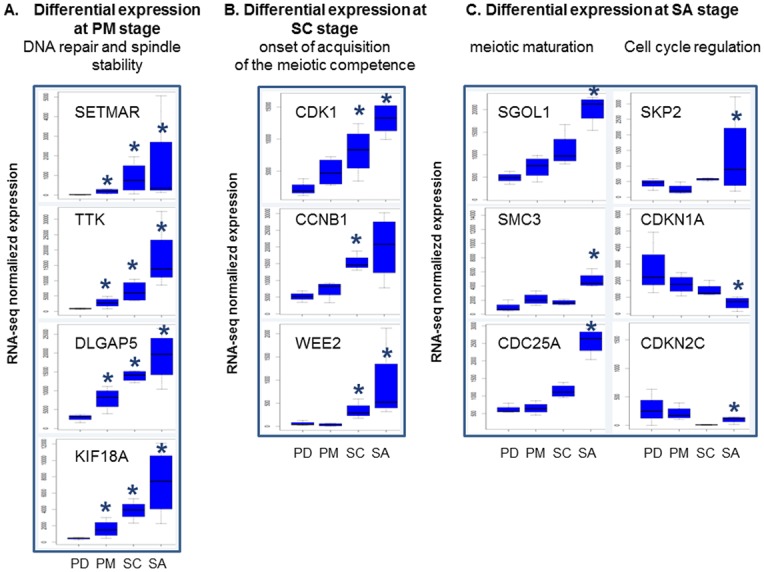
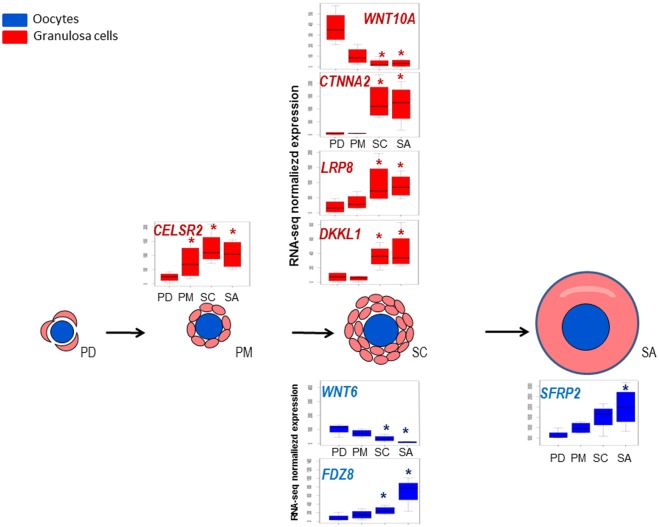
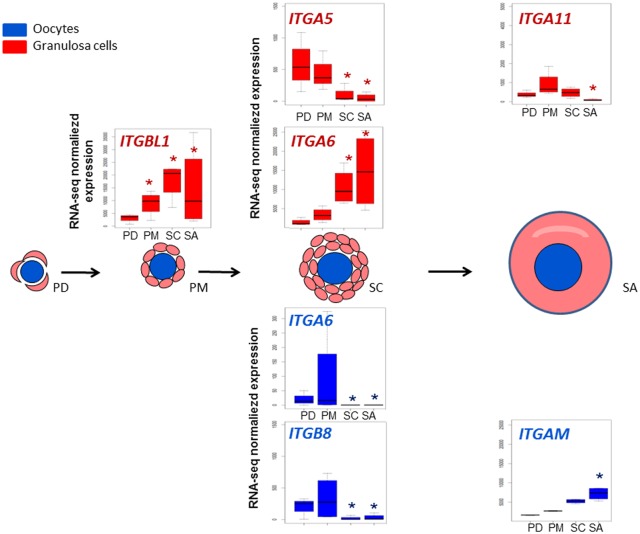
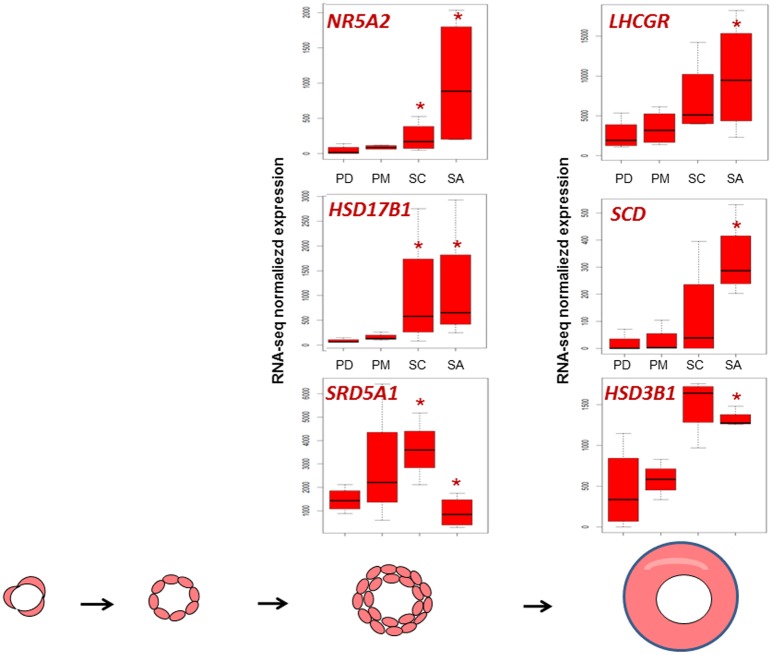
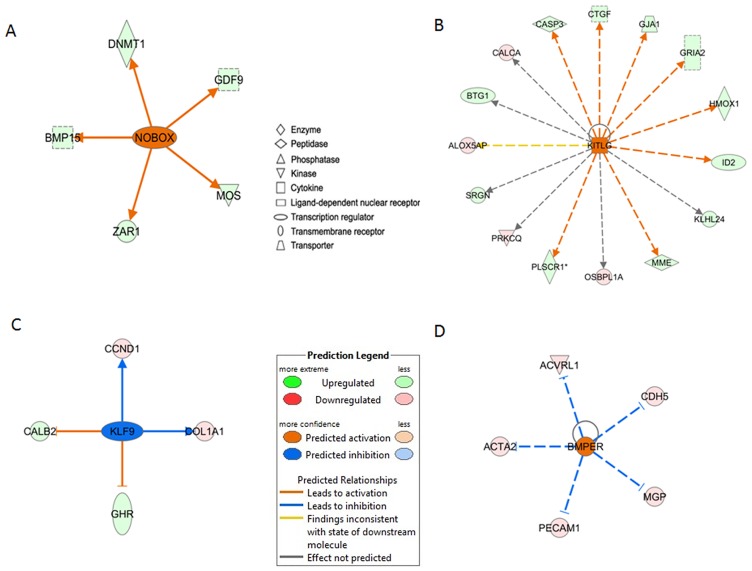
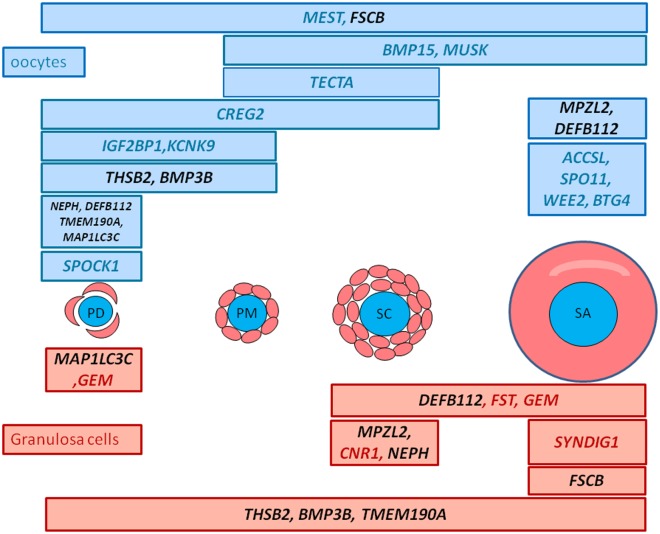
We used RNA-seq technology to explore the sheep transcriptome during early ovarian follicular development in the two main compartments: oocytes and granulosa cells. We documented the differential expression of 3,015 genes during this phase and described the gene expression dynamic specific to these compartments. We showed that important steps occurred during primary/secondary transition in sheep. We also described the in vivo molecular course of a number of pathways. In oocytes, these pathways documented the chronology of the acquisition of meiotic competence, migration and cellular organization, while in granulosa cells they concerned adhesion, the formation of cytoplasmic projections and steroid synthesis. This study proposes the involvement in this process of several members of the integrin and BMP families. The expression of genes such as Kruppel-like factor 9 (KLF9) and BMP binding endothelial regulator (BMPER) was highlighted for the first time during early follicular development, and their proteins were also predicted to be involved in gene regulation. Finally, we selected a data set of 24 biomarkers that enabled the discrimination of early follicular stages and thus offer a molecular signature of early follicular growth. This set of biomarkers includes known genes such as SPO11 meiotic protein covalently bound to DSB (SPO11), bone morphogenetic protein 15 (BMP15) and WEE1 homolog 2 (S. pombe)(WEE2) which play critical roles in follicular development but other biomarkers are also likely to play significant roles in this process.
To our knowledge, this is the first in vivo spatio-temporal exploration of transcriptomes derived from early follicles in sheep.
早期卵泡发生的成功实现对生育能力和生殖寿命至关重要。这一复杂的生物学过程需要在每个发育阶段、每个卵泡区室中众多基因的适当表达。目前对于驱动这一过程的分子机制了解相对较少,并且大多数基因表达研究是在啮齿动物中进行的,且未考虑不同的卵泡区室。
我们使用RNA测序技术探索绵羊卵巢早期卵泡发育过程中两个主要区室(卵母细胞和颗粒细胞)的转录组。我们记录了这一阶段3015个基因的差异表达,并描述了这些区室特有的基因表达动态。我们表明在绵羊的初级/次级转变过程中发生了重要步骤。我们还描述了许多信号通路的体内分子进程。在卵母细胞中,这些信号通路记录了减数分裂能力获得、迁移和细胞组织的时间顺序,而在颗粒细胞中,它们涉及黏附、细胞质突起的形成和类固醇合成。本研究提出整合素家族和骨形态发生蛋白(BMP)家族的几个成员参与了这一过程。在卵泡早期发育过程中首次突出显示了如Kruppel样因子9(KLF9)和BMP结合内皮调节因子(BMPER)等基因的表达,并且预测它们的蛋白质也参与基因调控。最后,我们选择了一组24个生物标志物数据集,能够区分早期卵泡阶段,从而提供早期卵泡生长的分子特征。这组生物标志物包括在卵泡发育中起关键作用的已知基因,如与双链断裂共价结合的减数分裂蛋白SPO11(SPO11)、骨形态发生蛋白15(BMP15)和芽殖酵母WEE1同源物2(WEE2),但其他生物标志物也可能在这一过程中发挥重要作用。
据我们所知,这是首次对绵羊早期卵泡转录组进行体内时空探索。