Bidulescu Aurelian, Francis Damian K, Ferguson Trevor S, Bennett Nadia R, Hennis Anselm J M, Wilks Rainford, Harris Eon N, MacLeish Marlene, Sullivan Louis W
Department of Epidemiology and Biostatistics, Indiana University School of Public Health - Bloomington, Bloomington, Indiana, USA.
Epidemiology Research Unit, Tropical Medicine Research Institute, The University of the West Indies, Kingston, West Indies, Jamaica.
Int J Equity Health. 2015 Nov 5;14:125. doi: 10.1186/s12939-015-0229-0.
Despite the large body of research on racial/ethnic disparities in health, there are limited data on health disparities in Caribbean-origin populations. This scoping review aimed to analyze and synthesize published and unpublished literature on the disparities in hypertension and its complications among Afro-Caribbean populations.
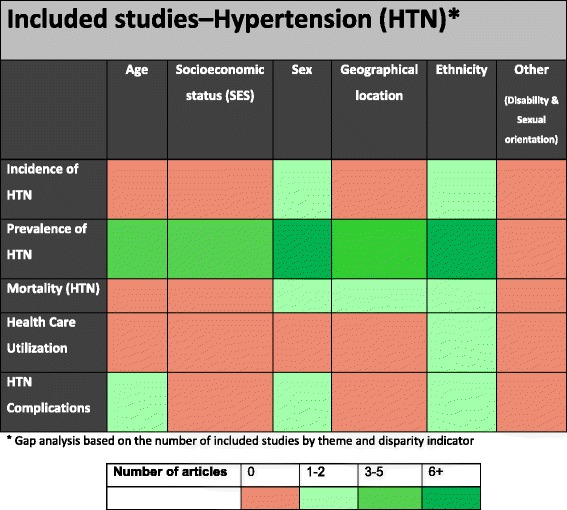
A comprehensive protocol, including a thorough search strategy, was developed and used to identify potentially relevant studies. Identified studies were then screened for eligibility using pre-specified inclusion/exclusion criteria. An extraction form was developed to chart data and collate study characteristics including methods and main findings. Charted information was tagged by disparity indicators and thematic analysis performed. Disparity indicators evaluated include ethnicity, sex, socioeconomic status, disability, sexual orientation and geographic location. Gaps in the literature were identified and extrapolated into a gap map.
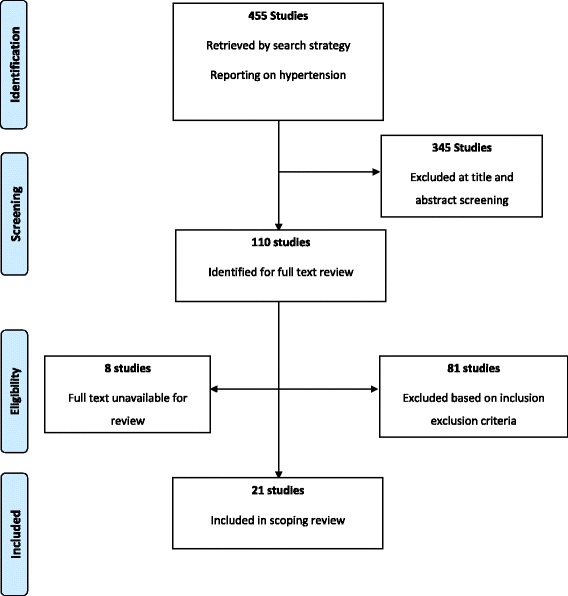
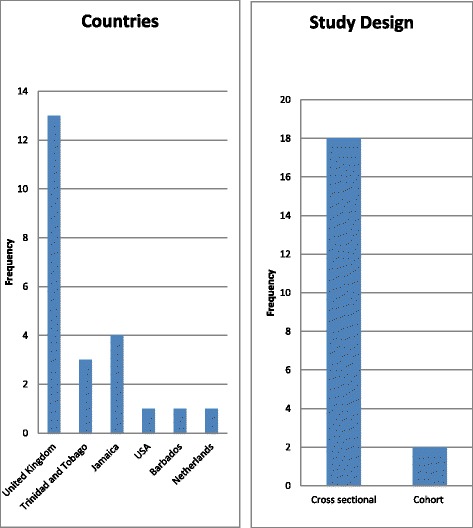
A total of 455 hypertension related records, published between 1972 and 2012, were identified and screened. Twenty-one studies met inclusion criteria for detailed analysis. The majority of studies were conducted in the United Kingdom and utilized a cross-sectional study design. Overall, studies reported a higher prevalence of hypertension among Caribbean blacks compared to West African blacks and Caucasians. Hypertension and its related complications were highest in persons with low socioeconomic status. Gap analysis showed limited research data reporting hypertension incidence by sex and socioeconomic status. No literature was found on disability status or sexual orientation as it relates to hypertension. Prevalence and morbidity were the most frequently reported outcomes.
The literature on hypertension health disparities in Caribbean origin populations is limited. Future research should address these knowledge gaps and develop approaches to reduce them.
尽管关于健康方面的种族/民族差异已有大量研究,但关于加勒比裔人群健康差异的数据却很有限。本综述旨在分析和综合已发表及未发表的有关非洲裔加勒比人群高血压及其并发症差异的文献。
制定了一项全面的方案,包括详尽的检索策略,并用于识别潜在相关研究。然后使用预先指定的纳入/排除标准对已识别的研究进行资格筛选。开发了一种提取表格来记录数据并整理研究特征,包括方法和主要发现。将记录的信息按照差异指标进行标记,并进行主题分析。评估的差异指标包括种族、性别、社会经济地位、残疾、性取向和地理位置。识别文献中的空白,并将其归纳到差距图中。
共识别并筛选了1972年至2012年间发表的455条与高血压相关的记录。21项研究符合详细分析的纳入标准。大多数研究在英国进行,采用横断面研究设计。总体而言,研究报告称加勒比黑人中高血压的患病率高于西非黑人和白种人。社会经济地位低的人群中高血压及其相关并发症最为常见。差距分析表明,按性别和社会经济地位报告高血压发病率的研究数据有限。未发现与高血压相关的残疾状况或性取向方面的文献。患病率和发病率是最常报告的结果。
关于加勒比裔人群高血压健康差异的文献有限。未来的研究应填补这些知识空白,并制定减少差异的方法。