Samuel Stephen R, Veluswamy Sundar K, Maiya Arun G, Fernandes Donald J, McNeely Margaret L
Department of Physiotherapy, SOAHS, Manipal University, Manipal, India.
Department of Physiotherapy, M S Ramaiah Medical College and Hospitals, MSR Nagar, MSR IT Post, Bangalore, 560054 Karnataka India.
Springerplus. 2015 Oct 31;4:655. doi: 10.1186/s40064-015-1456-y. eCollection 2015.
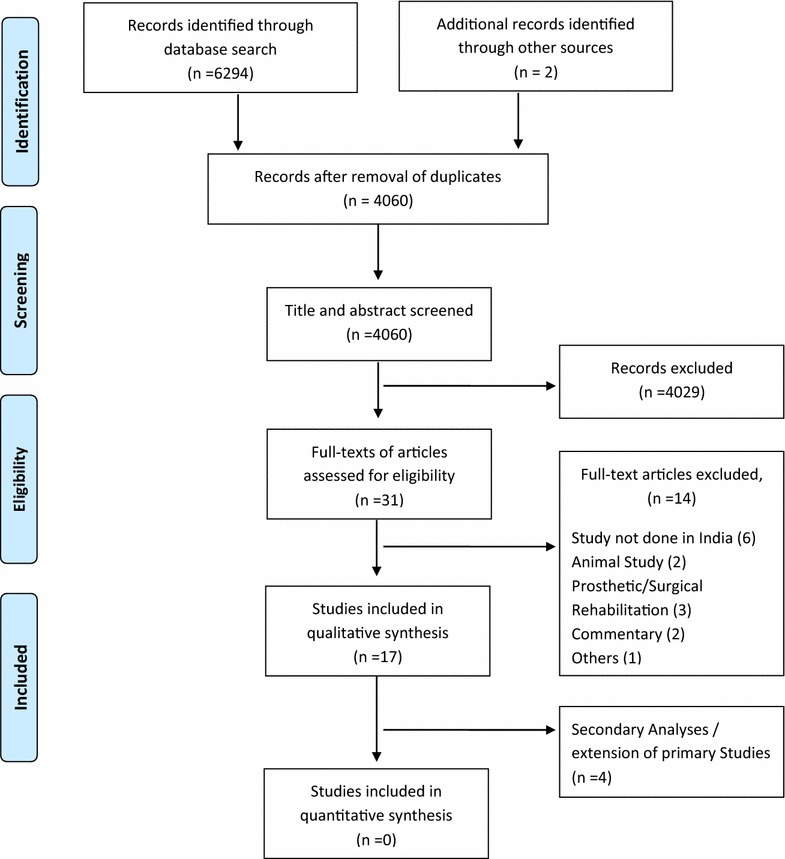
Existing literature suggests that cancer survivors present with high rates of morbidity due to various treatment and disease induced factors. Research globally has shown exercise to be beneficial in improving treatment outcomes and quality of life. India has a high prevalence of cancer and not much is known about exercise interventions for cancer survivors in India. This review was planned to review the state of exercise based interventions for cancer survivors in India. A comprehensive literature search was performed in PubMed, CINAHL, EMBASE, Scopus, Cochrane Library, PEDro, IndMed, and Shoda Ganga. The search results were screened and data extracted by two independent reviewers. All eligible studies were assessed for methodological quality rating using Downs and Black checklist. Data was extracted using a pilot tested pro forma to summarize information on site and stage of cancer, type of exercise intervention and outcome measures. The review identified 13 studies, published from 1991 to 2013, after screening 4060 articles. Exercise interventions fell into one of three categories: (1) yoga-based, (2) physiotherapy-based and (3) speech therapy based interventions; and exclusively involved either breast or head and neck cancers. Studies were generally of low to moderate quality. A broad range of outcomes were found including symptoms, speech and swallowing, and quality of life and largely supported the benefits of exercise-based interventions. At present, research involving exercise-based rehabilitation interventions in India is limited in volume, quality and scope. With the growing burden of cancer in the country, there is an immediate need for research on exercise based interventions for cancer survivors within the sociocultural context of India.
现有文献表明,由于各种治疗和疾病诱发因素,癌症幸存者的发病率很高。全球研究表明,运动有助于改善治疗效果和生活质量。印度癌症发病率很高,但对于印度癌症幸存者的运动干预了解甚少。本综述旨在回顾印度针对癌症幸存者的运动干预现状。在PubMed、CINAHL、EMBASE、Scopus、Cochrane图书馆、PEDro、IndMed和Shoda Ganga进行了全面的文献检索。检索结果由两名独立评审员进行筛选和数据提取。所有符合条件的研究均使用唐斯和布莱克清单进行方法学质量评级评估。使用经过预试验的表格提取数据,以总结癌症的部位和阶段、运动干预类型和结局指标等信息。该综述在筛选了4060篇文章后,确定了1991年至2013年发表的13项研究。运动干预分为三类:(1)基于瑜伽的,(2)基于物理治疗的,(3)基于言语治疗的干预;且仅涉及乳腺癌或头颈癌。研究质量普遍较低至中等。发现了广泛的结局,包括症状、言语和吞咽以及生活质量,并且在很大程度上支持了基于运动的干预的益处。目前,印度涉及基于运动的康复干预的研究在数量、质量和范围上都很有限。随着该国癌症负担的不断增加,迫切需要在印度的社会文化背景下开展针对癌症幸存者的基于运动的干预研究。