Bradley Sean J, Suarez-Fueyo Abel, Moss David R, Kyttaris Vasileios C, Tsokos George C
Division of Rheumatology, Department of Medicine, Beth Israel Deaconess Medical Center, Harvard Medical School, Boston, Massachusetts, United States of America.
Department of Anesthesiology, Tufts Medical Center, Boston, Massachusetts, United States of America.
PLoS One. 2015 Nov 6;10(11):e0141171. doi: 10.1371/journal.pone.0141171. eCollection 2015.
T cells regulate the adaptive immune response and have altered function in autoimmunity. Systemic Lupus Erythematosus (SLE) has great diversity of presentation and treatment response. Peripheral blood component gene expression affords an efficient platform to investigate SLE immune dysfunction and help guide diagnostic biomarker development for patient stratification.
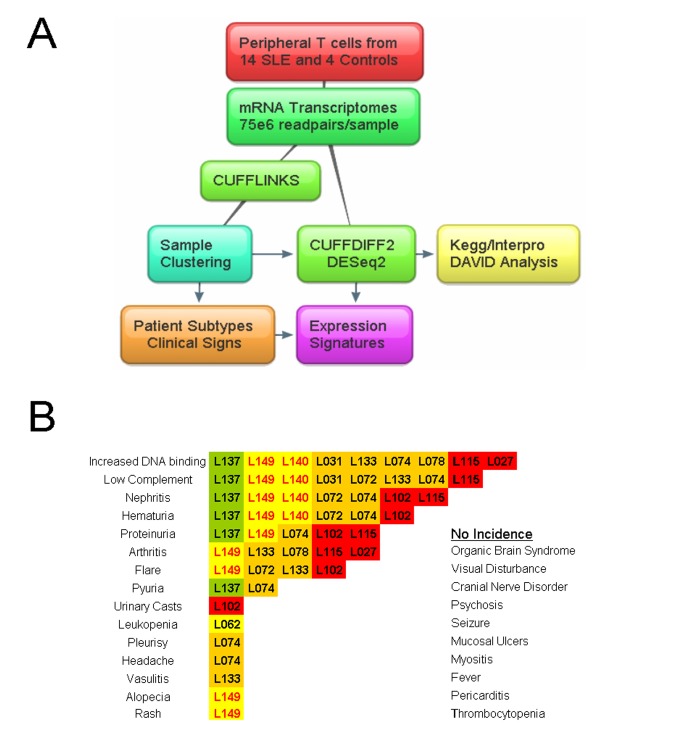
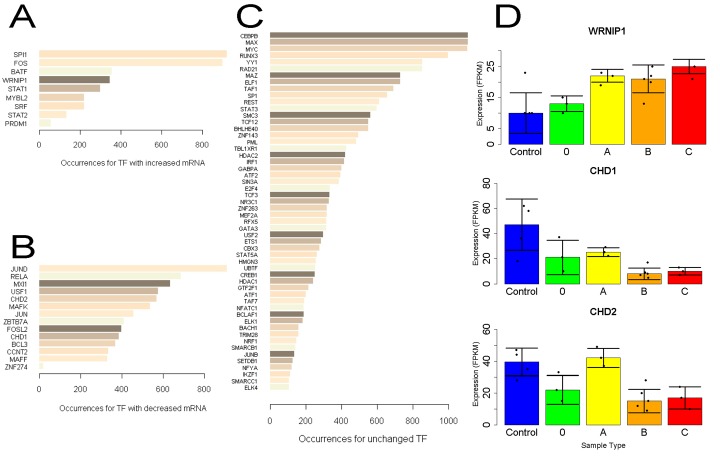
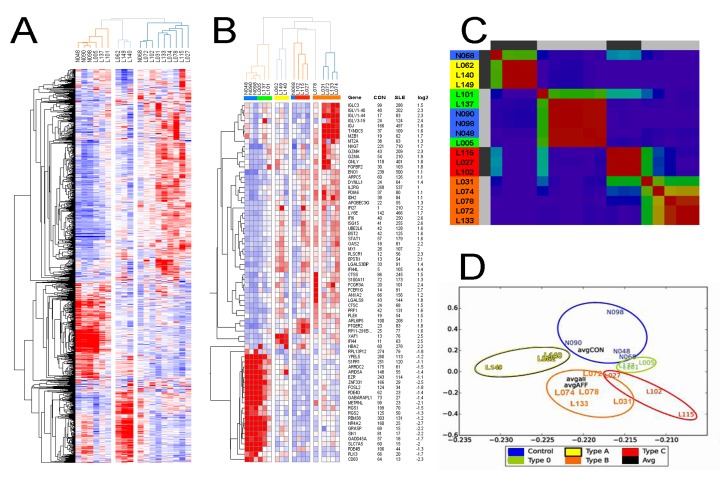
Gene expression in peripheral blood T cell samples for 14 SLE patients and 4 controls was analyzed by high depth sequencing. Unbiased clustering of genes and samples revealed novel patterns related to disease etiology. Functional annotation of these genes highlights pathways and protein domains involved in SLE manifestation.
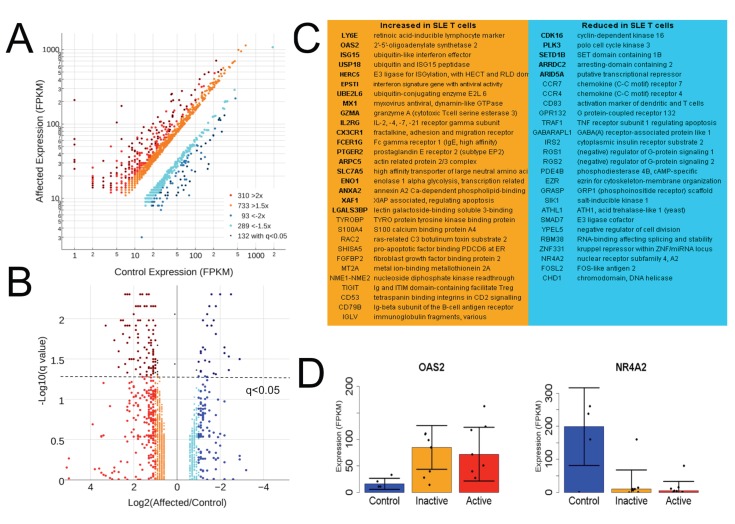
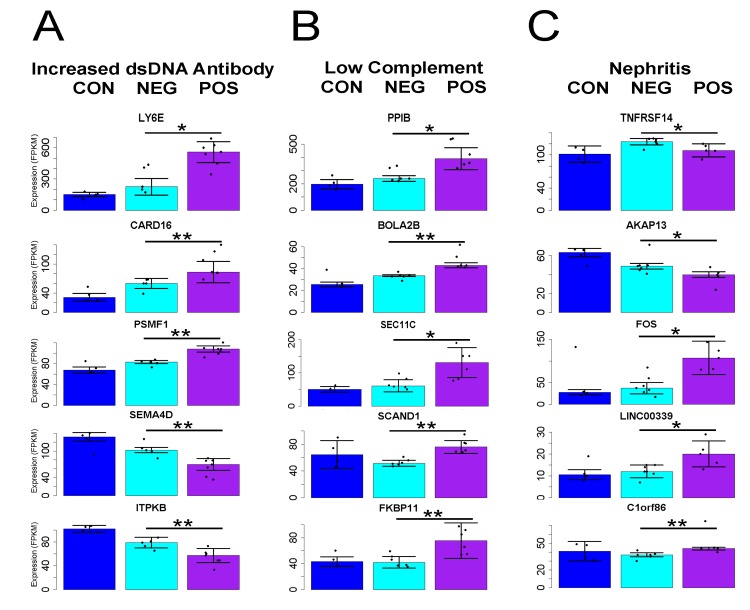
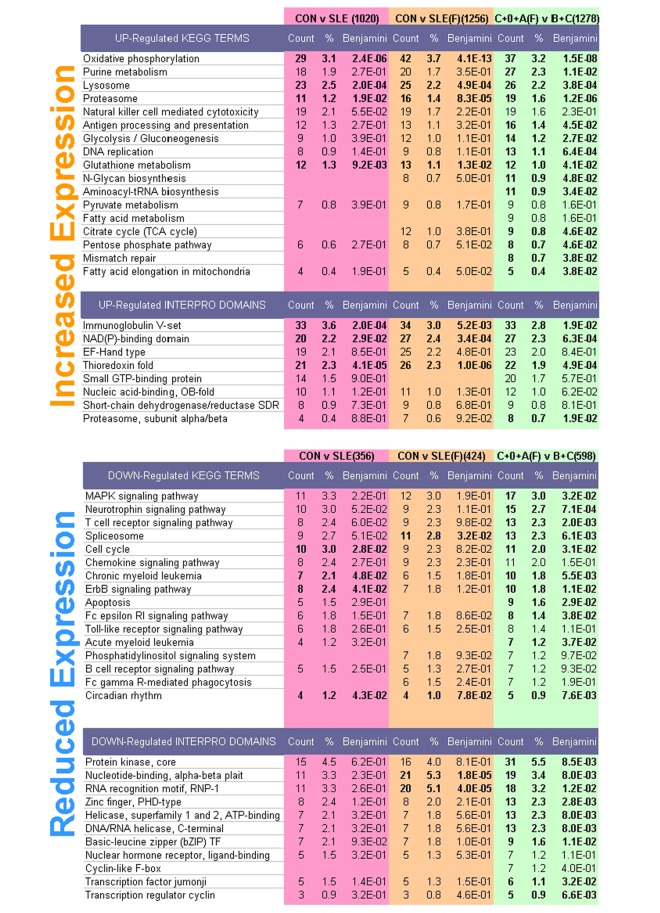
We found transcripts for hundreds of genes consistently altered in SLE T cell samples, for which DAVID analysis highlights induction of pathways related to mitochondria, nucleotide metabolism and DNA replication. Fewer genes had reduced mRNA expression, and these were linked to signaling, splicing and transcriptional activity. Gene signatures associated with the presence of dsDNA antibodies, low complement levels and nephritis were detected. T cell gene expression also indicates the presence of several patient subtypes, such as having only a minimal expression phenotype, male type, or severe with or without induction of genes related to membrane protein production.
Unbiased transcriptome analysis of a peripheral blood component provides insight on autoimmune pathophysiology and patient variability. We present an open source workflow and richly annotated dataset to support investigation of T cell biology, develop biomarkers for patient stratification and perhaps help indicate a source of SLE immune dysfunction.
T细胞调节适应性免疫反应,且在自身免疫中功能发生改变。系统性红斑狼疮(SLE)的临床表现和治疗反应具有高度多样性。外周血成分基因表达为研究SLE免疫功能障碍提供了一个有效的平台,并有助于指导用于患者分层的诊断生物标志物的开发。
通过深度测序分析了14例SLE患者和4例对照的外周血T细胞样本中的基因表达。对基因和样本进行无偏聚类揭示了与疾病病因相关的新模式。这些基因的功能注释突出了参与SLE表现的信号通路和蛋白质结构域。
我们发现数百个基因的转录本在SLE T细胞样本中持续发生改变,DAVID分析突出了与线粒体、核苷酸代谢和DNA复制相关的信号通路的诱导。较少的基因mRNA表达降低,这些基因与信号传导、剪接和转录活性有关。检测到与双链DNA抗体的存在、低补体水平和肾炎相关的基因特征。T细胞基因表达还表明存在几种患者亚型,例如仅具有最小表达表型、男性型,或严重型(伴有或不伴有与膜蛋白产生相关基因的诱导)。
对外周血成分进行无偏转录组分析有助于深入了解自身免疫病理生理学和患者变异性。我们提供了一个开源工作流程和注释丰富的数据集,以支持对T细胞生物学的研究,开发用于患者分层的生物标志物,并可能有助于指出SLE免疫功能障碍的来源。