El Berbri Ikhlass, Ducrotoy Marie J, Petavy Anne-Françoise, Fassifihri Ouaffa, Shaw Alexandra P, Bouslikhane Mohammed, Boue Franck, Welburn Susan C, Dakkak Allal
Department of Pathology and Veterinary Public Health, Institut Agronomique et Vétérinaire Hassan II, BP: 6202, Rabat, Morocco.
Division of Infection and Pathway Medicine, School of Biomedical Sciences, College of Medicine and Veterinary Medicine, The University of Edinburgh, Chancellor's Building, 49 Little France Crescent, Edinburgh, EH16 4SB, United Kingdom.
Infect Dis Poverty. 2015 Nov 9;4:48. doi: 10.1186/s40249-015-0082-9.
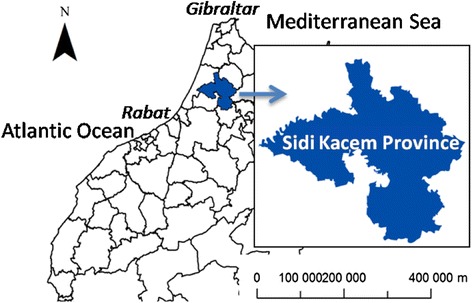
This study is a component of a large research project on five major neglected zoonotic diseases (NZDs) including cystic echinococcosis and was undertaken in the Province of Sidi Kacem over a period of four years (April 2009-March 2013).
Questionnaires were administered at community level in a total of 27 communes and visits were made to all of the 10 abattoirs situated in the Province, to collect qualitative data on determinants of transmission for disease in humans and animals. More specifically, community knowledge, attitudes and practices related to cystic echinococcosis were assessed, as well as the extent to which local customs and behaviours may promote transmission. Abattoir infrastructure and practices, and their role in perpetuating disease transmission were also critically evaluated.
The results show that only 50 % of people have heard of the disease, and of those, only 21 % are aware of the dog's role in disease transmission. Sixty-seven per cent of respondents stated that dogs are fed ruminant organs deemed unfit for human consumption. Owned dogs have access to the family home, including the kitchen, in 39 % of households. The extent of this close proximity between humans and animals is even more pertinent when one considers that dogs are omnipresent in the community, with an average of 1.8 dogs owned per household. The unrestricted access of dogs to abattoirs is a huge issue, which further promotes disease transmission.
This study would suggest that the high prevalence of cystic echinococcosis in humans and animals in Morocco is largely due to three factors: 1) abundance of dogs 2) engagement in risky behaviour of the local population and 3) poor abattoir infrastructure and practices. This has serious implications in terms of the socio-economic impact of the disease, especially for rural poor communities.
本研究是一项关于包括囊型包虫病在内的五种主要被忽视的人畜共患疾病的大型研究项目的一部分,在西迪卡塞姆省开展,为期四年(2009年4月至2013年3月)。
在总共27个社区进行了社区层面的问卷调查,并走访了该省所有10个屠宰场,以收集关于人类和动物疾病传播决定因素的定性数据。更具体地说,评估了与囊型包虫病相关的社区知识、态度和做法,以及当地习俗和行为可能促进传播的程度。还对屠宰场的基础设施和做法及其在疾病传播持续存在中的作用进行了严格评估。
结果显示,只有50%的人听说过这种疾病,其中只有21%意识到狗在疾病传播中的作用。67%的受访者表示,狗被喂食被认为不适于人类食用的反刍动物器官。在39%的家庭中,家养的狗可以进入包括厨房在内的家庭住所。当考虑到狗在社区中无处不在,平均每户拥有1.8只狗时,人与动物之间这种密切接触的程度就更加相关了。狗不受限制地进入屠宰场是一个巨大的问题,这进一步促进了疾病传播。
本研究表明,摩洛哥人和动物中囊型包虫病的高流行率主要归因于三个因素:1)狗的数量众多;2)当地居民的危险行为;3)屠宰场基础设施和做法不佳。这对该疾病的社会经济影响具有严重意义,尤其是对农村贫困社区而言。