Department of Pediatrics, Baylor College of Medicine, Houston, Texas, USA.
PLoS Negl Trop Dis. 2012;6(2):e1475. doi: 10.1371/journal.pntd.0001475. Epub 2012 Feb 28.
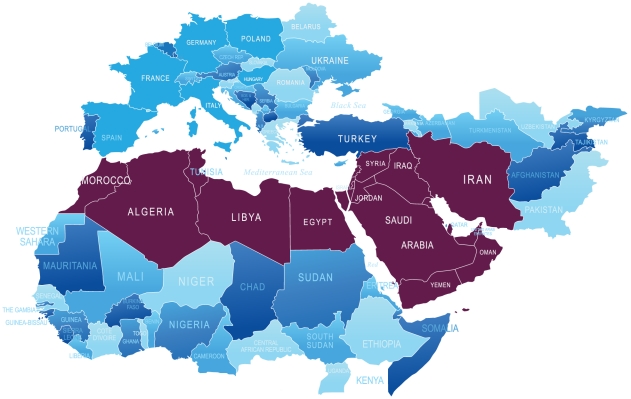
The neglected tropical diseases (NTDs) are highly endemic but patchily distributed among the 20 countries and almost 400 million people of the Middle East and North Africa (MENA) region, and disproportionately affect an estimated 65 million people living on less than US$2 per day. Egypt has the largest number of people living in poverty of any MENA nation, while Yemen has the highest prevalence of people living in poverty. These two nations stand out for having suffered the highest rates of many NTDs, including the soil-transmitted nematode infections, filarial infections, schistosomiasis, fascioliasis, leprosy, and trachoma, although they should be recognized for recent measures aimed at NTD control. Leishmaniasis, especially cutaneous leishmaniasis, is endemic in Syria, Iran, Iraq, Libya, Morocco, and elsewhere in the region. Both zoonotic (Leishmania major) and anthroponotic (Leishmania tropica) forms are endemic in MENA in rural arid regions and urban regions, respectively. Other endemic zoonotic NTDs include cystic echinococcosis, fascioliasis, and brucellosis. Dengue is endemic in Saudi Arabia, where Rift Valley fever and Alkhurma hemorrhagic fever have also emerged. Great strides have been made towards elimination of several endemic NTDs, including lymphatic filariasis in Egypt and Yemen; schistosomiasis in Iran, Morocco, and Oman; and trachoma in Morocco, Algeria, Iran, Libya, Oman, Saudi Arabia, Tunisia, and the United Arab Emirates. A particularly noteworthy achievement is the long battle waged against schistosomiasis in Egypt, where prevalence has been brought down by regular praziquantel treatment. Conflict and human and animal migrations are key social determinants in preventing the control or elimination of NTDs in the MENA, while local political will, strengthened international and intersectoral cooperative efforts for surveillance, mass drug administration, and vaccination are essential for elimination.
被忽视的热带病(NTDs)在中东和北非(MENA)地区的 20 个国家和近 4 亿人口中高度流行,但分布不均,估计有 6500 万人生活在每天不足 2 美元的贫困线以下。埃及是 MENA 地区中贫困人口最多的国家,而也门则是贫困人口比例最高的国家。这两个国家因遭受许多 NTD 疾病的影响最为严重而引人注目,包括土壤传播的线虫感染、丝虫感染、血吸虫病、肝片吸虫病、麻风病和沙眼,尽管它们最近采取了控制 NTD 的措施。利什曼病,特别是皮肤利什曼病,在叙利亚、伊朗、伊拉克、利比亚、摩洛哥和该地区其他地方流行。在 MENA 的农村干旱地区和城市地区,分别流行动物源性(利什曼原虫)和人源性(利什曼原虫热带亚种)利什曼病。其他流行的动物源性 NTD 包括囊型包虫病、肝片吸虫病和布鲁氏菌病。登革热在沙特阿拉伯流行,裂谷热和阿尔赫马出血热也在该国出现。在消除一些地方性 NTD 方面取得了重大进展,包括埃及和也门的淋巴丝虫病;伊朗、摩洛哥和阿曼的血吸虫病;以及摩洛哥、阿尔及利亚、伊朗、利比亚、阿曼、沙特阿拉伯、突尼斯和阿拉伯联合酋长国的沙眼。一个特别值得注意的成就是埃及长期与血吸虫病作斗争,通过定期使用吡喹酮治疗,降低了该病的流行率。冲突、人和动物迁徙是中东和北非控制或消除 NTD 疾病的关键社会决定因素,而地方政治意愿、加强国际和部门间合作以进行监测、大规模药物治疗和疫苗接种,是消除 NTD 疾病的关键。