Maekawa Motoko, Iwayama Yoshimi, Ohnishi Tetsuo, Toyoshima Manabu, Shimamoto Chie, Hisano Yasuko, Toyota Tomoko, Balan Shabeesh, Matsuzaki Hideo, Iwata Yasuhide, Takagai Shu, Yamada Kohei, Ota Motonori, Fukuchi Satoshi, Okada Yohei, Akamatsu Wado, Tsujii Masatsugu, Kojima Nobuhiko, Owada Yuji, Okano Hideyuki, Mori Norio, Yoshikawa Takeo
Laboratory for Molecular Psychiatry, RIKEN Brain Science Institute, Saitama, Japan.
Research Center for Child Mental Development, University of Fukui, Fukui, Japan.
Sci Rep. 2015 Nov 9;5:16239. doi: 10.1038/srep16239.
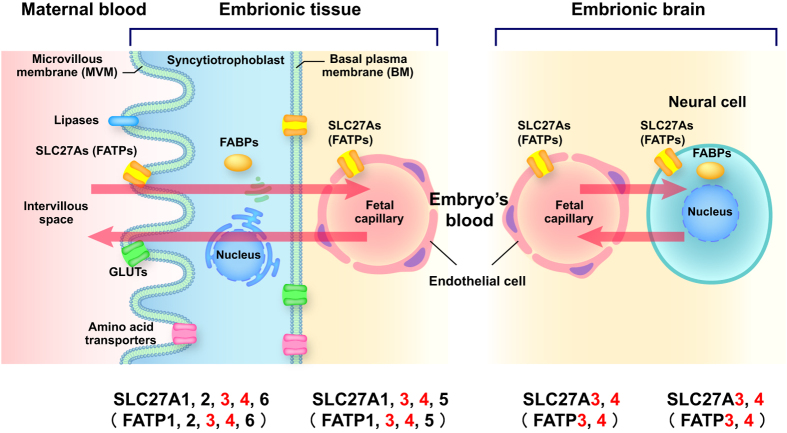
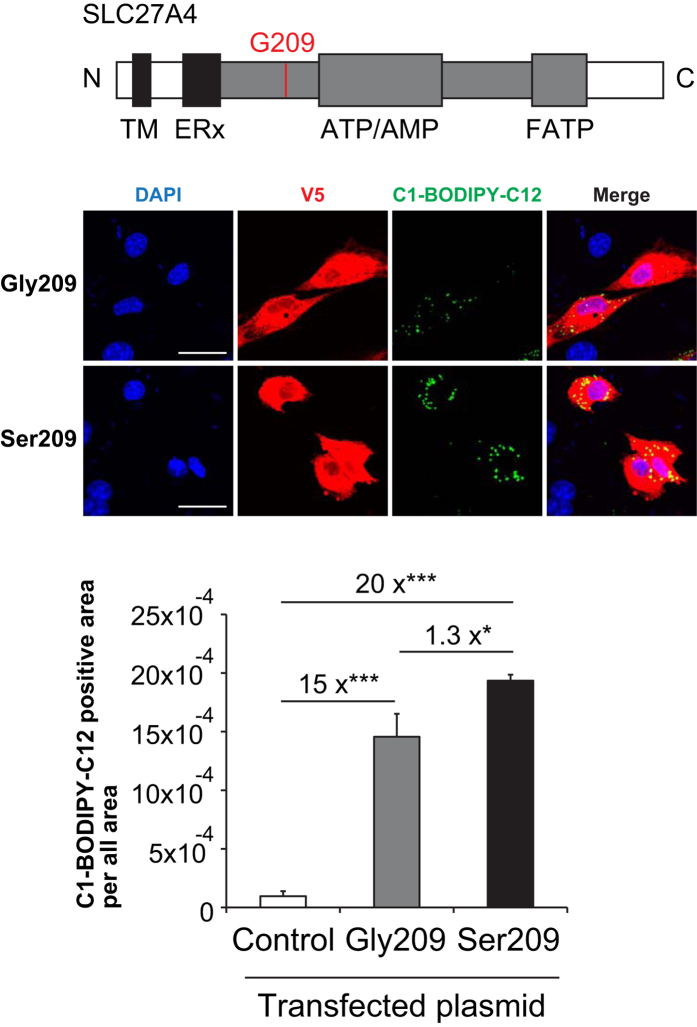
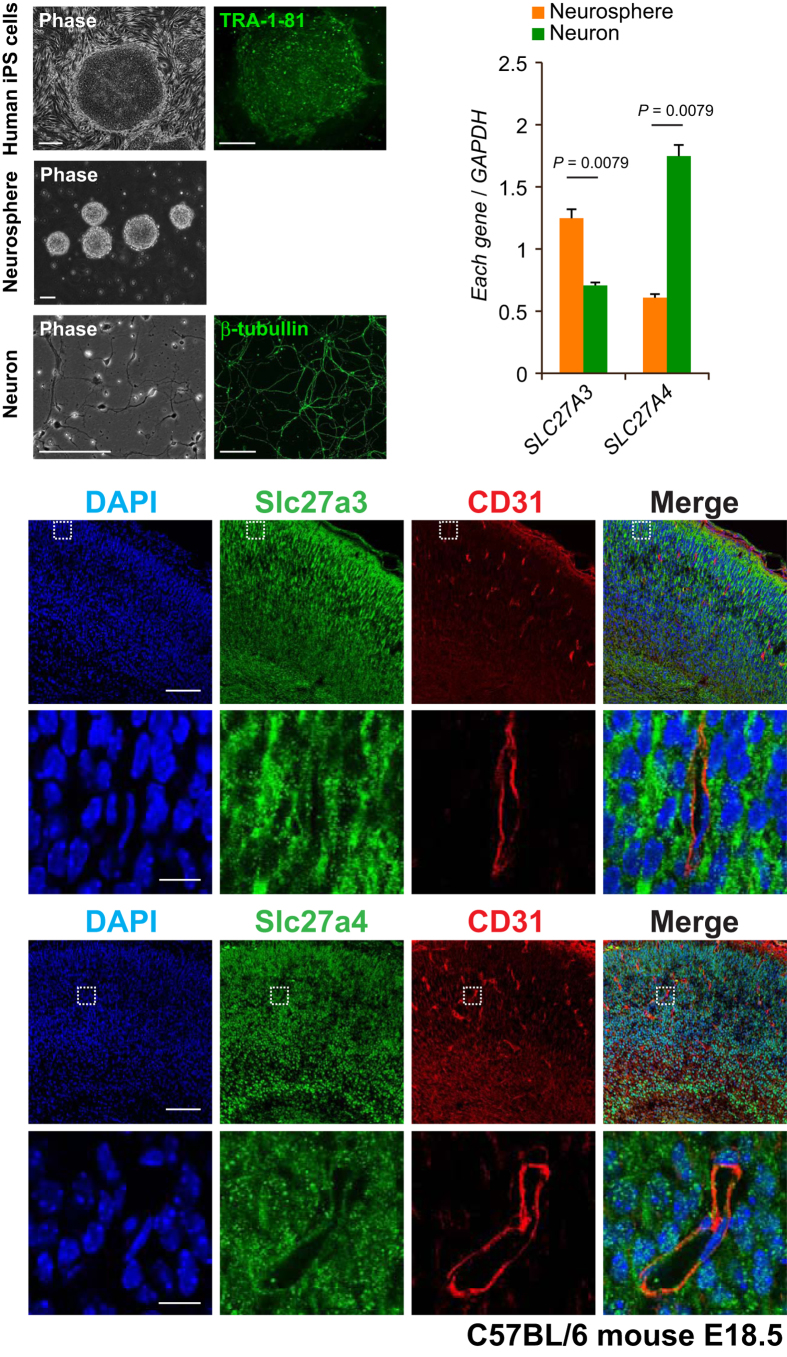
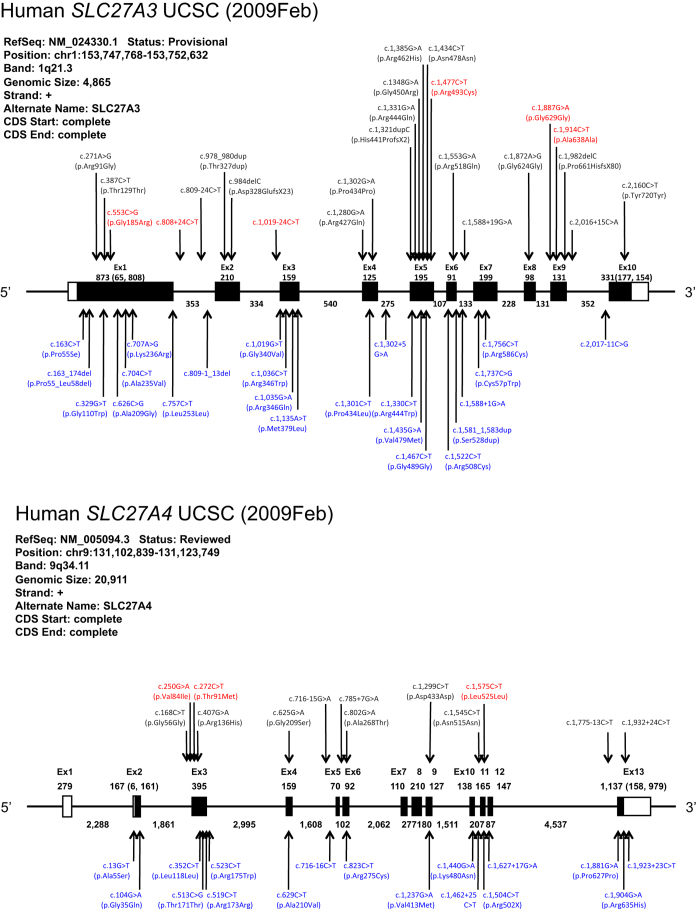
The solute carrier 27A (SLC27A) gene family encodes fatty acid transport proteins (FATPs) and includes 6 members. During fetal and postnatal periods of development, the growing brain requires a reliable supply of fatty acids. Because autism spectrum disorders (ASD) are now recognized as disorders caused by impaired early brain development, it is possible that functional abnormalities of SLC27A genes may contribute to the pathogenesis of ASD. Here, we confirmed the expression of SLC27A3 and SLC27A4 in human neural stem cells derived from human induced pluripotent stem cells, which suggested their involvement in the developmental stage of the central nervous system. Additionally, we resequenced the SLC27A3 and SLC27A4 genes using 267 ASD patient and 1140 control samples and detected 47 (44 novel and 29 nonsynonymous) and 30 (17 novel and 14 nonsynonymous) variants for the SLC27A3 and SLC27A4, respectively, revealing that they are highly polymorphic with multiple rare variants. The SLC27A4 Ser209 allele was more frequently represented in ASD samples. Furthermore, we showed that a SLC27A4 Ser209 mutant resulted in significantly higher fluorescently-labeled fatty acid uptake into bEnd3 cells, a mouse brain capillary-derived endothelial cell line, compared with SLC27A4 Gly209, suggesting that the functional change may contribute to ASD pathophysiology.
溶质载体27A(SLC27A)基因家族编码脂肪酸转运蛋白(FATP),包括6个成员。在胎儿期和出生后的发育阶段,不断生长的大脑需要可靠的脂肪酸供应。由于自闭症谱系障碍(ASD)现在被认为是由早期大脑发育受损引起的疾病,SLC27A基因的功能异常可能导致ASD的发病机制。在这里,我们证实了SLC27A3和SLC27A4在源自人诱导多能干细胞的人神经干细胞中的表达,这表明它们参与中枢神经系统的发育阶段。此外,我们使用267例ASD患者和1140例对照样本对SLC27A3和SLC27A4基因进行了重测序,分别检测到SLC27A3和SLC27A4的47个(44个新的和29个非同义的)和30个(17个新的和14个非同义的)变异,表明它们具有高度多态性,有多个罕见变异。SLC27A4 Ser209等位基因在ASD样本中出现的频率更高。此外,我们发现,与SLC27A4 Gly209相比,SLC27A4 Ser209突变体导致荧光标记的脂肪酸进入bEnd3细胞(一种小鼠脑毛细血管衍生的内皮细胞系)的摄取量显著增加,这表明功能变化可能导致ASD的病理生理学。