Abdulrahman Hunar, Henson Richard N
MRC Cognition & Brain Sciences Unit, Cambridge, England, United Kingdom; University of Cambridge, Cambridge, United Kingdom.
MRC Cognition & Brain Sciences Unit, Cambridge, England, United Kingdom.
Neuroimage. 2016 Jan 15;125:756-766. doi: 10.1016/j.neuroimage.2015.11.009. Epub 2015 Nov 6.
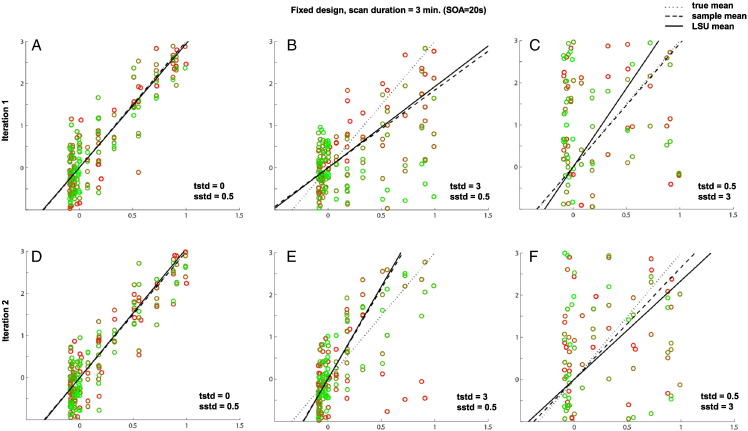
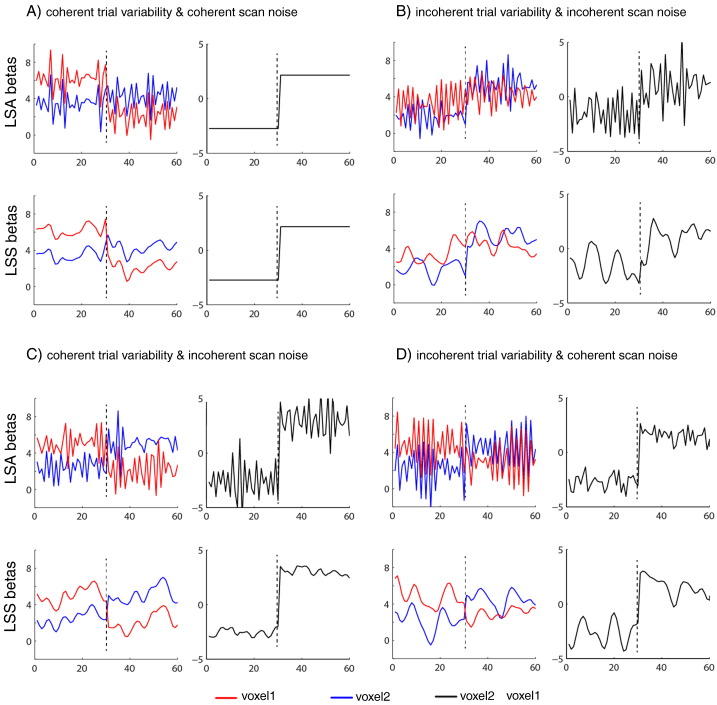
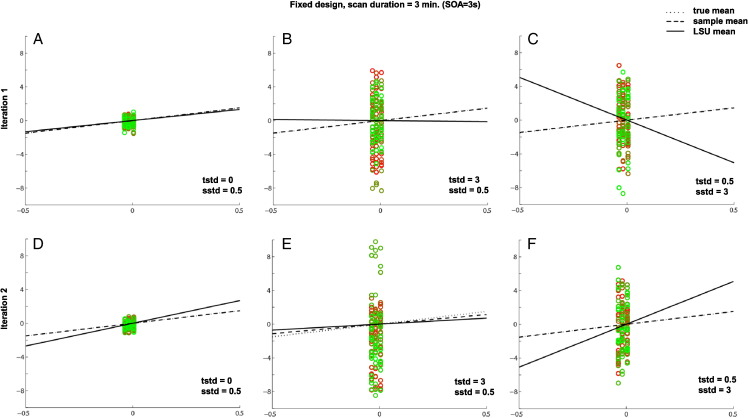
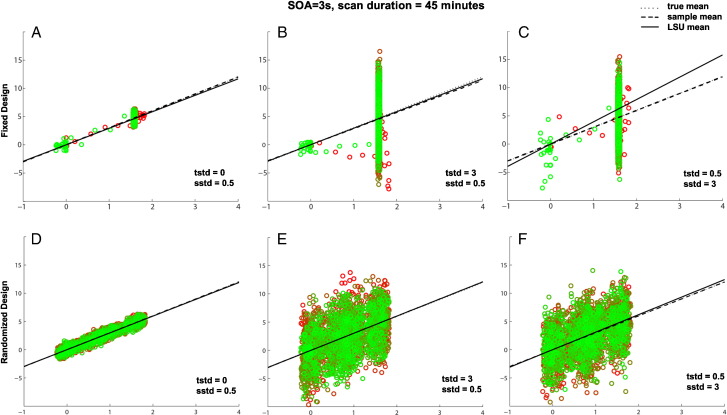
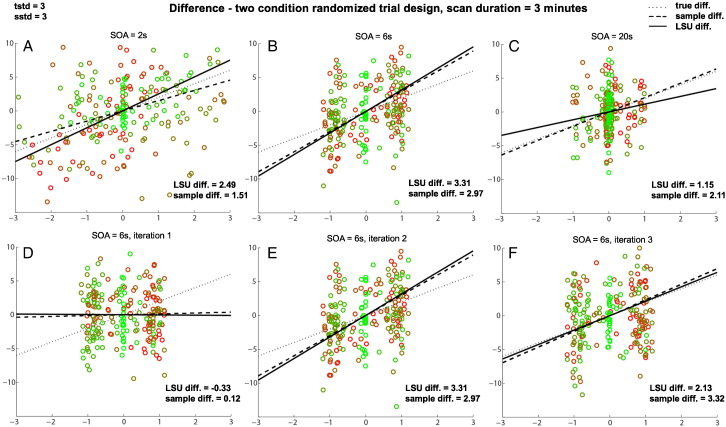
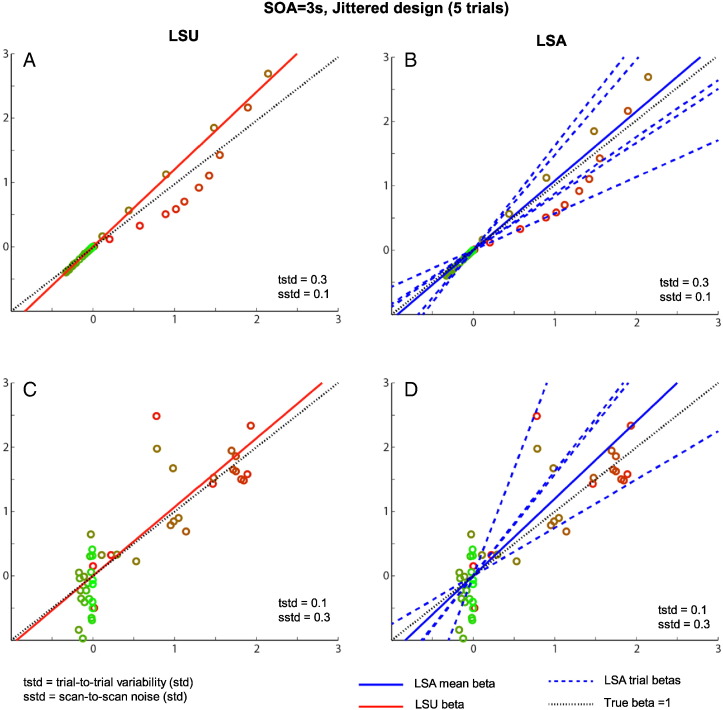
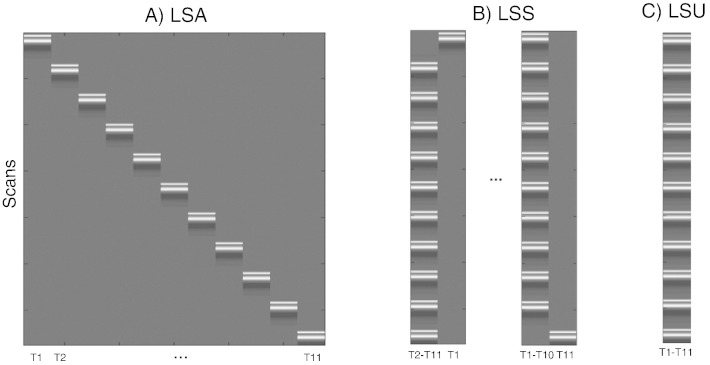
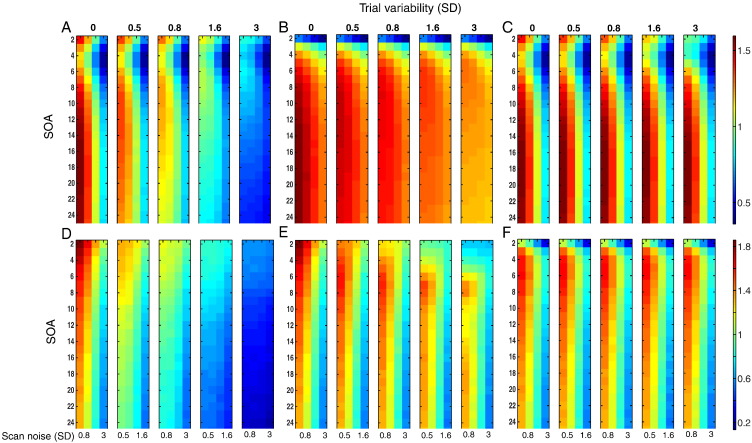
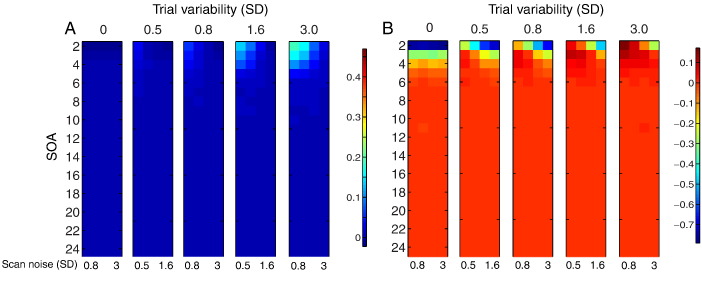
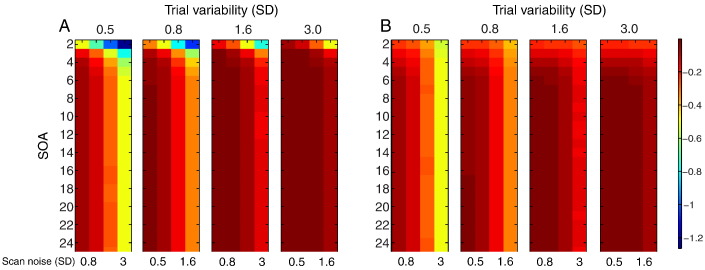
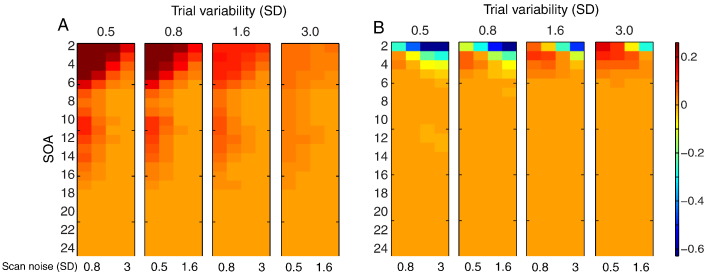
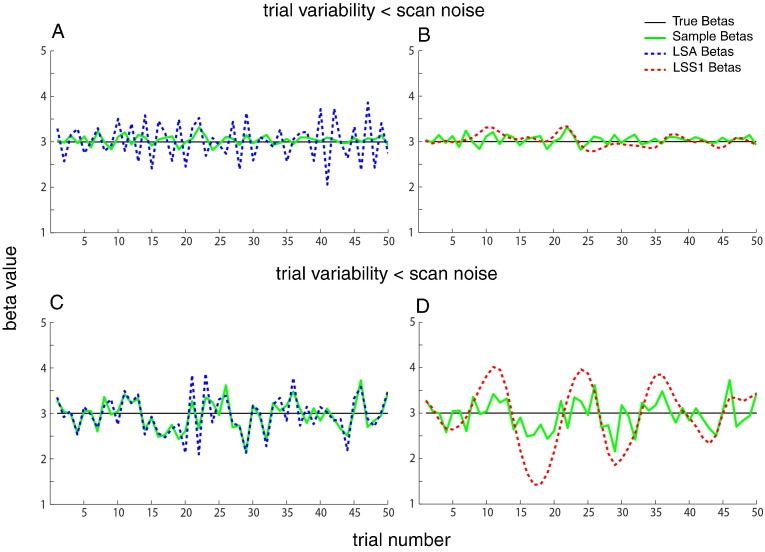
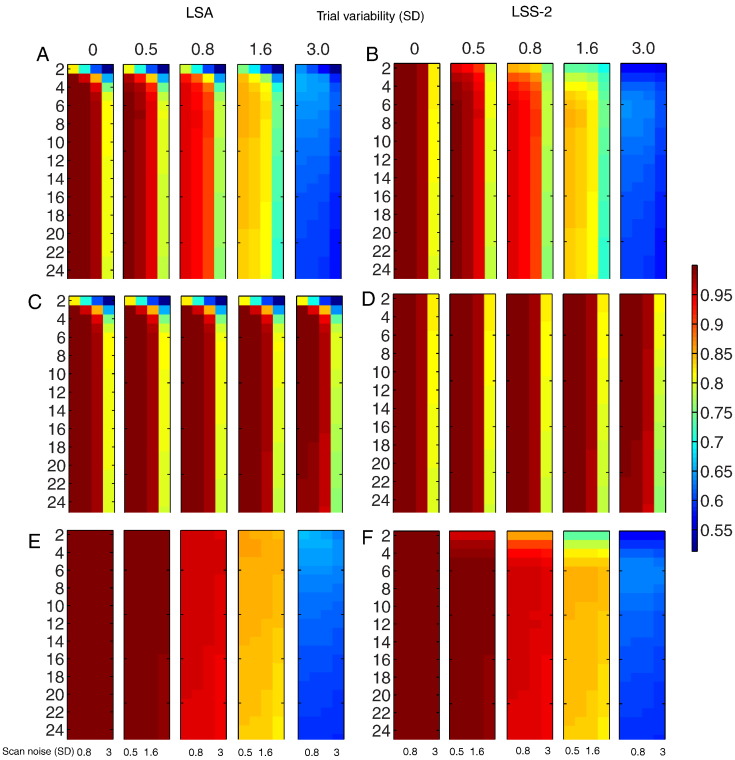
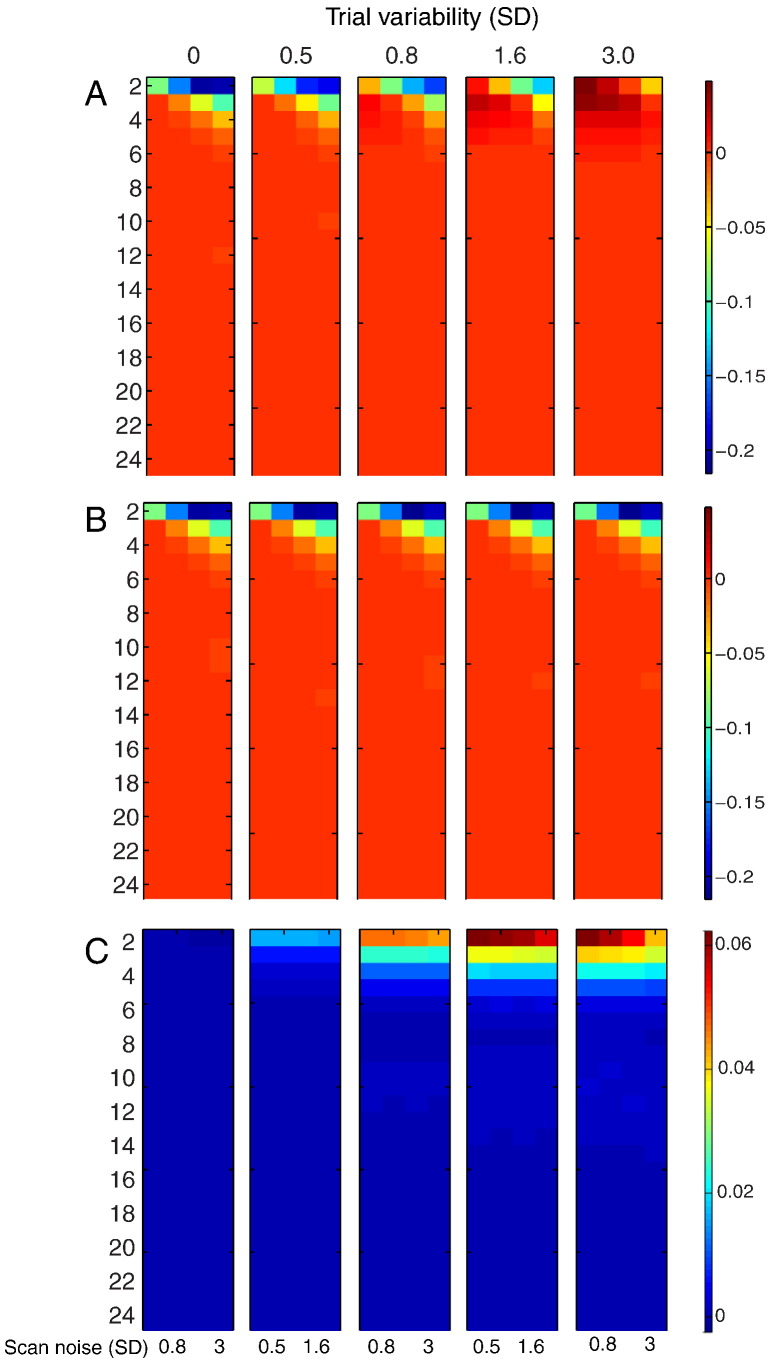
Functional magnetic resonance imaging (fMRI) studies typically employ rapid, event-related designs for behavioral reasons and for reasons associated with statistical efficiency. Efficiency is calculated from the precision of the parameters (Betas) estimated from a General Linear Model (GLM) in which trial onsets are convolved with a Hemodynamic Response Function (HRF). However, previous calculations of efficiency have ignored likely variability in the neural response from trial to trial, for example due to attentional fluctuations, or different stimuli across trials. Here we compare three GLMs in their efficiency for estimating average and individual Betas across trials as a function of trial variability, scan noise and Stimulus Onset Asynchrony (SOA): "Least Squares All" (LSA), "Least Squares Separate" (LSS) and "Least Squares Unitary" (LSU). Estimation of responses to individual trials in particular is important for both functional connectivity using "Beta-series correlation" and "multi-voxel pattern analysis" (MVPA). Our simulations show that the ratio of trial-to-trial variability to scan noise impacts both the optimal SOA and optimal GLM, especially for short SOAs<5s: LSA is better when this ratio is high, whereas LSS and LSU are better when the ratio is low. For MVPA, the consistency across voxels of trial variability and of scan noise is also critical. These findings not only have important implications for design of experiments using Beta-series regression and MVPA, but also statistical parametric mapping studies that seek only efficient estimation of the mean response across trials.
出于行为学原因以及与统计效率相关的原因,功能磁共振成像(fMRI)研究通常采用快速的、与事件相关的设计。效率是根据从一般线性模型(GLM)估计的参数(β值)的精度来计算的,在该模型中,试验开始时间与血液动力学响应函数(HRF)进行卷积。然而,先前的效率计算忽略了试验之间神经反应可能存在的变异性,例如由于注意力波动或试验间不同的刺激。在这里,我们比较了三种GLM在估计试验间平均β值和个体β值时的效率,这是试验变异性、扫描噪声和刺激开始异步性(SOA)的函数:“全最小二乘法”(LSA)、“分离最小二乘法”(LSS)和“单一最小二乘法”(LSU)。特别是对单个试验反应的估计,对于使用“β系列相关性”的功能连接和“多体素模式分析”(MVPA)都很重要。我们的模拟表明,试验间变异性与扫描噪声的比率会影响最佳SOA和最佳GLM,特别是对于短SOA<5秒的情况:当该比率较高时,LSA更好,而当比率较低时,LSS和LSU更好。对于MVPA,试验变异性和扫描噪声在体素间的一致性也很关键。这些发现不仅对使用β系列回归和MVPA的实验设计有重要意义,而且对仅寻求有效估计试验间平均反应的统计参数映射研究也有重要意义。