Cox Daniel T C, Gaston Kevin J
Environment & Sustainability Institute, University of Exeter, Penryn, Cornwall, United Kingdom.
PLoS One. 2015 Nov 11;10(11):e0141505. doi: 10.1371/journal.pone.0141505. eCollection 2015.
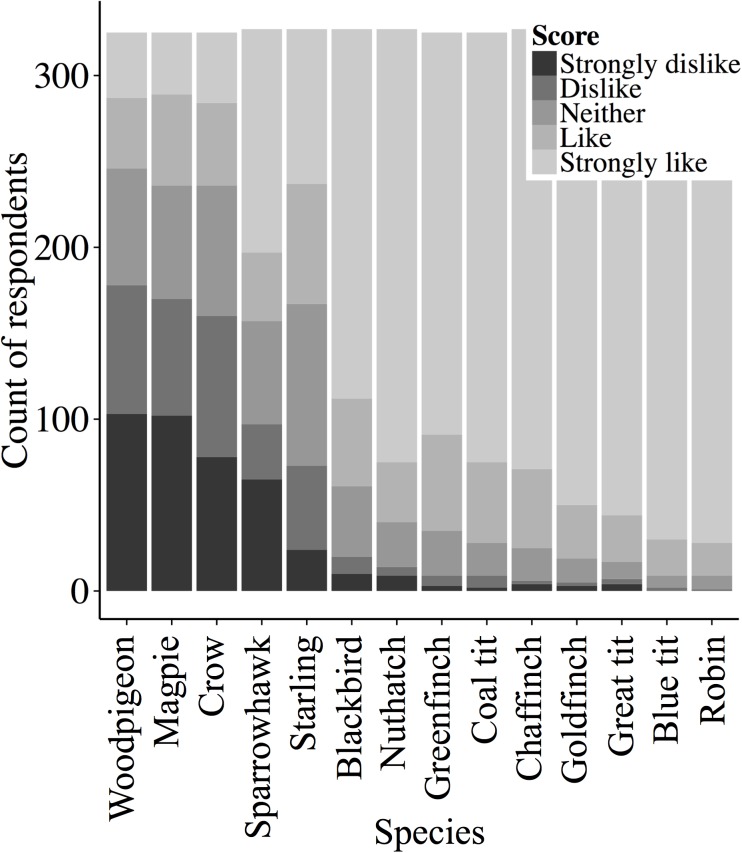
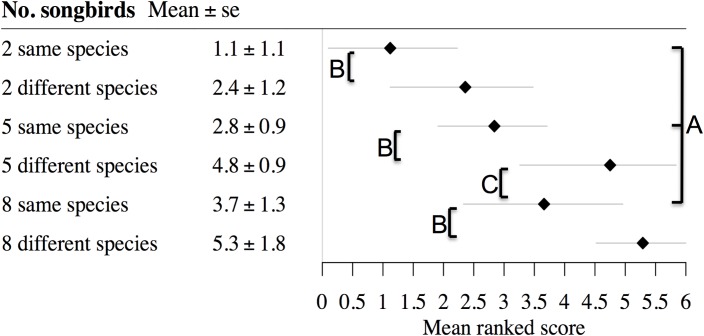
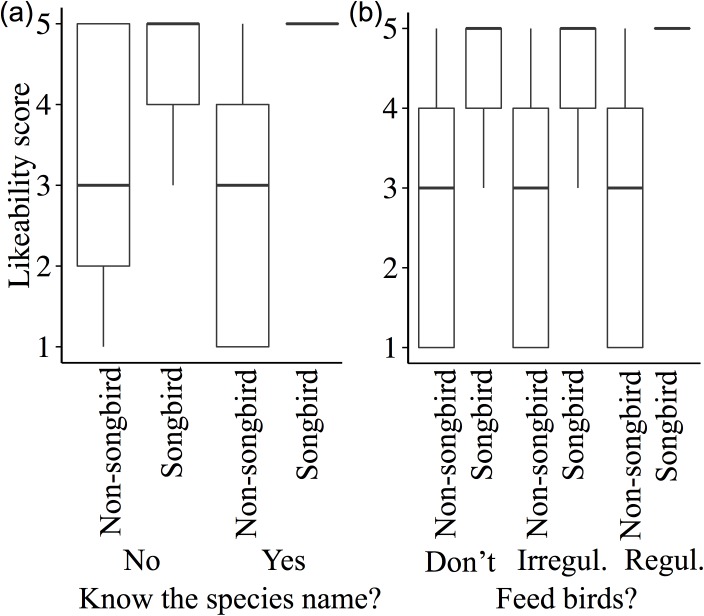
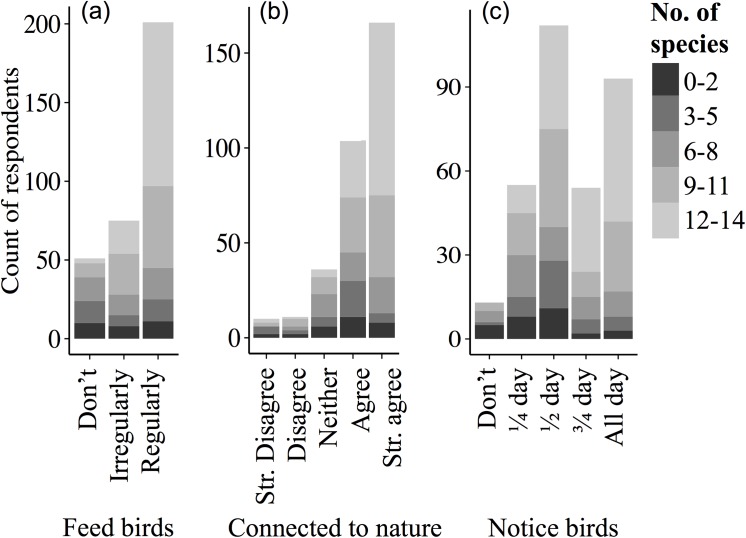
Interacting with nature is widely recognised as providing many health and well-being benefits. As people live increasingly urbanised lifestyles, the provision of food for garden birds may create a vital link for connecting people to nature and enabling them to access these benefits. However, it is not clear which factors determine the pleasure that people receive from watching birds at their feeders. These may be dependent on the species that are present, the abundance of individuals and the species richness of birds around the feeders. We quantitatively surveyed urban households from towns in southern England to determine the factors that influence the likeability of 14 common garden bird species, and to assess whether people prefer to see a greater abundance of individuals or increased species richness at their feeders. There was substantial variation in likeability across species, with songbirds being preferred over non-songbirds. Species likeability increased for people who fed birds regularly and who could name the species. We found a strong correlation between the number of species that a person could correctly identify and how connected to nature they felt when they watched garden birds. Species richness was preferred over a greater number of individuals of the same species. Although we do not show causation this study suggests that it is possible to increase the well-being benefits that people gain from watching birds at their feeders. This could be done first through a human to bird approach by encouraging regular interactions between people and their garden birds, such as through learning the species names and providing food. Second, it could be achieved through a bird to human approach by increasing garden songbird diversity because the pleasure that a person receives from watching an individual bird at a feeder is dependent not only on its species but also on the diversity of birds at the feeder.
与自然互动被广泛认为能带来诸多健康和福祉益处。随着人们的生活方式日益城市化,为花园中的鸟类提供食物可能成为连接人们与自然并使他们获得这些益处的关键纽带。然而,尚不清楚哪些因素决定了人们从在喂食器旁观赏鸟类中获得的愉悦感。这些因素可能取决于出现的鸟类物种、个体数量以及喂食器周围鸟类的物种丰富度。我们对英格兰南部城镇的城市家庭进行了定量调查,以确定影响14种常见花园鸟类受喜爱程度的因素,并评估人们是更喜欢在喂食器旁看到更多数量的个体还是增加的物种丰富度。不同物种的受喜爱程度存在很大差异,鸣禽比非鸣禽更受青睐。经常喂鸟且能叫出鸟类名字的人对物种的喜爱程度更高。我们发现,一个人能够正确识别的物种数量与他们在观赏花园鸟类时所感受到的与自然的联系程度之间存在很强的相关性。人们更喜欢物种丰富度,而非同一物种的更多个体数量。尽管我们没有证明因果关系,但这项研究表明,有可能增加人们从在喂食器旁观赏鸟类中获得的福祉益处。首先,可以通过人对鸟的方式来实现,即鼓励人们与花园中的鸟类进行定期互动,比如通过学习鸟类名字和提供食物。其次,可以通过鸟对人的方式来实现,即增加花园中鸣禽的多样性,因为一个人从在喂食器旁观赏一只鸟中获得的愉悦感不仅取决于其物种,还取决于喂食器旁鸟类的多样性。