Clark E M, Gooberman-Hill R, Peters T J
Musculoskeletal Research Unit, School of Clinical Sciences, Southmead Hospital, University of Bristol, Learning and Research Building, Bristol, BS10 5NB, UK.
Osteoporos Int. 2016 Apr;27(4):1459-1467. doi: 10.1007/s00198-015-3397-2. Epub 2015 Nov 13.
Women with back pain and vertebral fractures describe different pain experiences than women without vertebral fractures, particularly a shorter duration of back pain, crushing pain and pain that improves on lying down. This suggests a questionnaire could be developed to identify older women who may have osteoporotic vertebral fractures.
Approximately 12 % of postmenopausal women have vertebral fractures (VFs), but less than a third come to clinical attention. Distinguishing back pain likely to relate to VF from other types of back pain may ensure appropriate diagnostic radiographs, leading to treatment initiation. This study investigated whether characteristics of back pain in women with VF are different from those in women with no VFs.
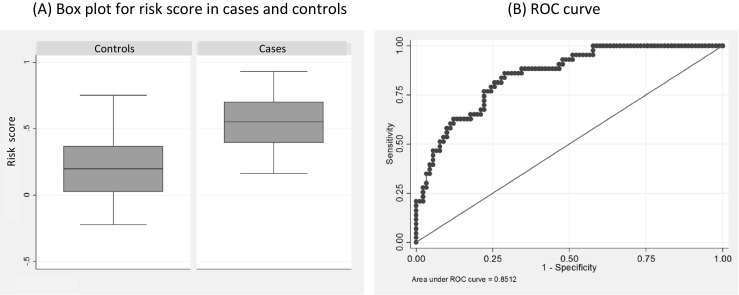
A case control study was undertaken with women aged ≥60 years who had undergone thoracic spinal radiograph in the previous 3 months. Cases were defined as those with VFs identified using the algorithm-based qualitative (ABQ) method. Six hundred eighty-three potential participants were approached. Data were collected by self-completed questionnaire including the McGill Pain Questionnaire. Chi-squared tests assessed univariable associations; logistic regression identified independent predictors of VFs. Receiver operating characteristic (ROC) curves were used to evaluate the ability of the combined independent predictors to differentiate between women with and without VFs via area under the curve (AUC) statistics.
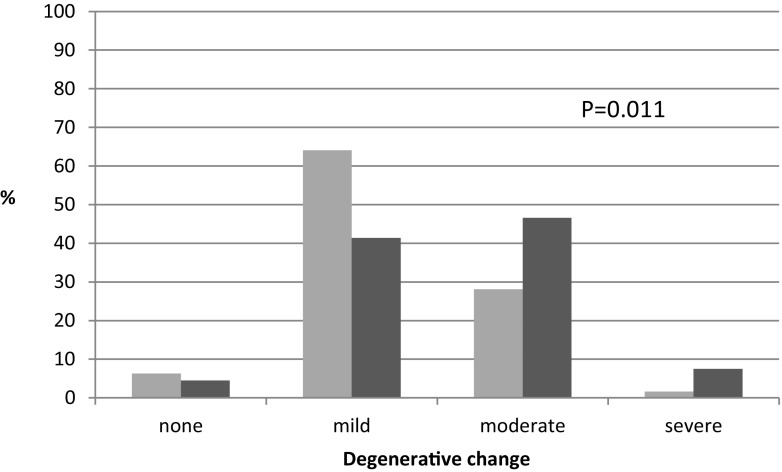
One hundred ninety-seven women participated: 64 cases and 133 controls. Radiographs of controls were more likely to show moderate/severe degenerative change than cases (54.1 vs 29.7 %, P = 0.011). Independent predictors of VF were older age, history of previous fracture, shorter duration of back pain, pain described as crushing, pain improving on lying down and pain not spreading down the legs. AUC for combination of these factors was 0.85 (95 % CI 0.79 to 0.92).
We present the first evidence that back pain experienced by women with osteoporotic VF is different to back pain related solely to degenerative change.
有背痛和椎体骨折的女性所描述的疼痛体验与无椎体骨折的女性不同,尤其是背痛持续时间较短、有挤压痛以及躺下时疼痛会改善。这表明可以开发一种问卷来识别可能患有骨质疏松性椎体骨折的老年女性。
约12%的绝经后女性患有椎体骨折(VF),但不到三分之一的患者会引起临床关注。将可能与椎体骨折相关的背痛与其他类型的背痛区分开来,可能会确保进行适当的诊断性X光检查,从而开始治疗。本研究调查了有椎体骨折的女性与无椎体骨折的女性背痛特征是否不同。
对年龄≥60岁且在过去3个月内接受过胸椎X光检查的女性进行病例对照研究。病例定义为使用基于算法的定性(ABQ)方法确定患有椎体骨折的女性。共接触了683名潜在参与者。通过自我填写问卷收集数据,包括麦吉尔疼痛问卷。卡方检验评估单变量关联;逻辑回归确定椎体骨折的独立预测因素。使用受试者工作特征(ROC)曲线通过曲线下面积(AUC)统计来评估联合独立预测因素区分有和无椎体骨折女性的能力。
197名女性参与研究:64例病例和133名对照。与病例相比,对照的X光片更有可能显示中度/重度退行性改变(54.1%对29.7%,P = 0.011)。椎体骨折的独立预测因素包括年龄较大、既往骨折史、背痛持续时间较短、描述为挤压痛、躺下时疼痛改善以及疼痛未向下肢扩散。这些因素组合的AUC为0.85(95%CI 0.79至0.92)。
我们提供了首个证据,表明骨质疏松性椎体骨折女性所经历的背痛与仅与退行性改变相关的背痛不同。