Xu Shan, Cherok Edward, Das Shweta, Li Sunan, Roelofs Brian A, Ge Shealinna X, Polster Brian M, Boyman Liron, Lederer W Jonathan, Wang Chunxin, Karbowski Mariusz
Center for Biomedical Engineering and Technology, University of Maryland School of Medicine, Baltimore, MD 21201 Department of Biochemistry and Molecular Biology, University of Maryland School of Medicine, Baltimore, MD 21201.
Center for Biomedical Engineering and Technology, University of Maryland School of Medicine, Baltimore, MD 21201 Department of Biochemistry and Molecular Biology, University of Maryland School of Medicine, Baltimore, MD 21201 Department of Anesthesiology and the Shock, Trauma and Anesthesiology Research (STAR) Center, University of Maryland School of Medicine, Baltimore, MD 21201.
Mol Biol Cell. 2016 Jan 15;27(2):349-59. doi: 10.1091/mbc.E15-09-0678. Epub 2015 Nov 12.
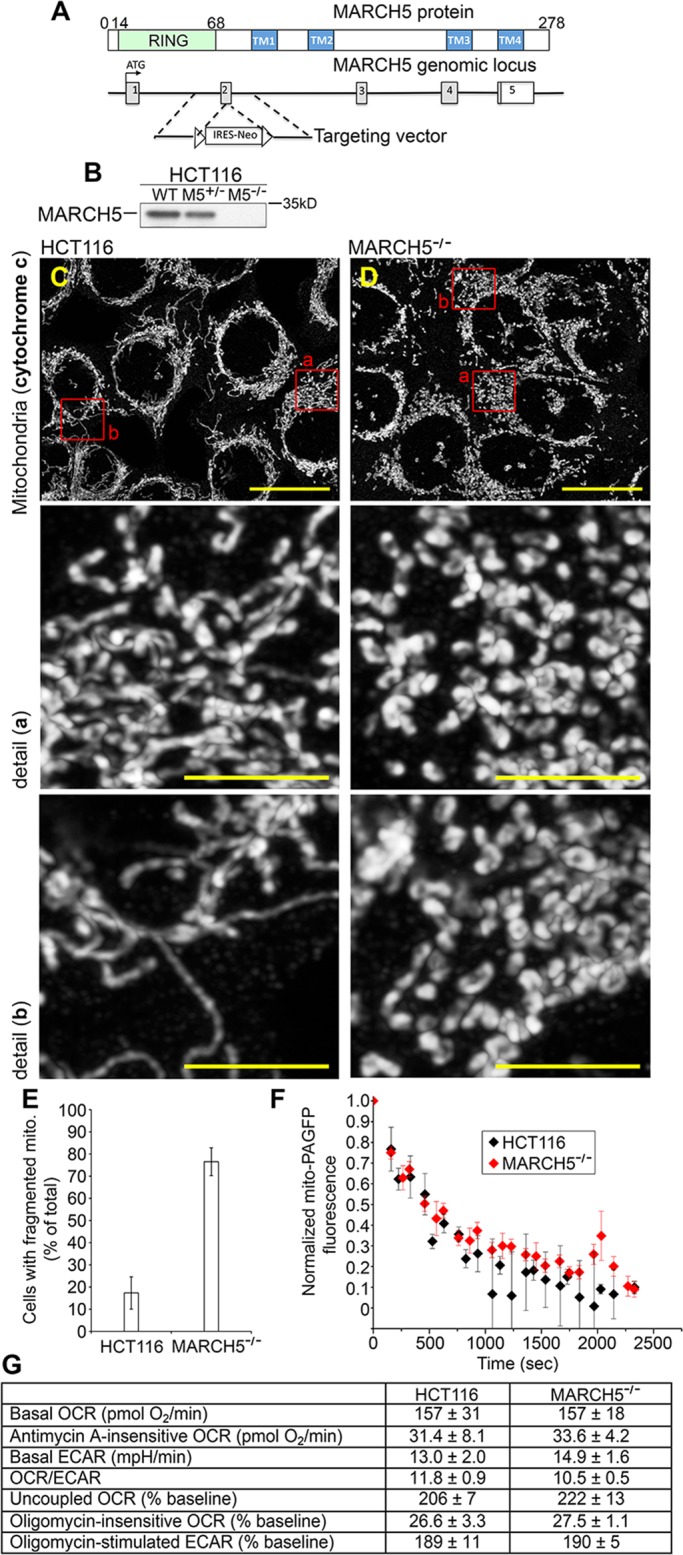
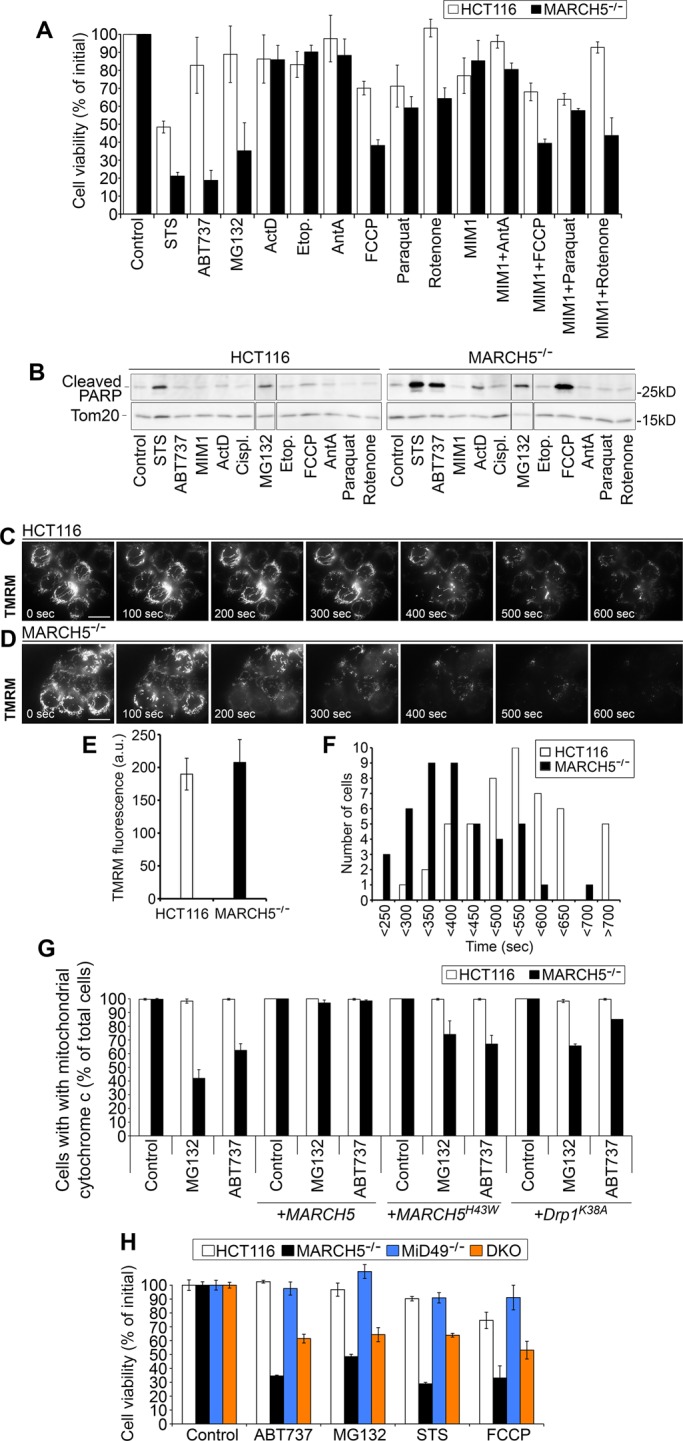
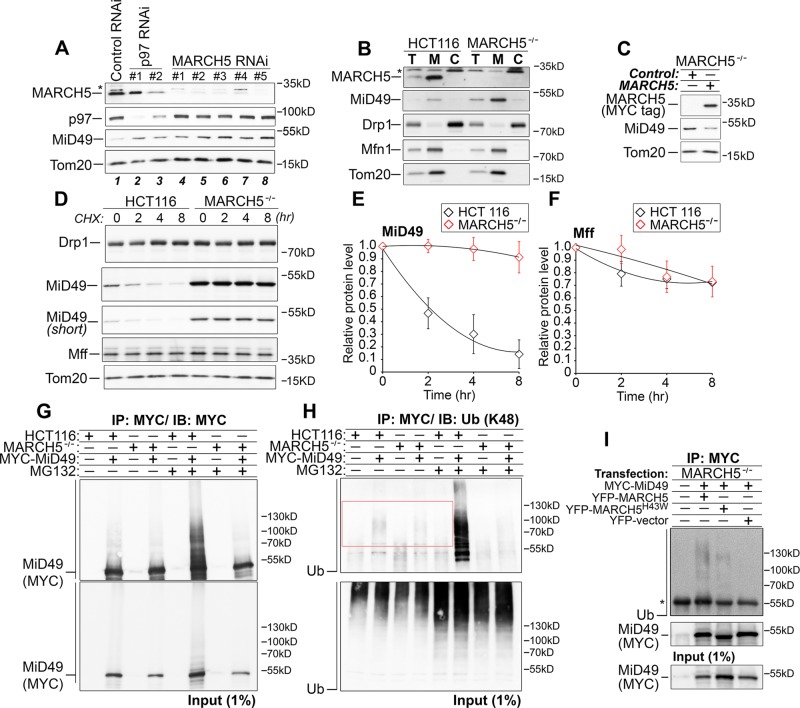
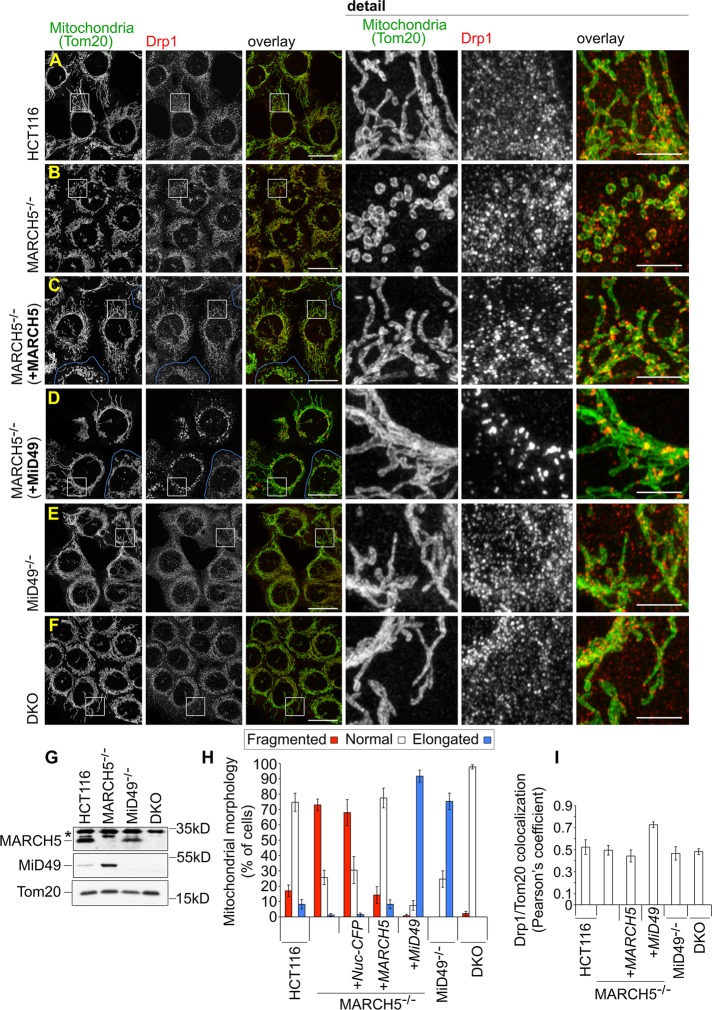
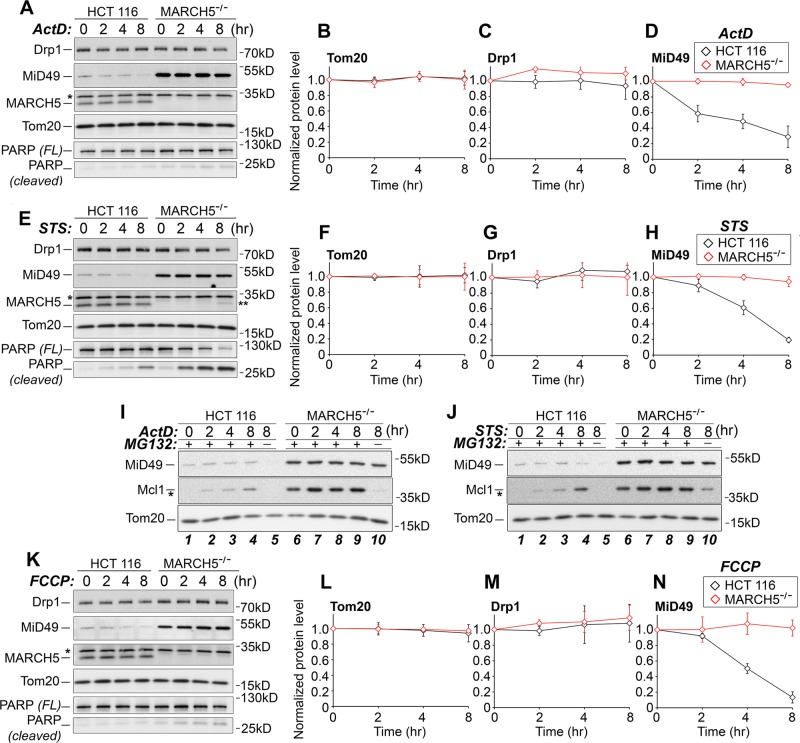
Ubiquitin- and proteasome-dependent outer mitochondrial membrane (OMM)-associated degradation (OMMAD) is critical for mitochondrial and cellular homeostasis. However, the scope and molecular mechanisms of the OMMAD pathways are still not well understood. We report that the OMM-associated E3 ubiquitin ligase MARCH5 controls dynamin-related protein 1 (Drp1)-dependent mitochondrial fission and cell sensitivity to stress-induced apoptosis. MARCH5 knockout selectively inhibited ubiquitination and proteasomal degradation of MiD49, a mitochondrial receptor of Drp1, and consequently led to mitochondrial fragmentation. Mitochondrial fragmentation in MARCH5(-/-) cells was not associated with inhibition of mitochondrial fusion or bioenergetic defects, supporting the possibility that MARCH5 is a negative regulator of mitochondrial fission. Both MARCH5 re-expression and MiD49 knockout in MARCH5(-/-) cells reversed mitochondrial fragmentation and reduced sensitivity to stress-induced apoptosis. These findings and data showing MARCH5-dependent degradation of MiD49 upon stress support the possibility that MARCH5 regulation of MiD49 is a novel mechanism controlling mitochondrial fission and, consequently, the cellular response to stress.
泛素和蛋白酶体依赖性线粒体外膜(OMM)相关降解(OMMAD)对于线粒体和细胞稳态至关重要。然而,OMMAD途径的范围和分子机制仍未得到充分了解。我们报告称,与OMM相关的E3泛素连接酶MARCH5控制动力相关蛋白1(Drp1)依赖性线粒体分裂以及细胞对应激诱导凋亡的敏感性。MARCH5基因敲除选择性地抑制了Drp1的线粒体受体MiD49的泛素化和蛋白酶体降解,从而导致线粒体碎片化。MARCH5(-/-)细胞中的线粒体碎片化与线粒体融合抑制或生物能量缺陷无关,这支持了MARCH5是线粒体分裂负调节因子的可能性。MARCH5(-/-)细胞中MARCH5的重新表达和MiD49基因敲除均可逆转线粒体碎片化并降低对应激诱导凋亡的敏感性。这些发现以及显示应激时MARCH5依赖性MiD49降解的数据支持了以下可能性:MARCH5对MiD49的调节是一种控制线粒体分裂的新机制,因此也是细胞对应激的反应机制。