Hernandez-Anzaldo Samuel, Berry Evan, Brglez Vesna, Leung Dickson, Yun Tae Jin, Lee Jun Seong, Filep Janos G, Kassiri Zamaneh, Cheong Cheolho, Lambeau Gérard, Lehner Richard, Fernandez-Patron Carlos
Department of Biochemistry, Faculty of Medicine and Dentistry, University of Alberta, Edmonton, Alberta, Canada (S.H.A., E.B., D.L., C.F.P.).
Institut de Pharmacologie Moléculaire et Cellulaire, Centre National de la Recherche Scientifique, Université de Nice-Sophia Antipolis, Valbonne, France (V.B., L.).
J Am Heart Assoc. 2015 Nov 13;4(11):e002553. doi: 10.1161/JAHA.115.002553.
Endocrine functions of the heart have been well established. We investigated the hypothesis that cardiac secretion of a unique phospholipase A2 recently identified by our laboratory (cardiac secreted phospholipase A2 [sPLA2]) establishes a heart-liver endocrine axis that is negatively regulated by matrix metalloproteinase-2 (MMP-2).
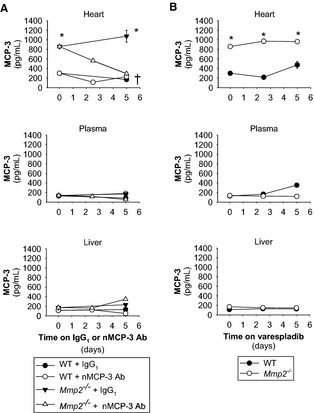
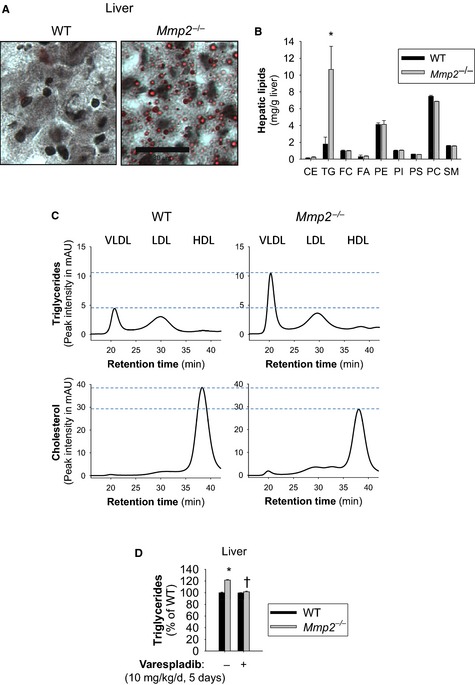
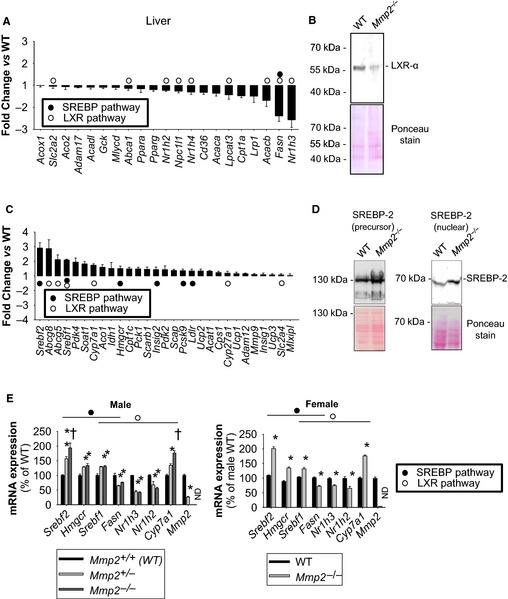
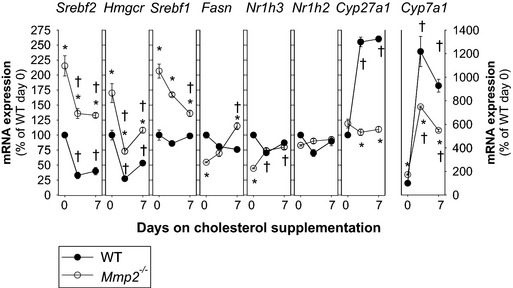
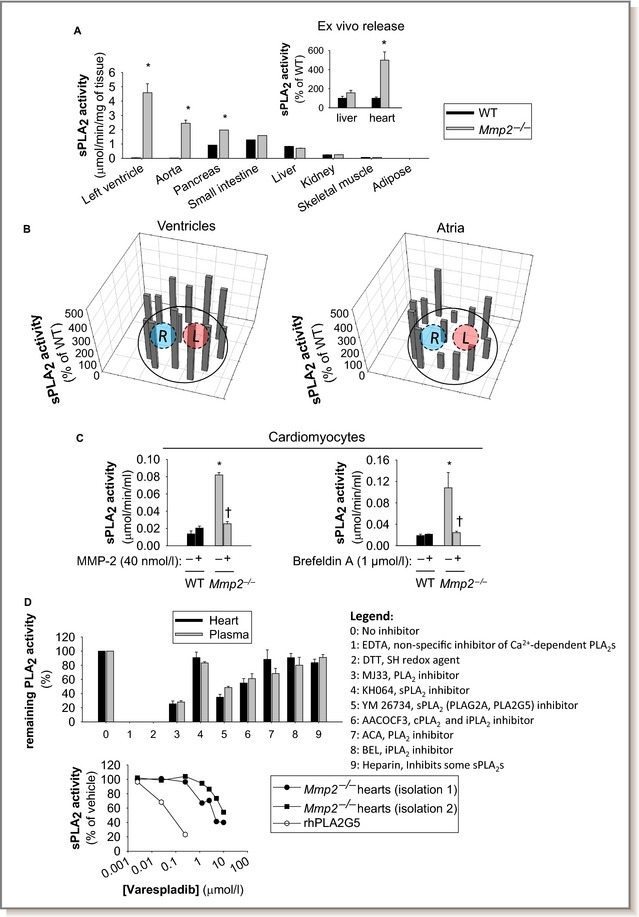
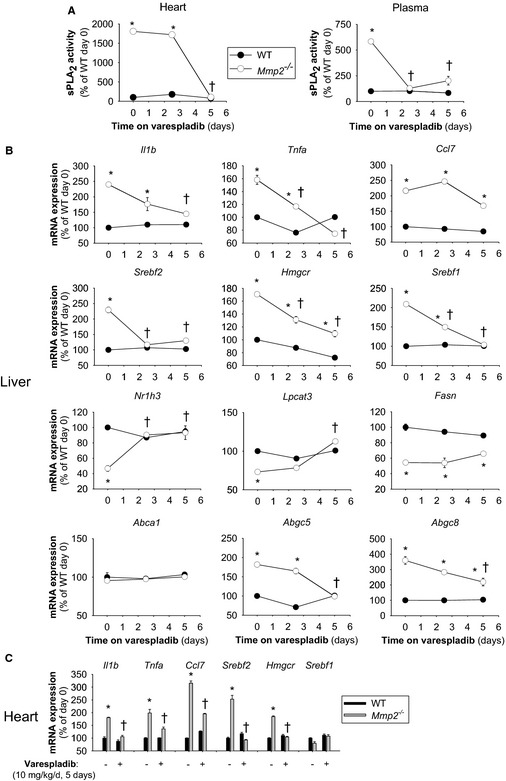
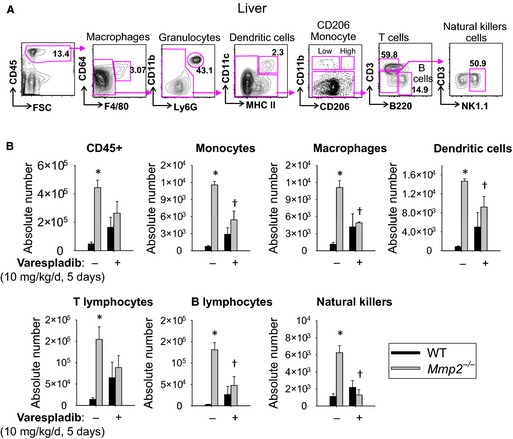
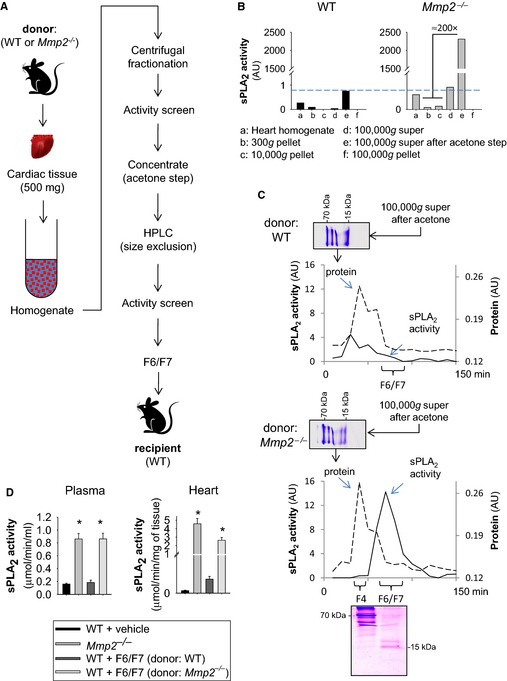
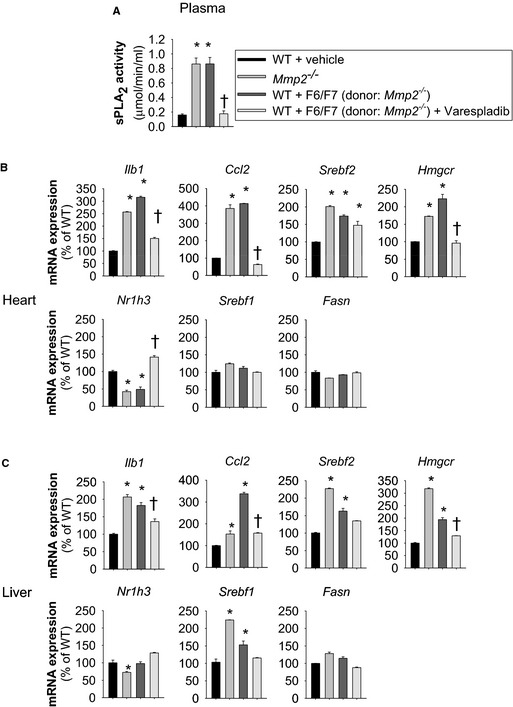
In Mmp2(-/-) mice, cardiac (but not hepatic) sPLA2 was elevated, leading to hepatic inflammation, immune cell infiltration, dysregulation of the sterol regulatory element binding protein-2 and liver X receptor-α pathways, abnormal transcriptional responses to dietary cholesterol, and elevated triglycerides in very low-density lipoprotein and in the liver. Expression of monocyte chemoattractant protein-3, a known MMP-2 substrate, was elevated at both mRNA and protein levels in the heart. Functional studies including in vivo antibody neutralization identified cardiac monocyte chemoattractant protein 3 as a possible agonist of cardiac sPLA2 secretion. Conversely, systemic sPLA2 inhibition almost fully normalized the cardiohepatic phenotype without affecting monocyte chemoattractant protein-3. Finally, wild-type mice that received high-performance liquid chromatography-isolated cardiac sPLA2 from Mmp2(-/-) donors developed a cardiohepatic gene expression profile similar to that of Mmp2(-/-) mice.
These findings identified the novel MMP-2/cardiac sPLA2 pathway that endows the heart with important endocrine functions, including regulation of inflammation and lipid metabolism in the liver. Our findings could also help explain how MMP2 deficiency leads to cardiac problems, inflammation, and metabolic dysregulation in patients.
心脏的内分泌功能已得到充分证实。我们研究了一种假设,即我们实验室最近鉴定出的一种独特的磷脂酶A2(心脏分泌型磷脂酶A2[sPLA2])的心脏分泌建立了一种心-肝内分泌轴,该轴受到基质金属蛋白酶-2(MMP-2)的负调控。
在Mmp2基因敲除小鼠中,心脏(而非肝脏)的sPLA2升高,导致肝脏炎症、免疫细胞浸润、固醇调节元件结合蛋白-2和肝脏X受体-α信号通路失调、对饮食胆固醇的转录反应异常以及极低密度脂蛋白和肝脏中的甘油三酯升高。单核细胞趋化蛋白-3(一种已知的MMP-2底物)在心脏中的mRNA和蛋白质水平均升高。包括体内抗体中和在内的功能研究确定心脏单核细胞趋化蛋白3可能是心脏sPLA2分泌的激动剂。相反,全身sPLA2抑制几乎完全使心-肝表型恢复正常,而不影响单核细胞趋化蛋白-3。最后,接受从Mmp2基因敲除供体中通过高效液相色谱分离得到的心脏sPLA2的野生型小鼠出现了与Mmp2基因敲除小鼠相似的心-肝基因表达谱。
这些发现确定了新的MMP-2/心脏sPLA2途径,该途径赋予心脏重要的内分泌功能,包括调节肝脏中的炎症和脂质代谢。我们的发现也有助于解释MMP2缺乏如何导致患者出现心脏问题、炎症和代谢失调。