Sterken Caroline, Lemiere Jurgen, Vanhorebeek Ilse, Van den Berghe Greet, Mesotten Dieter
Division of Cellular and Molecular Medicine, Clinical Department and Laboratory of Intensive Care Medicine , KU Leuven , Leuven , Belgium.
Child and Adolescent Psychiatry , University Hospitals Leuven , Leuven , Belgium ; Paediatric Haemato-Oncology , University Hospitals Leuven , Leuven , Belgium.
Open Heart. 2015 Oct 29;2(1):e000255. doi: 10.1136/openhrt-2015-000255. eCollection 2015.
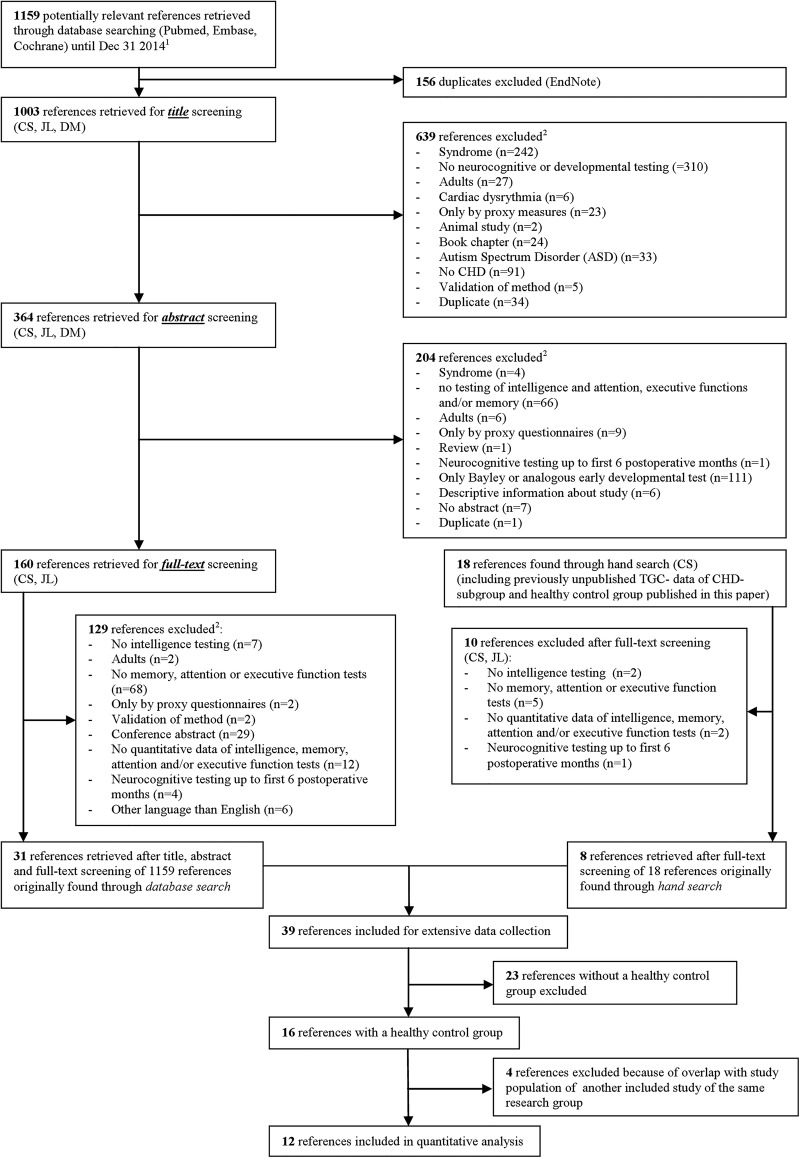
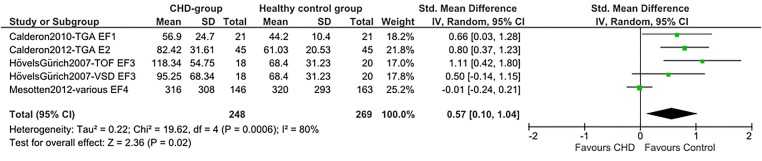
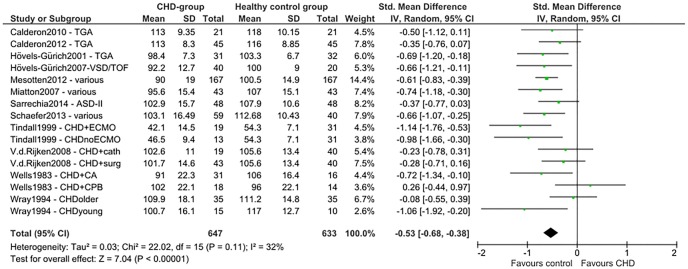
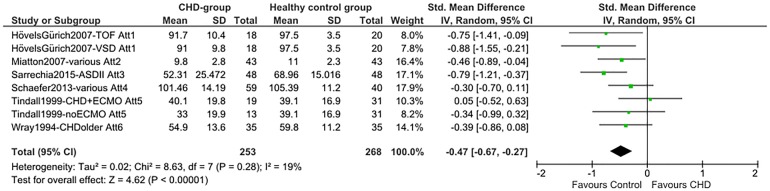
Children with congenital heart disease (CHD) often experience difficulties in academic and daily functioning, which have been associated with intelligence and neurocognitive skills, including executive functions (EFs), attention and memory. We report the neurocognitive data of children with CHD who were included in the Leuven glucose control trial (LGC trial). Through a systematic review and meta-analysis, we aimed to find which neurocognitive functions are most consistently and prominently affected. 365 children with CHD and 216 healthy control children underwent extensive neurocognitive testing in the LGC trial. A comprehensive search of electronic databases PubMed, EMBASE and Cochrane was conducted for studies measuring intelligence, EFs, attention and memory in children who underwent heart surgery for CHD. Standardised mean differences (SMDs) between the CHD group and a healthy control group were calculated for these neurocognitive functions. LGC trial data were included in the meta-analysis. Twelve studies with a healthy control group were included in the meta-analysis, involving 647 patients with CHD and 633 controls. The CHD group (median age 7.35 years at testing) had worse scores than healthy control children, for all investigated neurocognitive functions. A medium SMD was found for intelligence (SMD=-0.53 (95% CI -0.68 to -0.38), p<0.00001). Alertness, an attentional function, was also consistently poorer in the CHD group. Memory was less affected, while EF had a medium SMD with large heterogeneity. Children with CHD risk displayed lower performance on intelligence and alertness assessment, which may contribute to difficulties in daily life and school. Heterogeneity in neurocognitive assessment and small sizes in most studies limit the interpretation.
clinicaltrials.gov Identifier NCT00214916.
先天性心脏病(CHD)患儿在学业和日常功能方面常遇到困难,这与智力和神经认知技能有关,包括执行功能(EFs)、注意力和记忆力。我们报告了纳入鲁汶血糖控制试验(LGC试验)的CHD患儿的神经认知数据。通过系统评价和荟萃分析,我们旨在找出哪些神经认知功能受到的影响最一致且最显著。在LGC试验中,365名CHD患儿和216名健康对照儿童接受了广泛的神经认知测试。对电子数据库PubMed、EMBASE和Cochrane进行了全面检索,以查找测量接受CHD心脏手术患儿的智力、EFs、注意力和记忆力的研究。计算了CHD组和健康对照组在这些神经认知功能方面的标准化平均差异(SMD)。LGC试验数据纳入了荟萃分析。荟萃分析纳入了12项有健康对照组的研究,涉及647例CHD患者和633例对照。CHD组(测试时中位年龄7.35岁)在所有调查的神经认知功能方面得分均低于健康对照儿童。智力方面发现中等SMD(SMD=-0.53(95%CI -0.68至-0.38),p<0.00001)。注意力功能警觉性在CHD组中也一直较差。记忆力受影响较小,而EF的SMD中等且异质性较大。有CHD风险的患儿在智力和警觉性评估方面表现较低,这可能导致日常生活和学校中的困难。神经认知评估的异质性和大多数研究样本量较小限制了结果的解释。
clinicaltrials.gov标识符NCT00214916。