Papamichos Spyros I, Margaritis Dimitrios, Kotsianidis Ioannis
Department of Haematology, School of Medicine, Democritus University of Thrace, 68100 Alexandroupolis, Greece.
Scientifica (Cairo). 2015;2015:984706. doi: 10.1155/2015/984706. Epub 2015 Oct 19.
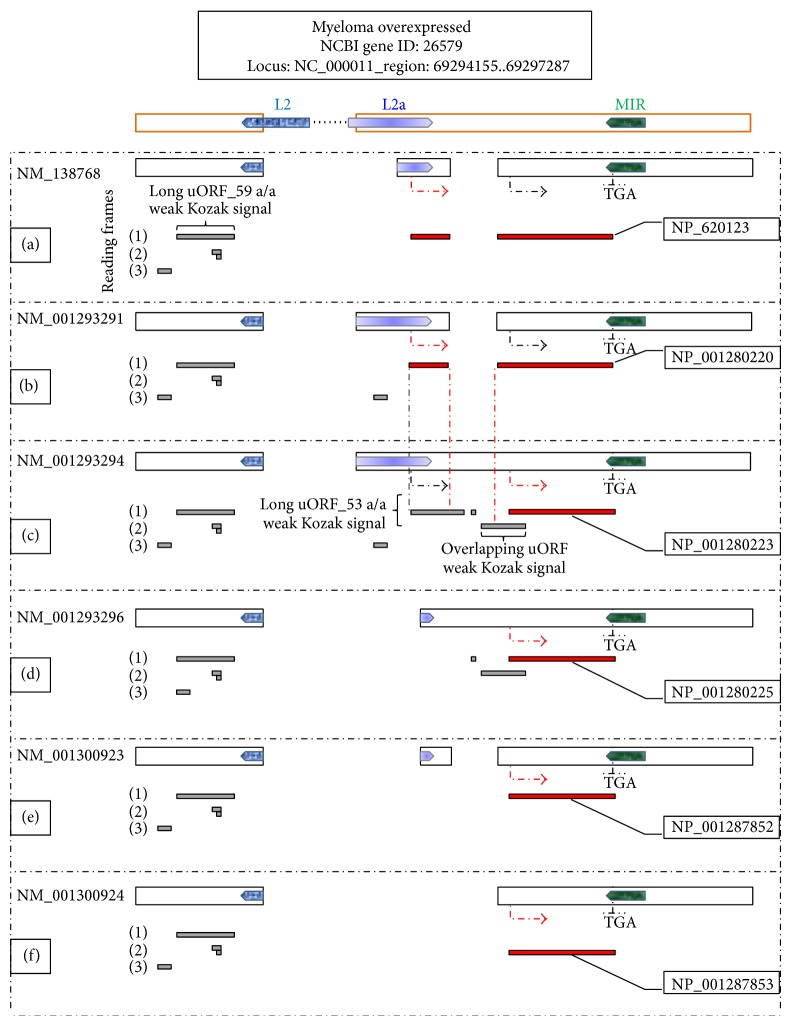
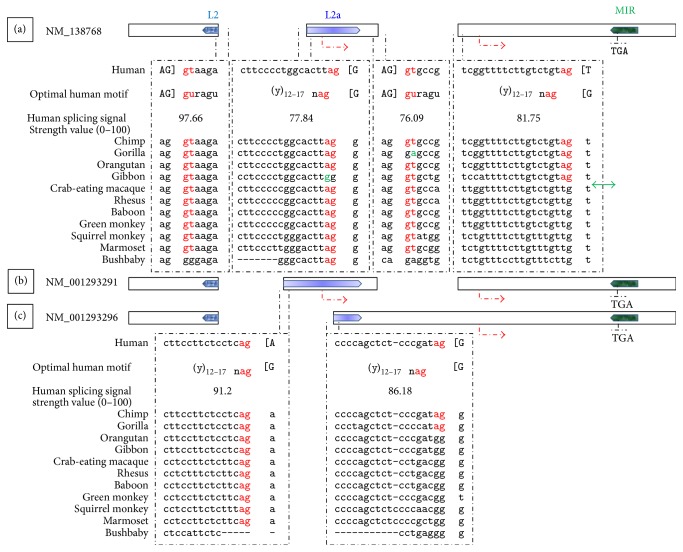
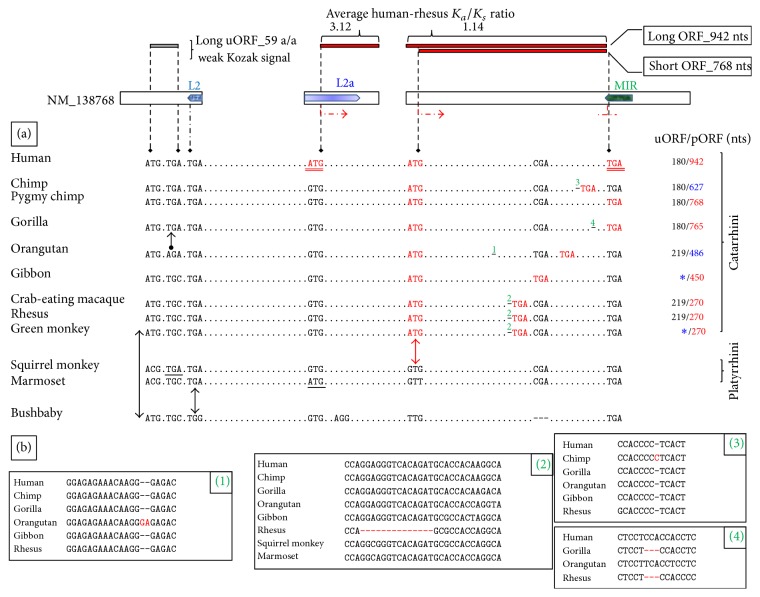
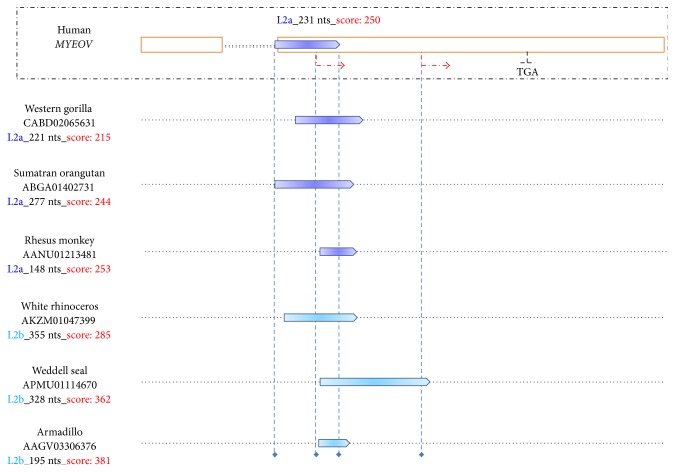
The incidence of cancer in human is high as compared to chimpanzee. However previous analysis has documented that numerous human cancer-related genes are highly conserved in chimpanzee. Till date whether human genome includes species-specific cancer-related genes that could potentially contribute to a higher cancer susceptibility remains obscure. This study focuses on MYEOV, an oncogene encoding for two protein isoforms, reported as causally involved in promoting cancer cell proliferation and metastasis in both haematological malignancies and solid tumours. First we document, via stringent in silico analysis, that MYEOV arose de novo in Catarrhini. We show that MYEOV short-isoform start codon was evolutionarily acquired after Catarrhini/Platyrrhini divergence. Throughout the course of Catarrhini evolution MYEOV acquired a gradually elongated translatable open reading frame (ORF), a gradually shortened translation-regulatory upstream ORF, and alternatively spliced mRNA variants. A point mutation introduced in human allowed for the acquisition of MYEOV long-isoform start codon. Second, we demonstrate the precious impact of exonized transposable elements on the creation of MYEOV gene structure. Third, we highlight that the initial part of MYEOV long-isoform coding DNA sequence was under positive selection pressure during Catarrhini evolution. MYEOV represents a Primate Orphan Gene that acquired, via ORF expansion, a human-protein-specific coding potential.
与黑猩猩相比,人类癌症的发病率较高。然而,先前的分析表明,许多与人类癌症相关的基因在黑猩猩中高度保守。迄今为止,人类基因组中是否包含可能导致更高癌症易感性的物种特异性癌症相关基因仍不清楚。本研究聚焦于MYEOV,这是一种编码两种蛋白质异构体的癌基因,据报道在血液系统恶性肿瘤和实体瘤中均与促进癌细胞增殖和转移有因果关系。首先,我们通过严格的计算机分析证明,MYEOV在狭鼻猴类中从头产生。我们表明,MYEOV短异构体起始密码子是在狭鼻猴类/阔鼻猴类分化后进化获得的。在整个狭鼻猴类进化过程中,MYEOV获得了逐渐延长的可翻译开放阅读框(ORF)、逐渐缩短的翻译调控上游ORF以及可变剪接的mRNA变体。人类中引入的一个点突变使得获得了MYEOV长异构体起始密码子。其次,我们证明了外显子化转座元件对MYEOV基因结构形成的重要影响。第三,我们强调,在狭鼻猴类进化过程中,MYEOV长异构体编码DNA序列的起始部分受到正选择压力。MYEOV代表了一个灵长类孤儿基因,它通过ORF扩展获得了人类蛋白质特异性编码潜力。